Levy's Top Gear Picks of 2011
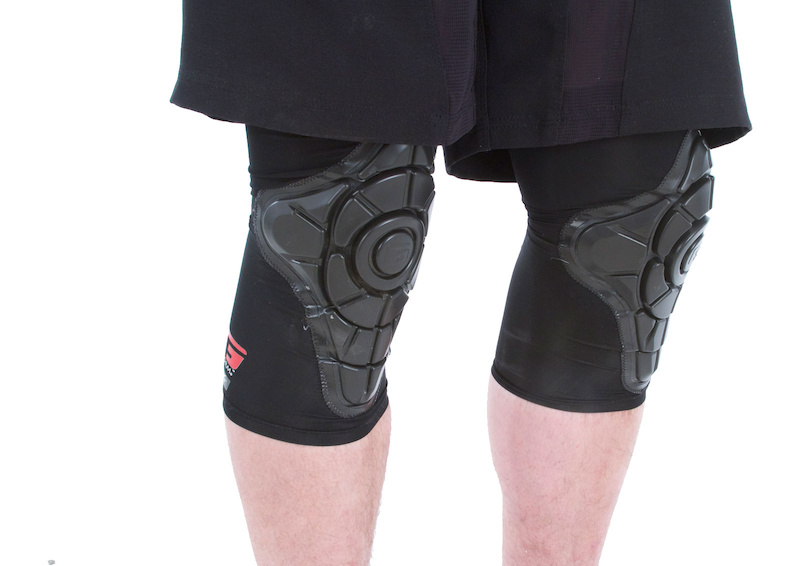
Favorite New Product: G-Form pads
Given my opportunity to sample the latest and greatest suspension and carbon fiber wonder-parts, some readers are likely surprised that I chose a set of knee pads as my favorite new product of 2011. I'll even admit that I couldn't help but poke fun when I first saw them being worn by a Euro journalist at a press camp earlier in the year (in my defense, he was sporting the bright yellow version), but once I got my own set to try, I was convinced. So many riders out there who used to be pure downhillers now spend a lot of time getting rowdy on their trail bike, but the majority of knee pads are just too bulky and uncomfortable for a proper mountain bike ride. The G-Form knee pads feel as if you're wearing a set of slim knee warmers, but do a far better job of keeping your knees scab free without the chaffing and heat of full sized pads that were never intended to be used on three hour trail rides. The deal closer for me is that they retail for just $49.95 USD, putting them at the very top of my recommendation list of 2011 products.
g-form.comGiven my opportunity to sample the latest and greatest suspension and carbon fiber wonder-parts, some readers are likely surprised that I chose a set of knee pads as my favorite new product of 2011. I'll even admit that I couldn't help but poke fun when I first saw them being worn by a Euro journalist at a press camp earlier in the year (in my defense, he was sporting the bright yellow version), but once I got my own set to try, I was convinced. So many riders out there who used to be pure downhillers now spend a lot of time getting rowdy on their trail bike, but the majority of knee pads are just too bulky and uncomfortable for a proper mountain bike ride. The G-Form knee pads feel as if you're wearing a set of slim knee warmers, but do a far better job of keeping your knees scab free without the chaffing and heat of full sized pads that were never intended to be used on three hour trail rides. The deal closer for me is that they retail for just $49.95 USD, putting them at the very top of my recommendation list of 2011 products.
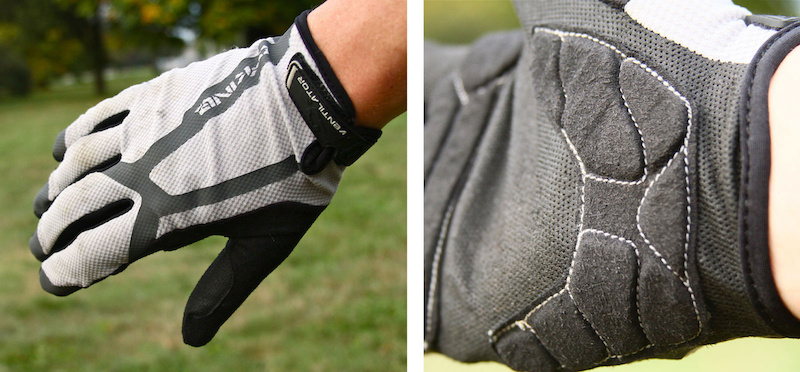
Best Product Under 50$: Dakine Ventilator glove
There are a lot of great products out there, but the list gets substantially shorter if you add the stipulation that they also have to retail for less then $50 USD. I would surely have to include Dakine's $35 Ventilator glove on that list, though, as they quickly became my favorite gloves to wear out of the countless pairs I have to choose from. True to their name, they are a lightweight and very breathable glove that is a great choice when conditions aren't too nippy, but they still offer substantial palm protection via thick gel inserts that shield the base of the hand when you try to do your best scorpion impression. The Ventilator's touch screen compatible fingers also mean that you won't be racing to pull your gloves off if you need to answer your phone or take a photo, something that this unabashedly phone-centric rider quickly fell in love with. I've been known to be notoriously picky about what I put my hands in to, but the Ventilators tick all the boxes for me: super comfy and lightweight, a reasonable amount of protection, and not unreasonably priced.
www.dakine.comThere are a lot of great products out there, but the list gets substantially shorter if you add the stipulation that they also have to retail for less then $50 USD. I would surely have to include Dakine's $35 Ventilator glove on that list, though, as they quickly became my favorite gloves to wear out of the countless pairs I have to choose from. True to their name, they are a lightweight and very breathable glove that is a great choice when conditions aren't too nippy, but they still offer substantial palm protection via thick gel inserts that shield the base of the hand when you try to do your best scorpion impression. The Ventilator's touch screen compatible fingers also mean that you won't be racing to pull your gloves off if you need to answer your phone or take a photo, something that this unabashedly phone-centric rider quickly fell in love with. I've been known to be notoriously picky about what I put my hands in to, but the Ventilators tick all the boxes for me: super comfy and lightweight, a reasonable amount of protection, and not unreasonably priced.
Most Promising Technology: 29'ers
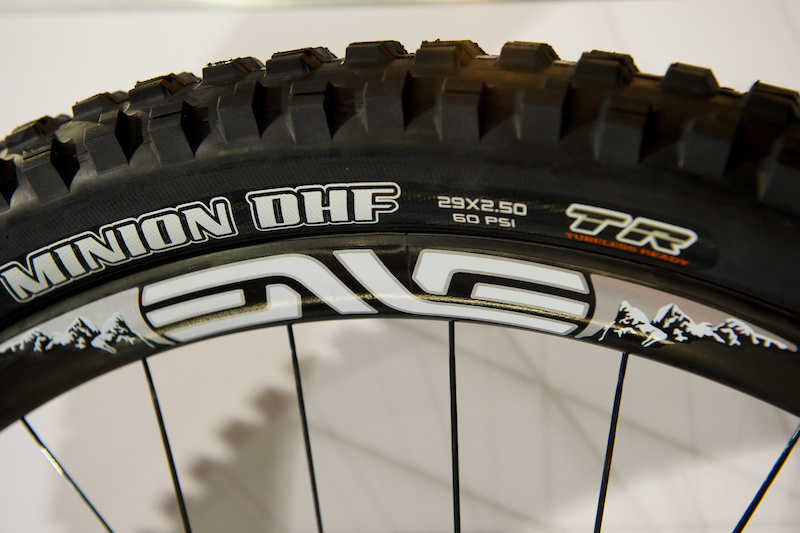
29'er evangelists will be quick to point out that big wheels are far from new, already filling the pages of many other websites and magazines. Pinkbike has been somewhat hesitant to investigate the 29'' movement, though, largely because the majority of 29'ers are short travel bikes that don't fit into most of our reader's interests. That is beginning to change. Companies like Maxxis and Specialized are producing high volume tires in 29" sizes, wheels sets are coming along nicely with wide and stiff options that cater to aggressive riders, and while it could be argued that the bigger wheels don't play well with long travel frame designs, riders are also coming to the conclusion that a shorter travel 29'er rides very much like a 26" bike with an extra inch of suspension. The opponents will be quick to point out the facts that get repeated over and over again: the heavier wheels will accelerate slower and flex more, a still limited component selection to choose from, and a bike selection that leans far more to the XC side of the fence. Those are the very words that I used to preach, but a funny thing happened when I threw my leg over a few different 29'ers: I didn't want to get back on my 26" wheeled bike. And guess what, I'm not some super fit cross-country weapon or fanny pack wearing randonneur. I may like to earn my turns, but my main reason for mountain biking is to push myself on the downhills, to get the tires sliding and generally have loads of fun in the forest, just like many of you. A dialed 29'er, even a short travel one, rides very different than its 26" counterpart. It literally feels as if you are sitting within the bike, something that translates to a very surefooted sensation on the trail. I'm not trying to convince anyone that 29" wheels are the future, they aren't, and 26" wheels will likely always have a place in our sport, but the latest crop of 29'ers do add another element that is different enough to warrant their place on the mountain. No one will be forcing you to ride one either, but having the option of two wheel sizes, each offering their own personalities on the trail, can only be a good thing.
29'er evangelists will be quick to point out that big wheels are far from new, already filling the pages of many other websites and magazines. Pinkbike has been somewhat hesitant to investigate the 29'' movement, though, largely because the majority of 29'ers are short travel bikes that don't fit into most of our reader's interests. That is beginning to change. Companies like Maxxis and Specialized are producing high volume tires in 29" sizes, wheels sets are coming along nicely with wide and stiff options that cater to aggressive riders, and while it could be argued that the bigger wheels don't play well with long travel frame designs, riders are also coming to the conclusion that a shorter travel 29'er rides very much like a 26" bike with an extra inch of suspension. The opponents will be quick to point out the facts that get repeated over and over again: the heavier wheels will accelerate slower and flex more, a still limited component selection to choose from, and a bike selection that leans far more to the XC side of the fence. Those are the very words that I used to preach, but a funny thing happened when I threw my leg over a few different 29'ers: I didn't want to get back on my 26" wheeled bike. And guess what, I'm not some super fit cross-country weapon or fanny pack wearing randonneur. I may like to earn my turns, but my main reason for mountain biking is to push myself on the downhills, to get the tires sliding and generally have loads of fun in the forest, just like many of you. A dialed 29'er, even a short travel one, rides very different than its 26" counterpart. It literally feels as if you are sitting within the bike, something that translates to a very surefooted sensation on the trail. I'm not trying to convince anyone that 29" wheels are the future, they aren't, and 26" wheels will likely always have a place in our sport, but the latest crop of 29'ers do add another element that is different enough to warrant their place on the mountain. No one will be forcing you to ride one either, but having the option of two wheel sizes, each offering their own personalities on the trail, can only be a good thing.
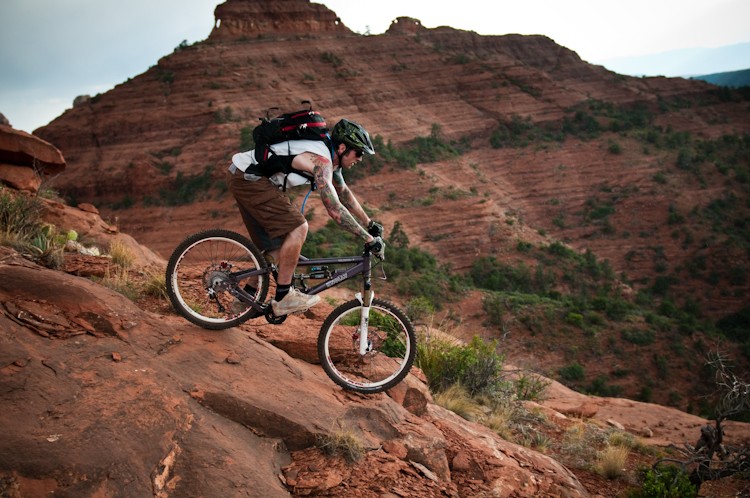
Best Destination: Sedona, Arizona
I consider myself very lucky to be able to travel the world and ride in some of the most amazing places with great people, but one location always seems to get me more excited than the rest. Located in Arizona, Sedona is known for its red rock terrain, a result of the iron oxide left over from when a post-glacial age ocean filled valley, as well as numerous "vortexes" that are said to be centers of high energy. Whether or not you believe the vortex theory, there is no arguing over the area's amazing trails. The terrain definitely caters to riders who prefer a technical challenge, with many sections that will test both your climbing and descending skills, but the rock surface also blesses you with incredible amounts of traction. It's the kind of riding that rewards skilled riders, not just those who are super fit, largely thanks to knowledgable trail builders who seem to know exactly how to build a line that gives you the most bang for your buck. I live in B.C., known as the promise land to many riders around the world, but there is nothing I look forward to more than my yearly pilgrimage South to Sedona. If possible, do yourself a favour and make the same trip. You won't regret it.
I consider myself very lucky to be able to travel the world and ride in some of the most amazing places with great people, but one location always seems to get me more excited than the rest. Located in Arizona, Sedona is known for its red rock terrain, a result of the iron oxide left over from when a post-glacial age ocean filled valley, as well as numerous "vortexes" that are said to be centers of high energy. Whether or not you believe the vortex theory, there is no arguing over the area's amazing trails. The terrain definitely caters to riders who prefer a technical challenge, with many sections that will test both your climbing and descending skills, but the rock surface also blesses you with incredible amounts of traction. It's the kind of riding that rewards skilled riders, not just those who are super fit, largely thanks to knowledgable trail builders who seem to know exactly how to build a line that gives you the most bang for your buck. I live in B.C., known as the promise land to many riders around the world, but there is nothing I look forward to more than my yearly pilgrimage South to Sedona. If possible, do yourself a favour and make the same trip. You won't regret it.

Best Underdog Performance of 2011: X-Fusion suspension
Ask your riding buddies what fork or shock they would choose if they could pick anything and the answer likely won't be X-Fusion, which just goes to show how strong of a hold the major suspension players have on consumers. X-Fusion may not have the marketing force and rider lineup that the competition has, but their high-end products can get into the ring with more popular offerings and more than hold their own. The Vengeance fork in particular outclasses many rivals with its very effective adjustments and incredibly smooth action, all at a price that is hundreds less than many other options. X-Fusion's rear shocks have also proven to be reliable and adjustable, even if they don't get the same respect as more expensive choices. I love seeing an underdog rise up, and while their smaller lineup doesn't offer as many options as larger brands, X-Fusion is doing just that with excellent performing suspension at a reasonable price.
www.xfushionshox.comAsk your riding buddies what fork or shock they would choose if they could pick anything and the answer likely won't be X-Fusion, which just goes to show how strong of a hold the major suspension players have on consumers. X-Fusion may not have the marketing force and rider lineup that the competition has, but their high-end products can get into the ring with more popular offerings and more than hold their own. The Vengeance fork in particular outclasses many rivals with its very effective adjustments and incredibly smooth action, all at a price that is hundreds less than many other options. X-Fusion's rear shocks have also proven to be reliable and adjustable, even if they don't get the same respect as more expensive choices. I love seeing an underdog rise up, and while their smaller lineup doesn't offer as many options as larger brands, X-Fusion is doing just that with excellent performing suspension at a reasonable price.
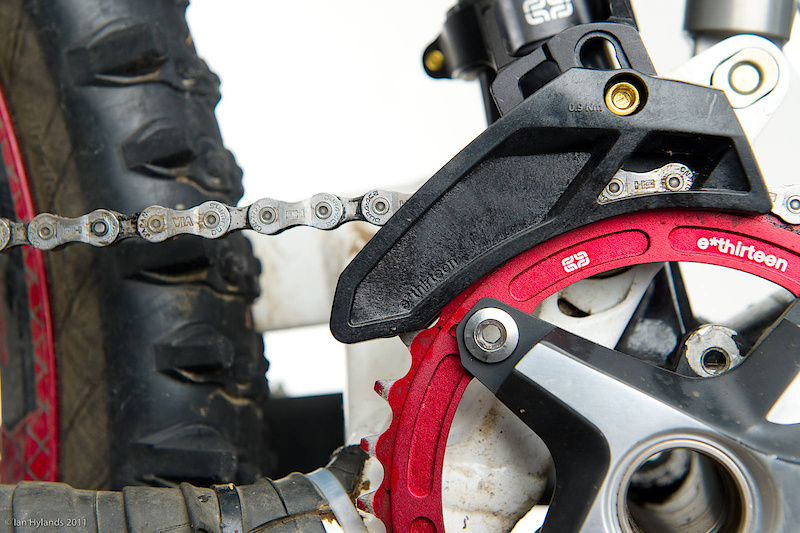
Best Gear Trend of 2011: 1 x 10 drivetrains
It would be pretty narrow minded of me to think that all riders can get away with running a single chain ring up front - varying degrees of fitness, bike setup, and local terrain are all factors that determine if one ring is for you - but converting my personal bike was the single best setup change that I made all year. The benefits include a simpler drivetrain with less to wear out or go wrong, a shorter chain that reduces chain slap, less weight, and how a single chain ring setup can build fitness faster than if you had a bailout gear to rely on. There are certainly drawbacks, though, with the higher gear range being harder on the knees, and that you are also bound to end up at the bottom of a climb that you can't pedal up, no matter how fit you are. I also have to mention the complete lack of proper chain guide mounting points on XC and trail bikes - manufacturers need to get their heads out of their asses on that front before 1 x 10 systems really take hold. SRAM and Shimano's large range 11-36 tooth cassettes (which is also available in a heavier 9 speed version from Shimano) have made running a single ring an option for more riders than ever before, but many are still hesitant to make the jump. All I can say is this: you're likely fitter than you think you are. And if you aren't, you will be after spending a few months with one chain ring on your bike. From my humbling experience I can say that the first while involved me cresting hills at my redline, very near meltdown point (I have some monster climbs nearby), but after some suffering through the first part of the Spring riding season I suddenly realized that I was fitter than ever before, earlier in the year than ever before. It may not be for you, but then again, you may surprise yourself.

Favorite Bike of 2011: Trek SuperFly 100
Are you wondering how I could choose a 110mm travel 29'er over all of the other bikes that I've spent time on this year, especially when the SuperFly clearly doesn't fit the mold of the usual Pinkbike test machine? The answer is simple: the bike blew my notions of not just how a 29'er behaves, but also what a properly done trail bike is really capable of. Looking at the numbers shows that the bike has an impossibly steep 71° head angle, massive 17.8'' chainstays, and just 110mm of rear wheel travel, but all of those gel together in the 29'er mixing bowl to create a package that can easily hang with longer travel 26" wheeled bikes on technical trails. No, the SuperFly isn't intended to fly over gaps or keep up with bigger travel rigs when things get gnarly, and I never rode with those intentions, but I've yet to ride such a competent machine when it comes to proper, technical trail riding. Simply put, I have a quiver of bikes to choose from, but when not having to ride a test bike I reach for the SuperFly for the majority of my saddle time.
www.trekbikes.comAre you wondering how I could choose a 110mm travel 29'er over all of the other bikes that I've spent time on this year, especially when the SuperFly clearly doesn't fit the mold of the usual Pinkbike test machine? The answer is simple: the bike blew my notions of not just how a 29'er behaves, but also what a properly done trail bike is really capable of. Looking at the numbers shows that the bike has an impossibly steep 71° head angle, massive 17.8'' chainstays, and just 110mm of rear wheel travel, but all of those gel together in the 29'er mixing bowl to create a package that can easily hang with longer travel 26" wheeled bikes on technical trails. No, the SuperFly isn't intended to fly over gaps or keep up with bigger travel rigs when things get gnarly, and I never rode with those intentions, but I've yet to ride such a competent machine when it comes to proper, technical trail riding. Simply put, I have a quiver of bikes to choose from, but when not having to ride a test bike I reach for the SuperFly for the majority of my saddle time.
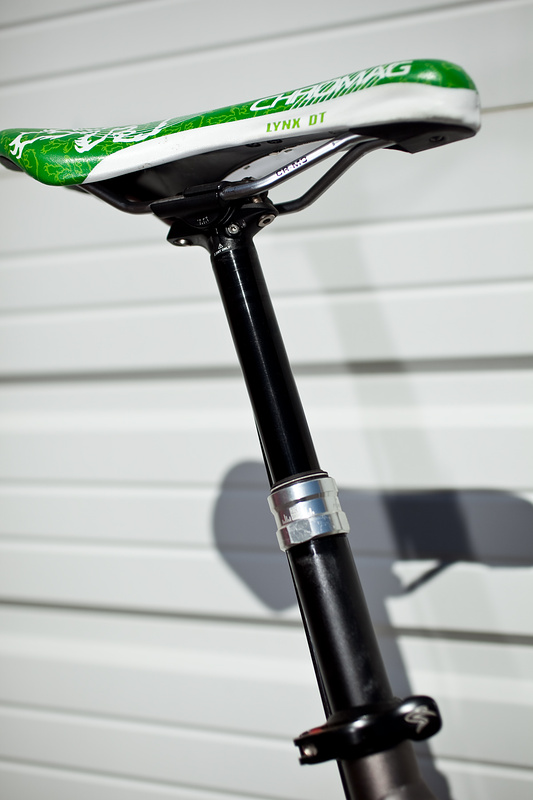
Best Product of '11: RockShox Reverb seat post
I'm long over trying to convince anyone that dropper posts are a must-have component that will forever change the way you ride your trail bike - if you don't believe it yet, you simply need to try one. There is a very clear leader in the dropper post category, with RockShox's Reverb proving to stand head and shoulders above the rest of the field. No, at $370 USD it's not inexpensive, but its hydraulic actuation gives it a level of consistency that I haven't found from any other post in my wet and muddy B.C. testing grounds. It's looking even better for the future, though, with the new Reverb Stealth employing hidden hose routing within the frame that eliminates that pesky extra loop when the saddle is slammed, even if that is only found as OE spec on select Trek and Scott models for next year (installation and routing complicate aftermarket sales, but we're crossing our fingers that it will happen). The dropper post category can sometimes feel as if it is still in its infancy, given the general unreliability found in many of the choices out there, but the Reverb is by far the least problematic of the bunch and the one product that I insist to have on my personal bikes.
www.rockshox.comI'm long over trying to convince anyone that dropper posts are a must-have component that will forever change the way you ride your trail bike - if you don't believe it yet, you simply need to try one. There is a very clear leader in the dropper post category, with RockShox's Reverb proving to stand head and shoulders above the rest of the field. No, at $370 USD it's not inexpensive, but its hydraulic actuation gives it a level of consistency that I haven't found from any other post in my wet and muddy B.C. testing grounds. It's looking even better for the future, though, with the new Reverb Stealth employing hidden hose routing within the frame that eliminates that pesky extra loop when the saddle is slammed, even if that is only found as OE spec on select Trek and Scott models for next year (installation and routing complicate aftermarket sales, but we're crossing our fingers that it will happen). The dropper post category can sometimes feel as if it is still in its infancy, given the general unreliability found in many of the choices out there, but the Reverb is by far the least problematic of the bunch and the one product that I insist to have on my personal bikes.
Author Info:

Must Read This Week
[UPDATED] Final Elite XC Results & Overall Standings from the Mairiporã XC World Cup 2024
42272 views
42272 views
Sign Up for the Pinkbike Newsletter - All the Biggest, Most Interesting Stories in your Inbox
PB Newsletter Signup
Second, the first time I heard of X-Fusion was seeing an advert if theirs in a copy of MBA many years ago. I remember thinking to myself "poor little company, they're either going to suck or just get blown out of the water by the big boys" I was also thinking that they wasted their money on the ad. Fast forward to now, I am so happy that they made it and are providing us with a great product at reasonable prices. In my eyes it was a daunting task that they were facing with the competition and that was coupled with a consumer group that is not exactly malleable when it comes to new companies (especially suspension) so I am very happy that they have made it this far. I have not tried any of their products yet but I will be buying a new fork in the next few months and they are at the top of my list due to all of the great things I hear about them.
26 is better!
No 29 is better!
26 is better cause it gets your hair all clean and shiny!
No, 29 is better because it gets your hair all silky smooth!
BTW Those G-form pads are Rad, and I love em!
fundamental training equipment... such as dumb bells, kettle bells, yoga mat etc.
+ some good training program i.e James Wilsons "DB Combo Drills" or go all the way for Ultimate MTB Workout
When much is give, much is required.
When freedom is given to the bike industry, the biking company can send out spies to see what people will pay for. ITs about numbers. Its about auditory and visionary hallucinations. The hallucination of happiness and to be tak'n care of. Or should I say " Being Tak'n......"
Bike companies can build a 5 pound downhill bike if you want one. The question their looking for is, Will you pay for one. They can go to numerous technologies in the oil industry, aeronautical instrustries, race car manufactures, medical and war industries tap their technologies to keep us roll'n for the next 200 years. The question is. How can they get you to lift that money out of your pack into their Vacation accounts. How can they convince you that you need one. That is the despicability that everyone is screaming about.
We are not mad at them. We are mad at us. Because we are using them like a drug to escape. And like any good addict, we are willing to pay and play the game to be tak'n care of and live in this fantasy bond. like any good drug dealer, they are willing to Father and Mother to us and groom us and lead us in, deeper and deeper and deeper until we cant live without them..
I think everyone should have to spend one year on a 2001 Enduro bike and like it.... with out buying anything new...
My 2 cents. Though if you like taking photos, as I do, I have two poster sized prints I took in Sedona in my living room that are amazing.
Not sure I would give up my trail bike for it but this will for sure be my XC race machine for 2012.
excess material and bad cut just all over by the looks of 2 pictures! I really hope he gets some that actually fit good and it will improve his quality of life 100 % !!!! cheers then.
Bulkiness is what was holding me back on knee pads. These may be worth a looksee.
Merry christmas and a happy single-ringing new year
Im a very sour person and I believe that if someone has trouble pedalling up on 32t, then he is most probably not using the 36t on downhills which is the most common chainring among "gravity riders" on single CG setups. I think it's a bit of dh racing influenced overuse than realistic approach to own abilities. So it's good to save the trouble, drop the extreme DH ego and start the 1x? "uphill for downhill" life with 32 and steadily move up when getting stronger
Having said that I also think the only seduction 10sp offers is 11-36 range. 9sp 11-34 isn't much tougher and works just fine with a bit of fitness. Apart from that, why isn't industry doing 9sp 11-36 cassettes? Steady gear ratio increase? Please leave that BS to roadies
And of course you can gain fitness in a month, or even two weeks. It depends how much riding you do. The only exercise i do is riding (not to keep fit, but because i love riding) and i guarantee that if i didn't, I'd be a fat tub of lard. A few months ago, when I had more time, I was riding 3 or 4 times a week, as opposed to my usual once or twice a week, if i'm lucky, and I saw my fitness improve significantly over the period of about 6 weeks (and I dropped a few notches in my belt). So keep your nonsense to yourself please.
Speaking of single chainrigs, if I was able to clear every hill I've seen on a road bike with a 39t granny and a 12-25 cassette how does it compare to a 36t with a 11-36 cassette on a trail bike? I know you get more rolling resistance on the trail bike and the terrain eats some of your power but do you think it will be good enough or I should just try the 2 ring setup and see how it goes? Kind of trying to build this machine so I can climb EVERYTHING and go down EVERYTHING too so I'm reluctant to go to the 36t right away but I don't want to buy a 2x chainguide only to switch 2 weeks later either.
great choice on the RS Reverb seatpost
fundamental game changer, super reliable and great backup from SRAM if it does go wrong
case in point? I snapped the trigger shaft on my 3 month old Reverb (totally my fault, snagged it on my shorts)
sent it back to UK SRAM Distrib. (fisher outdoor) and within 3 days had the damaged part replaced FOC and a full service thrown in for good measure
I really missed those 3 days of riding without my Reverb, but with my original Easton Haven rigid seatpost....something was missing from my ride, my left thumb kept going for the trigger every time I went downwards!!
The other is about the 1x10 set up, prevously my Yeti ASR7 came with the 36-24 front and 9v11-34 rear, it improved my strength to push such bike in step hills were I ride normally, it was very good in ratio/speed going up and going down. Now with the Ibis HD I would make the experiment, so I took and e13 33T and 34T chainrings to try each and choose the best for my riding zone. With the 34T was fine but the 36T in the back doesn´t made a big improvement from my 2x9 set up, so when I installed the 33T all the things changed, I can say that to come back to 2 chainrings setup for me will be hard, I will stick to buy some different sizes for the chainring and swap depending to the riding zone. It allow you reduce cables (not a big problem for me), you can save money if you are going custom building, more bling parts due colors and manufacturers designs and also you can play with your seatpost lever positions, I don´t know why this part still the Achiles hell of all the manufacturers to do a nice and friendly when need to push it.
I fall asleep every night and dream about Kenda doing a 2.3" Excavator in 29"...
Good news is that I was lucky and got the 2012 model as a replacement and can report that the 2012 model has fared much better. Had no problems with that one although if not bleed properly it will not be as responsive as it can be just as the 2011. I'd recommend the 2012 model. I would stay far away from the 2011-testing it out for a few hours and using it in the real world for a few weeks are completely two different things when it comes to the 2011 model. (2012 model has a black ring and not the silver one so you can easily tell the difference)
1X10! I would think 2X10 would be more versatile therefor a better call for best pics.
As for destinations, Sedona is awesome, but I would agree with another poster here who mentioned Southern Utah if only for more variety and equally amazing terrain/scenery. I can see why you wouldn't say Whistler, not exactly a destination for us
I've tried 2X10 a bit and I am surprised at how much I can climb in the 26X36. Mike is right, you are stronger then you think... and it is more efficient.
But I don't think I'm strong enough for only one ring in the front, what is it usually anyway?
There is other websites for clowns on big wheels!
As for the 29ers go?, well, for some reason I still believe that maybe its just the circus passing thru town.
I have multiple 650B bikes and they turn in just fine with the wheels front and back. Other brands have gotten the geometry perfect (Haro, Jamis, etc) yet somehow Intense still can't get it right? I think its more likely they don't want to invest in tooling for another model frame to get the tire clearance right in back for the eventual growth in tire widths that is going to come with 650Bs. As it stands now though they have a number of frames that fit 650Bs in back with just a wheel swap. Intense strikes me as a company that doesn't take that many chances anymore on new frame models because they're generally such poor sellers in most markets due to the high cost.
So, you have all this bikes and complain about the high cost of frames?
I knew it, you are just another posser from Canada.
You are in the wrong website.
I don't drink an Kool-aid, I ride things to form my own opinions.
YES...MULTIPLE...
I have a Haro Beasley AM hardtail in 650B (NeoMoto 2.35s) and I have a Eclipse Hero Carbon XC full suspension in 650B (Quasimoto 2.0s). I also have FIVE other 26er bikes that I can make into a 650B setup with just a wheelswap. That's one of the beauties to the wheel size, the outside diameter (27.5" give or take a tenth of an inch) being the same as a 26 x 2.7 means any 26er mountain bike or fork with the tire clearance for big enough tires can instantly become a bigger wheel bike. There's been rumours in the industry that Rocky Mountain, Specialized, Cannondale and Trek are all looking at adding 650B bikes to their lineups soon, and that Fox will soon be offering a 650B specific model to go with X-Fusion and White Brothers who already produce 650B specific or compatible forks.
And yes, I build all my own bikes from the frame up. I also handbuild all my own wheels and have done so for two decades now. I definitely do prefer bigger wheels to smaller ones now that the options for them are available. I have at present two built 29ers (a Salsa Dos Niner softtail and a GT peace 9r multi fully rigid), a Salsa Spearfish frameset as a over-winter project to build up, and I'm just waiting on the arrival of my crankset and finishing building my wheelset to put my Salsa Mukluk snow bike together. It technically is a 26er but its a 26 x FOUR INCH WIDE tire. So in actual inflated diameter its 29 inches.
And yes, even though I have a LOT of bikes, I do still value my money and don't see any reason to piss it away paying $2400 on an Intense frame when I can get better value/performance from another brand. Even if I do largely pay wholesale on bike stuff, I still wouldn't buy myself an Intense. If that makes me a poseur then so be it, but coming from a guy who can't afford a $250 Magura MT140 and yet claims to work in a store and sell bikes... that label didn't carry a lot of weight.
I work for the industry testing suspension products and I own an intense bike.
Did I mention former Dh Champ too?
And yes, you don't know what are you talking about.
I checked, and this guy (enrico650) is actually. A norba national champ.
Perhaps we are all wrong and you work for a major brand.
Or is all a just you trying look good.
As to enrico being a norba champion, yes... 2005 Masters class. Whoopy. I regularly rode with and have personally known MANY senior elite canadian national and WORLD championship XC and DH racers. So what. Racing creditentials in a small field event doesn't make someone an expert on something happening SIX plus years later.
As to trying to "look good", that'd be you and enrico... who's comments are consistently voted down below the threshold levels for normal viewing. A pair of yokes who are so anti-29er to be blind to what's actually happening in the industry, and who think their narrow little worlds they live in somehow makes them experts on them.
I know this and that and I know this person,and I rode with this person ,and the web is not the same without me.
At least this guy,(enrico) speaks his mind even if people don't like it. Its not a popularity contest.
This cat has more credentials and knowledge than you.
He has a picture of a prototype 2013 fork for 29ers. All carbon, its sick man!
More than I have seen from you.
He has a PICTURE of a 2013 prototype fork for 29ers.... Ohhhh wow. Really? That's all it takes to impress you? A photograph? Are you actually 46 or did you just put that on your profile to fool people into thinking you're not actually 16 ?
I'm sorry you think the point to this website is for people to impress you. I really do. It must suck to live a life where reading reviews on pinkbike is the highlight to your day and then bitching about the editors who then come out and state they like 29ers because they pissed in your 26er cornflakes.
I not only post this things to impress people,many of them ask me about the tech an future projects.
And just to show you that is not BSHT. When I'm done with my stuff I usually give people the chance to try it,and in almost all the cases I sell my stuff with the prototypes for prices sometimes below my cost. (GO TO MY BUY AND SELL ITEMS)
So if I'm such a bad person,why would I do that?
I'm not like you,trying to get money from old parts. If you have some decency you would give them away.
Shame on you!
This guy its not worth your time.
Maybe you can help me with a fork for my bike?
A friend os mine did it in a 12-21 Tiagra (or 105 dont remember). Get a 11cog from other cassete and replace the 12t from the tiagra (or 105)
Mind you, in road riding and stuff like that, the 29" rips up. And on really straight fast courses, the 29er will perform better overall.
But I personally prefer the 26 as said before.
I'm all for supporting local shops (I worked at the same one for over 10 years FYI), but it sounds to me like your issue runs deeper than what currency we use in our articles. We are very proudly Canadian, but, being a website, our audience is spread all around the world. USD is the most widely recognized currency, and the easiest for many to convert to their own country's dollar value.
- Like I said, we're a Canadian site, but our readers are from all around the world, much more so that what you'd find of a magazine's readership. In fact, US and Euro readers compare similarly to our Canadian numbers. We're based in Canada, but we are, in effect, worldwide. I understand the struggle of the LBS, but it's no fault of ours that Canadian LBS's prices are higher than in the US, and that fact isn't something that is in our agenda to hide. It isn't on our agenda at all... creating original content that is relavent worldwide is, though.
"Converting the dollar currencies does not result in an accurate price in your own country unfortunately, due to import duties, importer margins etc. By broadcasting the US price to Canadians and the world (but not explaining why Canadian prices are higher than a pure currency conversion) it makes the Canadian LBS look like they are hiking the prices when all they are doing is sticking with suggested Canadian retail, based on the higher costs that they are paying themselves."
- That is 100% true, duties and taxes vary from country to country, but using USD still gives people in other countries a much better idea of how much an item costs than using CAD. I'm not about to explain why Canadian prices are higher in one of my reviews or articles. I may be Canadian, but it isn't my job to keep your shop from looking like it is hiking prices.
"If you are a Canadian site, you should be quoting Canadian, not American prices."
- Like I said above, I'm Canadian and the website is based in Canada, but our readers are from all over the world, with a very large amount of them being located in the US and Europe. We are a worldwide site.
To all Canadians, but in particular the residents of the lower mainland, as a resident of Bellingham, WA I am very grateful to see you coming south every weekend and supporting our businesses. Thank you for all you add to our community!
Kootenay, you mention costs associated with import taxes, etc. Vancouver certainly has the infrastructure to handle direct shipping from overseas, perhaps your efforts would be better spent rallying other business owners to modify your tax code or distributor network to better compete with American prices than complaining about Mike spreading factual information.
or he is a smartass...
Oh hype...oh marketing...
Anyway...get to the point...
That´s my point about 10speed transmission and some trends (more than I would like) in bike industry. I just don´t give a f*ck if you agree with it or not.
Capitalism also allows you, the consumer, the ability to choose whatever products you like to buy. Conversely, you have the choice to NOT buy the ones you don't like. Your choice dictates where the industry goes. Hype and marketing? All businesses would go bankrupt without them.
I just don´t give a f*ck about that kind of discussion because Capitalism and Communism have his owns pros and cons...and you are talking about just these two.
Businesses and free consumer, ok, but what about the environment, resources... (I know I am purchasing another discussion
(btw: sorry for my poor english...)
1x10 much better than 3x10 - agree. Going uphill is bad for joints. Lifts and shuttles rule. No if we could do away with the rear derrailleur - would be great.
Airshocks are still lame compared to oilshock with steelspring.
Hydraulic seat posts - underengineered, silly.
Trek 71 degree head angle - silly engineering - 63 degree is state of the art. Superfly probably means "big engineering bug". Lame marketing exercise for the parrot tricot wearing crowd.
Ps: the guys who designed Gwin's world cup winning steed are the same guys who designed that "poorly engineered" superfly, just sayin
63 degrees mean comfort and safe handling at any speed. 71 degrees are sportyficated - a term only meaningful to the parrot crowd.
Oil shocks work - air does not. Simple as that. Can as well buy a hardtail and make the farting noise yourself. Airshock are very uncool ;-)
"Hydro post...make any...fr to xc more fun". So you buy a crippled bike and think a pogo post will make it more fun? Funny thinking...shouldn`it be fun from the beginning?
Steeds? Marketing driven innovation or real engineering? Come on - carbon is a real nightmare, environmentally, and product life is short and nobody will ride a 2nd hand carbonbike - unsafe at any speed. Market 1, customer 0.
shimano make a Deore level 9 speed cassette in 12-36T which is a great choice for all-mountain riders on 9 speed transmissions
its somewhat heavy (500gm) but works very well, and is super cheap