Trek Session 9.9 Review
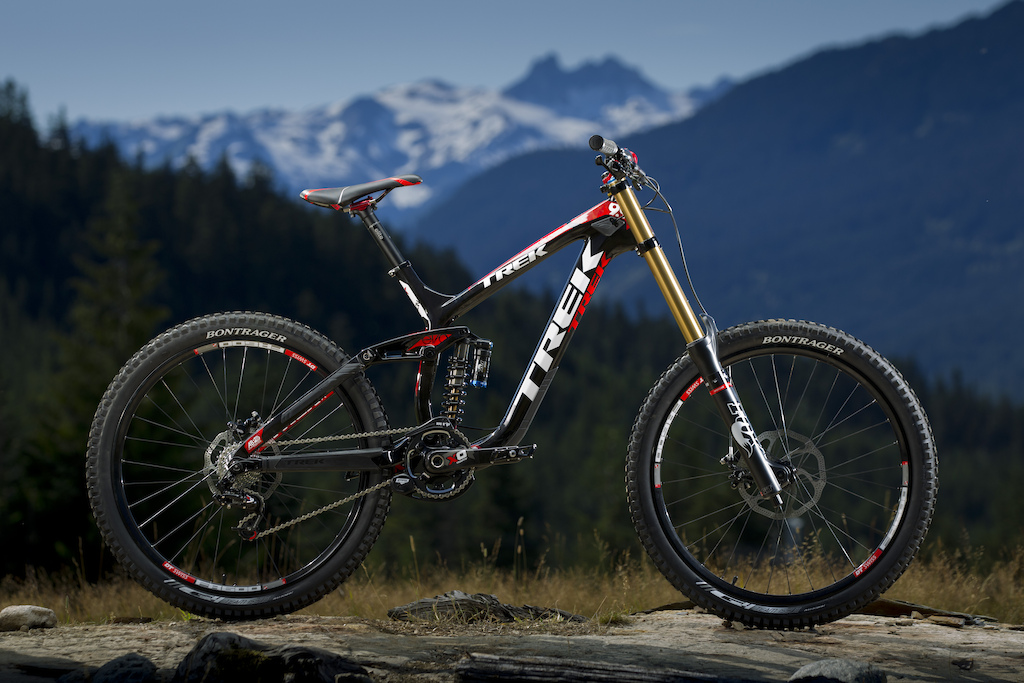 |
 The Session 9.9 is all new for 2012, and the forth incarnation of Trek's Session downhill bike. It is built around an entirely new frame for 2012 that is manufactured at Trek's U.S.A headquarters, with the front triangle, seat stays and EVO Link all being made from carbon fiber. Total weight for the production bike pictured above is 35lbs, making it the lightest production downhill bike available. The Session 9.9 is all new for 2012, and the forth incarnation of Trek's Session downhill bike. It is built around an entirely new frame for 2012 that is manufactured at Trek's U.S.A headquarters, with the front triangle, seat stays and EVO Link all being made from carbon fiber. Total weight for the production bike pictured above is 35lbs, making it the lightest production downhill bike available. |
The frame alone weighs just 7.2lbs (including the stock Fox DHX RC4 shock and its steel spring) and comes from the factory with a two year warranty. Trek hasn't been shy about wanting to create the most capable off the shelf race bike available and to do that it needed to come stock with first-class suspension. As such, the production 9.9 sports Trek-developed proprietary Fox suspension, including an interesting Fox Hybrid Air fork that uses an air-assist spring that you'll find only on the 9.9, and a custom rear shock tune that is currently used by the TWR team. Both get the full Kashima treatment as well. If you purchase the 9.9 as your race bike you will officially have no equipement excuses to fall back on after a bad day on the hill.

Filmed and edited by Levi VanderKwaak
Suspension Performance: Fox Racing Shox and Trek have worked together on the 9.9's suspension with the result being a fork and rear shock package that is unique to Trek, and a setup that would make most factory riders jealous. Up front, the Hybrid Air fork, with its titanium coil and air spring combination, performed exceedingly well. Setup was a breeze, requiring only a shock pump to make major changes to the spring rate instead of needing to remove the fork's top cap to swap out the coil. While many riders prefer the active feel of a coil spring (thanks to them requiring less sealing surfaces than an air unit), air sprung suspension has the advantage when it comes to being able to quickly fine tune the ride for the terrain. Fox and Trek have managed to merge the best of both worlds with the Hybrid Air fork, with it feeling every bit as active as a purely coil sprung unit, but with the ability to tune the spring rate in the smallest of increments. Those who like to take the time to find their bike's ideal setup will be in seventh heaven with the Session's trick Fox fork.
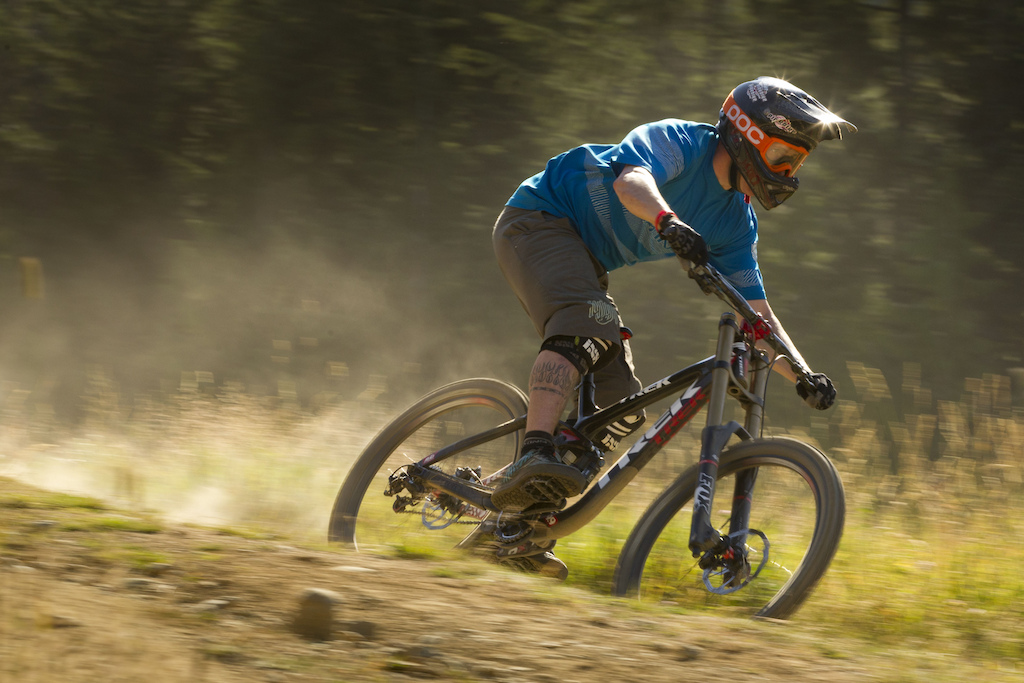 |
| Pinkbike's Mike Levy up to speed on the Session 9.9 on some familiar Whistler terrain. |
On dirt the Hybrid Air fork felt a touch more progressive than a standard 40, likely down to the ramp up caused by the fork's air cartridge. This is a welcome addition to the performance, though, with it meaning that we didn't need to be quite as aggressive with the spring rate and high speed compression setting. This allowed for a slightly more forgiving ride, and in turn meant that this particular 40 was easily the most active that we've ever ridden. The Fox DH fork often receives criticism for its sticky feel (caused to the large surface area of the fork's 40mm diameter stanchions), but we had no such complaints with the unit on the front of the Session - it did a great job of eliminating the chatter from small bumps before it could be transferred to the rider, and in turn, surely improved traction at the front end as well. We've been critical of Fox's Kashima coating in the past, with the added smoothness of the gold coating being easily offset by many factors, but it likely played a role in the solid performance of the Hybrid Air 40. With a more active, yet progressive and controlled stroke, the Hybrid Air fork is the best performing 40 that I've ridden.

Out back, the World Cup spec DHX RC4 damper made for a very unobtrusive rear end - you know that good things are happening back there when the rear of the bike feels invisible. It simply went about its job of moving the wheel out of the way as fast as possible without complaint. It didn't matter if it was a 10" tall ledge that was trying to stop the bike, or hundreds of small spider roots that were splayed across the trail at every angle, the damper made everything feel like less of an event than it should have been. In fact, the Session's custom tuned DHX RC4 is the first shock that we've felt has equalled the much heralded Cane Creek DoubleBarrel in terms of outright performance, with the Fox shock being much easier to wrap one's head around as well. The tailor made shock features custom valving, but also a new check valve on the main piston that allows for oil flow on rebound and blocks it on compression, helping to improve the bike's stability. But one has to wonder how much of the rear end's action can be put down to the production bike's exceptional Fox shock, and how much can be pinned on the revised leverage ratio that is said to handle square edges much better (thanks to tweaked rocker link, seat stay and lower shock pivot locations). Either way, whoever ends up with the Session under them is going to have what we feel is the most dialed package that any rider could hope for. No aftermarket suspension upgrading needed, no sending the shock away for tuning, and certainly no excuses.
Handling and fit: Looking back at some of the more recent downhill rigs that we've spent time on reveals a host of bikes with very specific characters - some forced us to really ride the front of the bike, while others had us feeling as if we were in the backseat regardless of how many times we turned the dials and upped the spring rate. Yes, good riders have shown that those machines can certainly be ridden fast, but they do suit certain riding styles more than others. A neutral bike, one that doesn't favour a particular riding style over another, always results in a fast ride, and the Session ticks that box. The carbon bike simply went fast without making a fuss about it. Lean into the turn and the bike responds exactly how you hope that it would: with a planted feel that gives the sensation of it using some sort of traction control in order to remain so calm. It didn't matter if it was a fast, marbly sweeper, or a tight and off camber corner, the 9.9 tracked predictably and was easily controlled. Some of this is a result of the 9.9's impressive G4 Team tires, but it isn't that simple. While certain manufacturers out there are pushing common sense with bottom bracket heights in the mid 13" region, the Session's 14" BB height seems rather mundane. But it also makes it quite clear that a bike doesn't need to be scraping the ground constantly in order for it to rail corners. After our time on the Session it is easy to see why Gwin, with his precise riding style, gets on so well with the this bike.
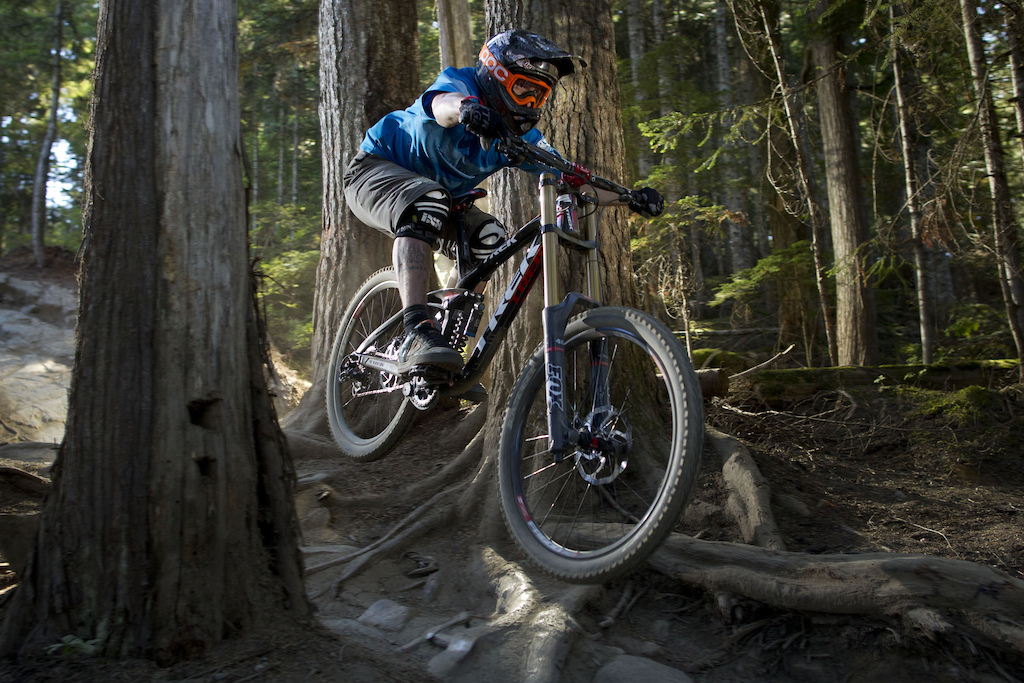 |
| The Session's top flight suspension devours nasty terrain, big and small hits alike. |
The bike's staggering performance has to be put down to a number of different factors, with the dialed suspension, proven geometry and the bike's active ABP rear end all working together to create a formidable package. The predictable nature of the bike, no matter what type of corner or terrain, must be due in large part to the bike's active suspension that allows you to anticipate the bike's behaviour, but also the RC4's trick valving that works to keep the bike from pitching. This attribute also means that the 9.9's geometry remains relatively stable, even if you're not, and we're convinced that it is this reason that the 9.9 is the animal that it is. Can some of the praise also be heaped on the bike's carbon fiber frame? There is a good argument for it playing a part as well, with Trek's engineers making great efforts to tune the bike's feel by experimenting with different carbon layups, but we can't say how much it counts for on the trail. What is impressive, though, is how stiff the frame feels regardless of its 7.2lb (including the Fox shock) frame weight - there are many bikes out there that we consider to be noodles in comparison, despite some of their frames weighing 2lbs more than 9.9s. InTension in action? There is undoubtedly something to it. The 9.9 would likely not be in the same performance bracket that it sits in if one or two of the above qualities were missing, but the package as a whole adds up to a bike that should be sainted for its ability to not punish mistakes. Hang off it any which way you'd like, ride the brakes, take the wrong lines - you'll suffer for it less on the 9.9 than on any other downhill bike out there.
Not so fast: The 9.9 is closer to being without fault than we would have ever expected, but a racer always wants more when talking performance. The one area where the Session may not be best-in-class is when it comes to putting the power down. It steams ahead in a satisfactory way, but it certainly doesn't have that rare, inspired feel that a few other steeds can boast about. It actually feels a bit humdrum when you're asking your legs to do all they can to make up lost time.
The Session also gives the impression of being slightly shorter in the cockpit than some other downhill bikes, with the medium size's effective top tube length feeling shorter than its 23" measurement would have you believe. Riders who would usually be aboard a medium will want to have a close look at the numbers, or even better, take a seat on one to get a feel for it. We wouldn't go so far as to say that the front end is cramped, but we were aware that the bars seemed a touch closer to our knees than we were used to. At 5'10" I could ride either the medium or large, but would likely prefer the longer of the two sizes. The bike's wheelbase also grows by a full inch between the two sizes, from 46.5" to 47.5", with the extra inch coming solely from a longer center to front number.
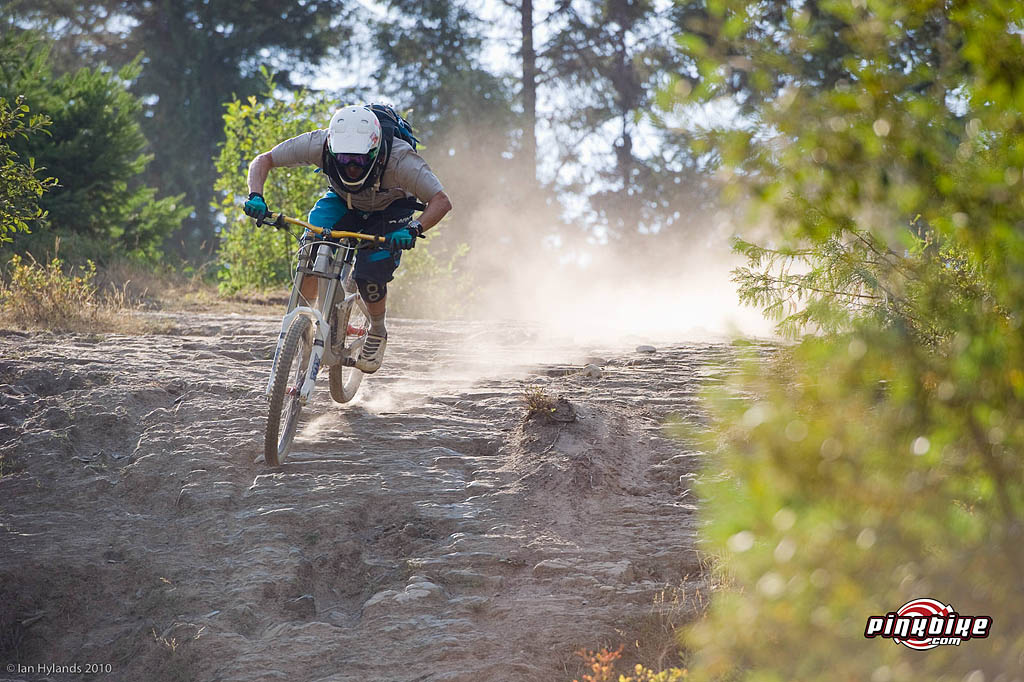 |
| Trek's Andrew Shandro puts in the testing aboard an early 9.9 prototype well over a year ago. |
What about those parts?
• The Session 9.9 comes stock with a few different Bontrager components, including its 2.35" wide G4 tires that bear a striking resemblance to the popular Minion. This isn't a coincidence, the Minions are a proven performer, but the G4 tires do have some subtle differences to the knob shape that actually make us prefer it over the Maxxis rubber. The tire has a much more predictable feel than what we've come to expect from the Minion, in our opinion allowing them to not only hold an edge longer, but also break traction in a less eventful manner that feels more controlled. Some riders will take issue with their 2.35" width, preferring to run a wider option for their trails, but we were happy with how they performed. Braking traction, as you'd expect from looking at the design, isn't as good as found with some other tires.
• The bike's lightweight Bontrager Rhythm Pro Carbon handlebar may look a little strange thanks to its unconventional shape - the sweep takes place further out from the stem clamp than other bars - but it does feel comfortable. Its 750mm width would have been considered massive at one point, but we would have liked to see a wider bar on the 9.9, possibly the new 820mm wide carbon fiber Bontrager DH bar that will soon be available. That's 32.28"!
• Are carbon crankarms up to the task of life on a downhill bike? After smashing the XO DH arms into rocks, landing to flat too many times for our liking, as well as a few eventful pedal strikes, we'd have to say that yes, they can handle whatever you want to throw at them. They also just happen to weight in at 750 grams (including the GXP bottom bracket), lighter than many cranksets built exclusively for cross-country use.
• The rest of the XO DH group performed just as well, with the brakes offering up plenty of power that was easy to control, enough that we'd question the need for average sized riders to make the move to the heavier Code stoppers.
• MRP's 156 gram G2 SL ups the bike's carbon content even more with its carbon fiber backplate that is sure to get the doubters talking, but it proved to be reliable and strong enough to brush off multiple impacts from us grounding the bike out on high points on the trail.
• While the bike's build performs well, as we'd expect given its $8,929.99 USD MSRP, we just couldn't come to terms with the stock grips. Every rider who sat on the 9.9 said that swapping out the grips would be one of the few changes that they would make. Are we nitpicking? Probably, but it just goes to show how close the carbon Session is to being without fault.
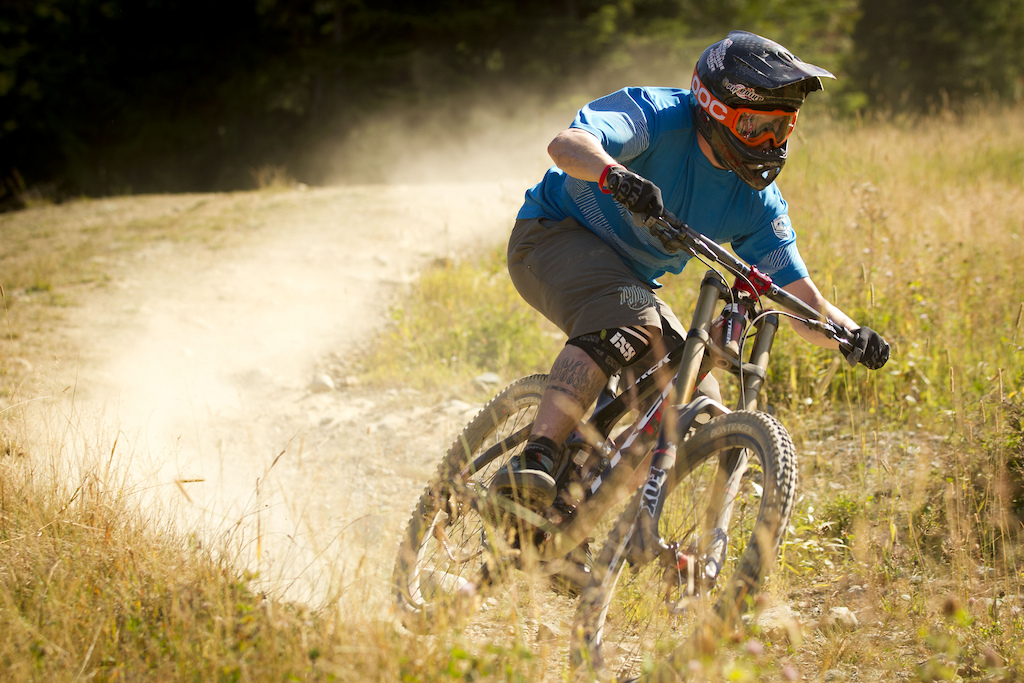 |
| The bike's surefooted feel inspires confidence on fast or lose terrain, with its G4 rubber impressing us time and time again. |
Pinkbike's take:
 | Trek has put a lot of effort developing the Session into a package that performs well on any terrain, and it showed when the bike was ridden on the edge of our personal limits. When the point is reached where rider skill level is maxed out, when things can start to look ragged and like you may only keep it up another few seconds, this is the time when the 9.9 comes into its own. The new Session is the most forgiving bike that we've spent time on in this regard. To put it clearly, the 9.9 will simply not punish rider error as much as other machines. This is a highly significant point when talking about a bike that has been designed as a no holds barred race bike. In the heat of all this praise it's important to keep in mind that race times will always come down to rider skill, no matter how great the bike is. Not to shatter your dreams, but don't expect the 9.9 to be lifting you up from sport category pack fodder to pro-level podium contender. And the Session 9.9 will surely have its critics. Some will never be convinced of the validity of using carbon to build a downhill frame, others will point out that the Bontrager components, as well as they perform, have no place on a bike costing $8,929.99 USD. Hell, the frame alone retails for $4,199.99 - that's more than many off the shelf complete bikes! Price and components aside, the fact is that Trek has designed and built the highest performing downhill bike that we've ever tested. Strong words that are sure to stir the pot, but we have to give credit where it's due. - Mike levy |
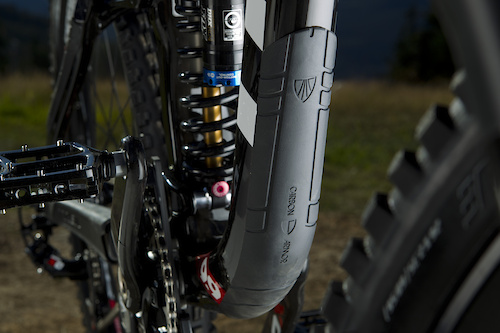
SESSION 9.9 FRAME DETAILS:
• Intended use: Downhill racing
• All new carbon frame
• Carbon EVO Link and seat stays
• 210mm of rear wheel travel (up 10mm from last year)
• Tapered E2 1-1/8'' - 1.5'' head tube
• Frame is approx. 800 grams lighter than the TWR team's aluminum version
• ISCG-05 chain guide tabs
• 12 x 157 ABP DH rear axle spacing (slotted 150mm rear end for easier wheel alignment, can also accept standard 150mm wheels)
• Internal or external cable routing for both brake and derailleur
• Custom Fox RC4 shock with TWR tune
• Adjustable geometry allows head angle range from 62.5 to 65.4 degrees
• Revised suspension rate for better square bump performance
• Frame weight: 7.2lbs (w/ Fox DHX RC4 shock with a steel spring)
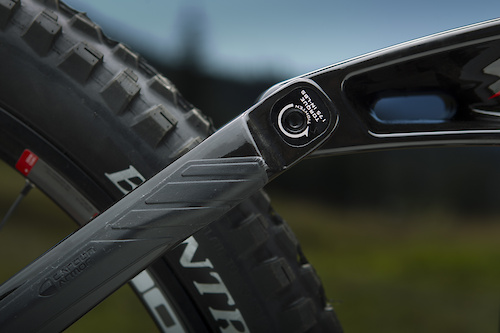
The bike's low weight and suspension is only part of the story, with its adjustability also playing a big role in its performance. Between the Session's Mino Link system (rotatable chips used to attach the seat stays to the EVO Link, pictured to the right ), the Cane Creek AngleSet headset that comes stock, and 12mm of adjustability in the Fox fork’s axle-to-crown length, the new Session has over 28 geometry settings. This unique combination of adjustability provides 1/3 of a degree adjustments at the head tube, and bottom bracket adjustments down to the mm. Excessive? Certainly not, considering the bike's intentions as a top tier race machine. It should also be stressed that although using a combination of the Mino Link and AngleSet allows you to select a head angle between 62.5 to 65.4 degrees, the Mino Link's prime intention is to tune the suspension by varying the leverage ratio to either devour square edge impacts or to pop, enabling the rider to clear rough sections with ease. The AngleSet and axle-to-crown length compensate for the geometry changes made by altering the Mino Link.
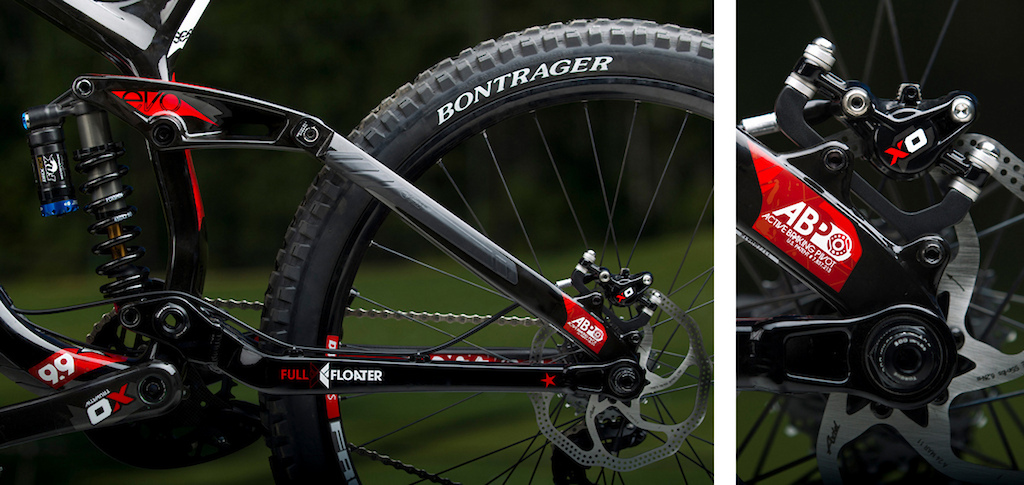 |
| While the layout may look the same as previous years, closer examination reveals slight changes to the pivot locations that have been made, enhancing the bike's ability to handle those square momentum killing impacts. The main swingarm pivot is still in the same location relative to the bottom bracket, but both the EVO Link rocker's shock pivot and seat-stay pivot locations have been changed slightly. Trek has also altered the length of the swingarm's 'Full Floater' extension at the lower shock mount. Why? Trek is adamant that the suspension's leverage rate plays a much larger role in allowing the bike to carry momentum over rough ground. |
The new design features a slightly flatter rate through the middle of the stroke - where the bike spends a lot of its time - which allows the rear wheel to react quicker to abrupt impacts that try to suck your speed away. In simple terms: the rear wheel can move out of the way faster if the suspension uses a flatter leverage rate, and the faster the rear wheel can move out of the way, the more momentum the bike will carry. That flatter rate also adds an extra 10 mm of rear-wheel travel, upping the total amount to 210 mm. Of course the 9.9 employs Trek's ABP system that allows the dropout pivot to rotate concentrically around the rear axle, limiting the amount of rotation between the caliper and rotor, making for more active suspension under braking, but the design is also interchangeable to accept both common 12 x 150mm hubs and the new 12 x 157mm size.
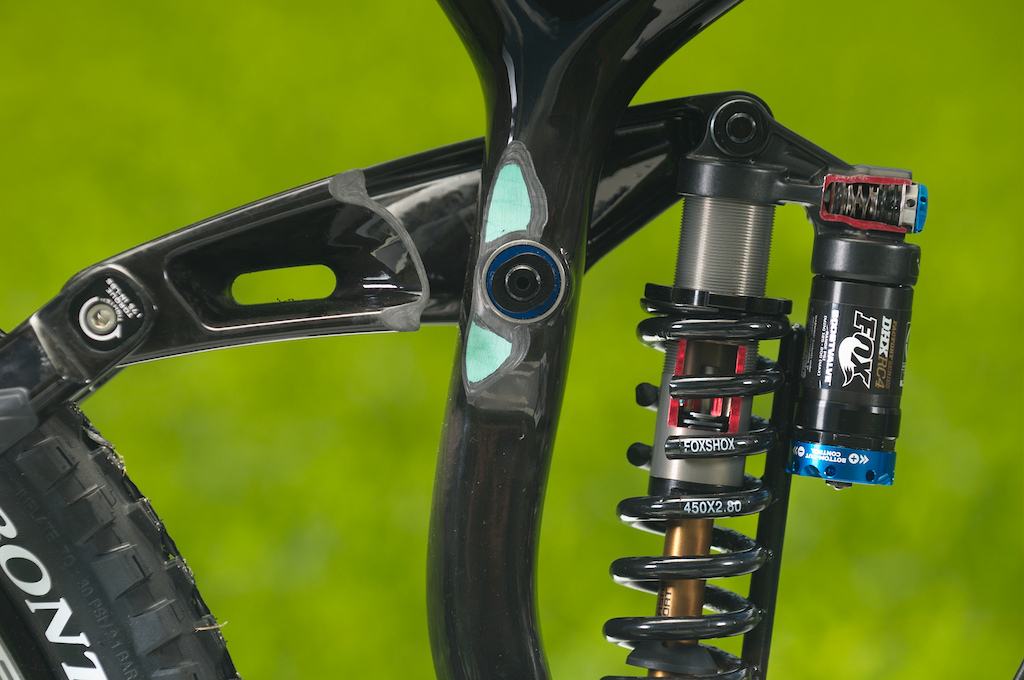 |
| Some of the 9.9's most interesting technology is hidden within the frame. Like all top carbon frames, the Session frame is built using a bladder - a lightweight inflatable balloon is inserted within the frame to apply pressure to the layers of carbon as they cure inside the mold. A rubber bladder cannot apply even pressure to tight and or complex-shaped sections within the frame. According to Trek, instead of adding extra carbon to reinforce these trouble spots, it uses a proprietary low-density, ultra-stiff material inside the frame to evenly pressurize these areas from within. Interestingly, Trek claims that this method, referred to as 'InTension', actually results in tube sections that are four times higher in flexural strength and eight times as stiff. InTension helps build a lighter, stronger carbon structure by replacing inner layers of carbon with a material that fills more volume, but with significantly lighter weight than a carbon-only structure. Presently, the Session 9.9 is the only frame in Trek's lineup that currently uses InTension, but Trek is so pleased with the performance that it is likely to be found on other models in the near future. |
2012 Trek Session Geometry:
Between the Session's Mino Link system (rotatable chips used to attach the seat stays to the EVO Link), the Cane Creek AngleSet headset that comes stock, and 12mm of adjustability in the Fox fork’s axle-to-crown length, The new Session has over 28 different geometry settings. This unique combination of adjustability gives you 1/3 of a degree adjustments at the head tube, and bottom bracket adjustments down to the millimeter. Excessive? Certainly not considering the bike's intentions as a top tier race machine. It should also be stressed that although using a combination of the Mino Link and AngleSet allows you to select a head angle between 62.5 to 65.4 degrees, the Mino Link's prime intention is to tune the suspension (by varying the leverage ratio to either devour square edge impacts or to pop, enabling the rider to clear rough sections easier, while the AngleSet and axle-to-crown length are used to compensate for the geometry changes made by altering the Mino Link.
MINO LINK RACE - big bumps, super fast, steep, maximum square edge absorption
 |
MINO LINK PARK - maximum pop for jumping, higher BB for super rough and rocky, fast-pedaling courses.
 |
*size medium, applies to both carbon and aluminum models
Options: It goes without saying that a $8,929.99 USD mountain bike does not make sense for the vast majority of riders, regardless of how great it is. But it gets interesting when you take a look at the two aluminum framed options, the $6,299.99 Session 88 and the $4,619.99 Session 8. While they are missing some of the suspension trickery that is employed on the 9.9, the genes of a fast bike should still be present, especially when you consider that the geometry is identical to their more expensive brother. We are a bit disappointed to see that Trek decided against offering an aluminum frame on its own.
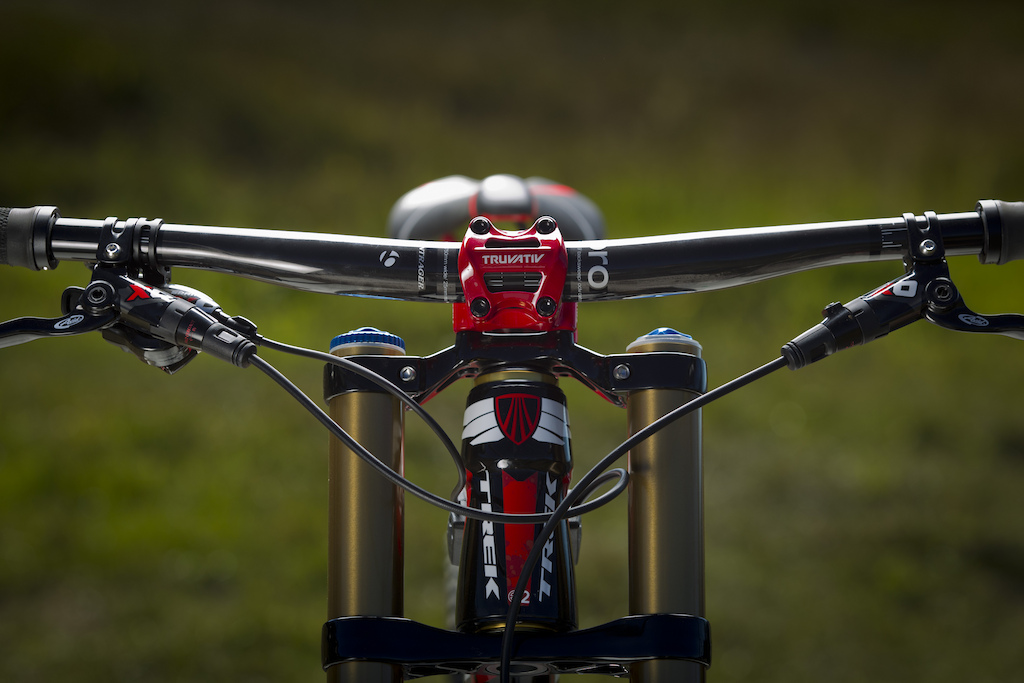 |
| The 9.9's component spec consists of a mix of SRAM, Avid and Truvativ's new DH specific group, along with a some of Trek's in-house Bontrager parts sprinkled in. Some may be disappointed to see the Bontrager branded post, bar, tires and rims, but it needs to be noted that Trek has spared no expense when it comes to the bike's suspension. The custom tuned rear shock is the only production damper that makes use of a one way check valve on the main piston, something proven to be beneficial on dirt bikes to control chassis movement, and the Trek only fork is sprung with a combination of air and a lightweight titanium coil spring to keep the weight low and adjustability high. Both units receive the full Kashima treatment as well. |
| Specifications | ||
| Release Date | 2012 | |
| Price | $8929.99 | |
| Travel | 210mm | |
| Rear Shock | Fox DHX RC4 w/ custom TWR tune and Kashima coating | |
| Fork | Fox Factory Series 40 Fit RC2 w/ Hybrid Air and Kashima coating, 203mm of travel | |
| Headset | Cane Creek AngleSet | |
| Cassette | SRAM PG-1070 11-26, 10 speed | |
| Crankarms | SRAM X0 DH Carbon | |
| Chainguide | MRP Carbon | |
| Pedals | Wellgo MG-1 | |
| Rear Derailleur | SRAM X0 DH | |
| Shifter Pods | SRAM X0, 10 speed | |
| Handlebar | Bontrager Rhythm Pro Carbon | |
| Stem | Truvativ Holzfeller | |
| Brakes | Avid Elixir X0 | |
| Wheelset | DT Swiss 240s 20mm front hub, 12 x 157mm rear hub, DT Swiss FR 600 rims | |
| Tires | Bontrager G4 Team | |
| Seat | Bontrager - Evoke 4, titanium rails | |
| Seatpost | Bontrager Rhythm Elite, 31.6 | |
Photos by Sterling Lorence
Author Info:

Must Read This Week
Sign Up for the Pinkbike Newsletter - All the Biggest, Most Interesting Stories in your Inbox
PB Newsletter Signup
You could build a world cup spec V10c for 2/3rds of that...
still, in a couple years this technology will have trickled down until it's available at a price point that we can all afford it. and that's the true worth of such development in my opinion.
This bike is not for everyone. But they made it for their WC golden boy, and he deserves it. And you can buy one. If you have the money. How cool is that? Models like these push the envelope of bicycle design and its how we move forward. This has been done for generations in motorsport, as well it is common in road cycling. The lessons learned trickle down to everything we ride, at all price points. Not all bikes are designed around being a good value. Did I mention you can buy one?
As the customer i dont want to be hearing that i am paying (a massive price) for some expanding foam inside my bike.
What's more as many have said there are alternatives as equally desirable as this such as the Summum and the V10 at a much more bearable price.
Internal cable routing, bash gaurd on down tube and integrated bumpers in frame.
Other company's should take note.
But..... $9000.
For a racer at a level (that actually means something) who needs to shave off 3-5secs off a run.... maybe.... but for everyone else.... forget it.
I just built my aluminum frame DH bike up for $4800 and change and it weighs 39lbs.
$4000 extra is a lot of coin for 4lbs and a custom fork and shock that is not going to make the average rider much quicker.
I'll just work on my riding to save the seconds with my stock Fox DHX RC4 and Boxxer.
I'll take the left over $4000 and buy the wife something to keep her happy as well.
That's money well spent IMO.
I did read the article before commenting.
A hybrid air fork sounds great along with all the other advantages packed in there but $4000 extra is still $4000 dollars extra.
The buck has to stop somewhere.
These things are not going to make much deference for most riders.
Don't get me wrong, I'm not Trek bashing.
I'm not tied to any brand.
If a company can give me a bike that preforms great with decent spec at a reasonable weight and price that makes me grin...I'm all in.
I'm saying $4000 dollars more than my non-carbon build that is good enough for me.
That bike is amazing btw....
and how much is specialized carbon demo? id rather that tbh :/
more like ...
shimano sis vs saint
or kia vs lamborghini
or call of duty vs battlefield
or ....
haha this is boring now idk even know what started this?
This bike is amazing end of story!
PS The argument is meanwhile in Canada
and anyway f1 cars gearbox's are somthing like £60,000
but fair point cause treks frames gotta be £4 - £5000 alone
yet thats the price of a aluminium 2011 88 full build
still what a wicked dream bike
it makes you wonder what will be next in line for performance bikes it feels as though were at the limit now..
although people may have said that 10 years ago lol
But 8300$ is taking the piss.
I think there are better ways to blow 9000 bucks....
Comparing it to the SC V10c, the vpp counterpart is almost 2k less fully built BUT if the ENVE rear triangle does go into mass production, there's no doubt in my mind it'll tip over the 8k price easily; seeing the Session 9.9 frame is almost all carbon sans the chainstays. The prices of these high-end race bikes are all up there. Hell the Norco Aurum is almost the same price.
But then again, all our whining go amiss compared to the prices of road bike frames, easily in the 8k range for a frame and fork. Given the price difference is attributed to who buys/can afford 'em. Theres a higher/bigger market for road bikes compared to mountaim bikes, much more on gravity oriented ones. The DH market is still so small compared to other disciplines.
Buy what you want and what makes you happy as a rider. AND it won't hurt having this, or any other high-end carbon sled. Thats just my opinion.
if someone wanted to go ahead and just giiiiive me one though.....
Anybody concerned about the price I recommend this article on bike radar:
www.bikeradar.com/road/news/article/10000-bikes-whats-the-point-32350
InTension technology smells of "can internal bladders used during moulding process of a carbon downhill frame be removed easily, fast and cheap without compromising structural design guidelines?: WE HAVEN'T SOLVED THIS - since you pay so much, here's a good story why do we keep them inside"
The 9.9 isn´t just another bike, in fact for me when you buy this, what you getting is a WC rig, not a simple bike, big difference. This is the same kind a deal that you would do if you want tho enter in Rally Racing. You would have to buy a nice car and tuned up with new components. In this case, is like you could buy a tuned rally car right from the store, no need to add new things.
Sure that are more more "realistic-price" WC rigs, but this will also gives you status.
I think what Trek is doing, is bring almost-prototype technology to the public. And dont forget, im not sure, but this is (or is close enough) to the rig that win 5 WC races.
by the way if the carbon bike construction was so sick, why they didn't put the lifetime warranty for the frame?
Now that whuld be Porn!
Nice frame but if it does not pedal as good as a i-drive or have better scuare edge bump absobtion, then why bother...
I like the shock technoligy, ill just wait for Fox to release those coil/air shox - forks and we are Rockin.
Cheers.
Well on A-Line kind of track a DH bike can have 11"BB and no one would give a sht. On Olympic XC course you can roll easily with roadie BB height. Mountain biking goes to sht
Also close to no bikes are at 13'' today. Mine is 13.7'' and I can land in rockgardens. I only grind when I get to slow and fall into holes between the rocks too much and that only happens on crazy rockgardens like in maribor but that's my fault. You have to learn to ride your bike.
Also How high is slash? last time I have checked it wasn't that low.
www.bis.gov.uk/files/file34992.pdf
www.recycledcarbonfibre.com
Both Trek and Spec seem to be on board:
www.cyclingnews.com/news/trek-embarks-on-ambitious-carbon-fiber-recycling-program
www.bikerumor.com/2011/11/10/specialized-accelerates-carbon-fiber-recycling-program
Tadow
Regardless i still think it looks great and love the idea of the rubber or whatever it is on the rear swingarms to stop the rubbing from your feet.
It is a beautiful bike, but i dont think it will make you any faster than something thousands less. I think they are also trying to capitalize on their recent racing successes (dont blame them). Everyone wants to ride Trek right now. some will give in and buy so they can claim they have the "best". DH is starting to hit its trendy stage, and thats what i think we are starting to see IMO.
Setting the marketplace up for the next round of price increase if you will.
All successful business do it from the latest 3D TV with more inputs to that shinny new sports car that parks itself.
Seller says - Look what we can do and you can have for $9000!
Consumer says - Very nice but $9000, that's way to much!
Seller says - Expensive but high quailty and state of the art.
Consumer says - True, but more than I need.
Competitor says - We can do something close to that for less. Only a little more than what you pay now.
Consumer says - That seems a little more resonable for upgrades.
Seller says - That competitor's is good but maybe our lower end models may suit you for a little more than you pay now but not as good as this state of the art model.
Consumer says - Well, let's take a look at one of those.
Seller says - right this way.
Final choices?
Consumer buys the state of the art one because they just have to have it.
Or...
Consumer buys the competitors product at a higher price than what they pay now.
Or...
Consumer buys the sellers lower end product at a higher price than what they pay now.
Or...
Consumer dosen't buy anything and does without. (unlikey, we like stuff to much)
Bottom line - Margin goes up for marketplace and consumer goes away happy with a new puchase.
For a little more than you pay now, of course.
It's all bid-nezz kids... it's all bid-nezz.
The scratch was ok, but more all-mountainy.
The session88 was the perfect FR bike!
I just cant imagine someone on this or a session 8 at rampage.
Come on, trek, build a Freeride bike, not all of us are fast enough to dh race!!!
Freeride requires skills and progression!!!!
It says it was 'no expense spared'. It's got bontrager parts all over it, which are not common place on most bikes, and aren't 'no expense'.
Carbon 820mm bars... are you joking? 800mm bars are excessive, yes it gives you the option to cut them down but do you really want to go cutting carbon?
End of it all, ridiculous price tag.
On one of the largest mtb websites, at least give slightly realistic reviews. Bias is in any report, but there's a limit.
I have an older session 09 or 10 I think? I love it! Amazing bike. If this one is that much better then wow.
As for those bitching about price, its a Trek? They're expensive! deal with it. If you did buy it you would not be disappointed.
did anyone else notice in the movie him smash the rear derailer at 2.09 ??
The 2012 Norco Aurum LE is 34.7 lbs (www.norco.com/bikes/mountain/dh/aurum)
If I had $9k.