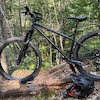
I have bled these brakes multiple times. Zero bubbles come out and I also pressurized from the caliper side to finish filling the system. I checked torque on every nut and bolt in the system. Zero leaks. Rotors front and rear and pads front and rear all measure the same. New fluid. New pads. New rotors. I have elevated the bike front and rear to allow air to travel up. The rear brake lever moves in towards the bars 4mm more than the front and it’s noticeable to me when stopping. Is this normal for these brakes? If not, whats next?
You could still have a bubble in there. (1) Did you degas the fluid? SRAM used to have a video showing the way to remove gas trapped in the DOT fluid. Even though they may have removed that step from the published process I still do it. Degas the fluid before starting the rest of the bleed. (2) Did you cycle/tap/flick the lever? Repeatedly tapping and cycling the lever may help dislodge a bubble. (3) Did you rattle/vibrate the whole line from bottom to top? Try using an electric razor or the side of a sander - hold it against the caliper and work up the line to the lever to dislodge any sticky bubbles. (4) Are the pistons moving symmetrically? If you have a sticky piston then you won't have great performance that you can feel at the lever. Remove the wheel and the pads. Fully seat the pistons in the caliper. Use block to restrict 2 of the pistons from moving and carefully press the brake lever. The other unrestricted pistons will move. Pressing too hard will pop them out of the caliper so either be super careful or add a spacer between the unrestricted pistons to physically prevent full throw. Observe piston motion to see if they both move at the same time - you may see one piston reluctant to move. You can 3D print piston blocks, use carved pieces of wood, use part of an old rotor or use selected tools in the garage being careful not to scratch the pistons. Very carefully cycle and lubricate the pistons with a bit of DOT fluid and a Q-tip. Do this for all the pistons in the caliper and they should start moving at nearly the same time during lever pulls.