DH-One by PDC Racing… Handling by Lotus?
When I last cast my eyes on the Arbutus Red PDC Racing prototype DH-One last January at Vancouver’s Outdoor Adventure Show it wore far fewer bruises; it and its metallic black twin were freshly painted dolled-up showpieces centre stage in PDC Racing’s display booth. It has since been ridden hard by a lucky few as it made its way around media circles as a test sled. So when Pinkbike’s turn came around I eagerly drove the hundred or so kilometres to meet with the prototype’s master and keeper, Kyle Kusznieryk at B.C.’s picturesque Horseshoe Bay. Half way for Kyle journeying from PDC’s shop in the quiet seaside town of Qualicum Beach on Vancouver Island - where he and his partner, Jordan Macey designed and will manufacture their rig - Horseshoe Bay was the ideal meeting place.
The project is wholly theirs; from CAD concept to current form the work has taken place in Qualicum Beach, a refreshing change considering the recent cost saving trend of many manufacturers, big and small, to catalogue order from Taiwan and re-label as their own. Aside from the US made Romic rear shock (standard issue was set to be an Avalanche shock as mounted on the prototype, custom tuned to rider specs, this is now an option), the bike is all Canadian beef.
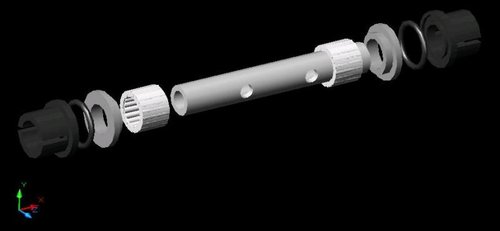
Kyle delivered the DH-One to me set up with a Marzocchi Shiver, and at the other end, the 9” progressive travel, “anti-pedal bob” swing arm was suspended with the optional Avalanche. The swing arm’s greaseable needle bearing pivots, a 160mm Hadley hub and neutral floating disc brake are standard fare as are the FSA 100mm bottom bracket and the adjustable chain line idler.
![photo]() The DH-One would be in my possession for several weeks, so I planned out a few trips to a variety of locations that would let me try the bike out in different terrain scenarios to get a good idea of how the bike performs. PDC designed the rig as a downhill race machine, so it isn’t completely fair to expect it to perform well as a freeride bike, none the less, few of us can afford to have a bike dedicated to one task, so for both review purposes and to satisfy my own curiosity, I rode the bike in and out of it’s element.
The DH-One would be in my possession for several weeks, so I planned out a few trips to a variety of locations that would let me try the bike out in different terrain scenarios to get a good idea of how the bike performs. PDC designed the rig as a downhill race machine, so it isn’t completely fair to expect it to perform well as a freeride bike, none the less, few of us can afford to have a bike dedicated to one task, so for both review purposes and to satisfy my own curiosity, I rode the bike in and out of it’s element.
Several obvious places sprang to mind, I had a road trip planned to meet up with friends at Sun Peaks in Kamloops B.C., but due to the forest fire situation at the time the resort was closed and my comrades cancelled, so I ventured further south to Silver Star in Vernon instead. I would later have the opportunity to ride the PDC along side my friends in Whistler a week later, and again at Mt. Seymour on the ‘Shore in North Van, both suitable locations to put the rig through its paces.
I had never ridden at Silver Star so I didn’t know what to expect to have to put the DH-One up against. Thankfully Silver Star had an ideal network of trails, from epic cross-country to double black diamond downhill.
Setting off on my first run of the day, I exited the lift and as I wasn’t yet use to the bike I chose to warm up on a blue run on the other side of the mountain - little did I know the distance to the trail head on the map was not an accurate representation of the truth. Turns out I had set off on an epic rolling cross-country jaunt to the far boundary of the resort, over rolling but smooth terra firma.
![photo]() My accidental journey to the trail head is where the DH-One revealed a valuable property. It won’t leave you wanting to enter any cross-country races anytime soon, but it did pedal surprisingly well with very little pedal bob; testament that the PDC design swing arm is competent competition to other pedal feedback preventing swing arm setups.
My accidental journey to the trail head is where the DH-One revealed a valuable property. It won’t leave you wanting to enter any cross-country races anytime soon, but it did pedal surprisingly well with very little pedal bob; testament that the PDC design swing arm is competent competition to other pedal feedback preventing swing arm setups.
After a few runs down Silver Star’s slopes I began to warm up to the bike and started to hit more technical double black downhill runs, this where the DH-One was bred to be. I found myself confidently opening it up with greater speed in sections where less plush and sophisticated bikes would have left me feeling on edge. The bike’s weight and super low centre of gravity coupled with its forgiving progressive suspension let you make “point and shoot” line decisions. Standing on the pedals while riding steeps gives you the feeling – no doubt due in part to its gobs of stand over height - that you’re floating down the grade with your feet just above the ground.
Perhaps the most telling tale of the swing arm’s design is that you don’t even noticing that it’s at work, even when hammering on the pedals through rough rooty and rocky sections. In short it makes a very smooth and stable ride out of the most technical rock garden, which translates into better traction under power delivery.
The next weekend I took the bike up to Whistler, grounds I was more familiar with and while there I got an appreciation for the DH-One’s ability to corner, thanks again to its low “c of g”. Taming turns is super easy with this bike, ride into the corner, get your weight right, bank and the bike sticks to the trail whether there is a berm there or not. In fact you don’t even have to hit dirt to get an understanding of this with the DH-One, just carving turns in the parking lot gives you an idea of how far you can lean the bike over. I’m sure that the only wheeled machine to balance as well as this is the Segway.
I spent the day ripping it up on the DH-One, it aired the step-ups and step downs and railed the corners on “Dirt Merchant”, it stayed stable in the air over the tables and drops on “A-Line” and felt clean through the technical sections on “Joyride” and “Schleyer”. The only time that I encountered a hitch was when the chain somehow managed to work its way off the chain ring after the rock drop on A-Line, which was strange considering the MRP seemed to be set up correctly.
During the next week I managed to squeeze in a trip to North Vancouver to ride Mt. Seymour on the ‘Shore before I had to send the bike back. Riding down CBC and Ned’s I found the only negative traits I could come up with on the DH-One.
One was that the plush long travel swing arm exhibited a tendency to “unfold”, or go through excessive travel, while riding slow technical step sections as the front wheel would leave the elevation that the rear wheel was on, causing the bottom bracket housing and chain guide to occasionally contact objects on the trail. It wasn’t so bad that the bike wasn’t ride-able, but enough that I elected to walk some sections that I could have ridden if the remote reservoir hose wasn’t routed under the bottom bracket. In all fairness to PDC the reservoir hose is to be relocated on production bikes (of course this will be a non-issue with Romic equipped rigs), and it turned out that the Avalanche had developed a nitrogen leak that no doubt didn’t help the shock’s ability to damped compression.
The other trait that I and others who briefly threw a leg over the DH-One weren’t so wild about was the amount of effort required to get the front end up. It felt like the plushness of the rear end wanted to soak up any attempt at lifting the front wheel. The only time I had any real trouble with this however was in Fernie before I had any time on the bike, I failed at a slow wheelie drop as I attempted to pull up, though the tough to lift front end didn’t help through the slow technical sections on Seymour either. Again this is most likely attributable to the nitrogen low Avalanche.
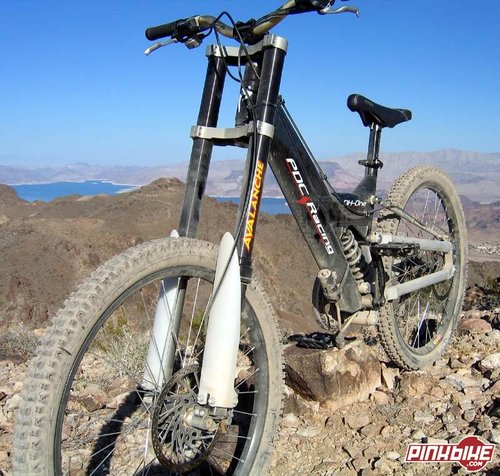
![photo]() The DH-One that I rode was a pre-production frame; there are a few changes in store for the retail version. Most notable is a more slack head tube angle, some felt that it was too steep (which I think is more of an optical illusion when you look at the bike side on to its unique top tube/bottom tube hybrid shape), though I didn’t find it to be a problem especially when you took swing arm sag into consideration. I did however think that the bike would be better served with a longer travel fork than a Shiver to better compliment the rear travel, of course a fork choice is a personal preference. Other changes include a revised seat stay to provide extra clearance for the chain so that chain slap is reduced (making the otherwise quiet DH-One quieter) and shortened chainstays.
The DH-One that I rode was a pre-production frame; there are a few changes in store for the retail version. Most notable is a more slack head tube angle, some felt that it was too steep (which I think is more of an optical illusion when you look at the bike side on to its unique top tube/bottom tube hybrid shape), though I didn’t find it to be a problem especially when you took swing arm sag into consideration. I did however think that the bike would be better served with a longer travel fork than a Shiver to better compliment the rear travel, of course a fork choice is a personal preference. Other changes include a revised seat stay to provide extra clearance for the chain so that chain slap is reduced (making the otherwise quiet DH-One quieter) and shortened chainstays.
All in all I thoroughly enjoyed the DH-One, in fact I wish I could have had it longer before having to send it home to Vancouver Island. It definitely fit the bill that it was designed for, fast technical big hit downhill trails, and that’s where it felt most at home, though I’m sure with the changes to the production run swing arm and a properly dialled shock – which is always difficult to set up on a multi-rider demo bike – it would handle better in freeride applications.
The DH-One is a high speed super stable downhill platform that corners like a Lotus, I’m sure that it’ll see many a bike jockey on the podium. If you’re in the market for a downhill bred race bike, make sure that PDC Racing is on your “to check out” list.
Visit the PDC Racing website, and for more information contact Kyle Kusznieryk.
Check out PDC Racing's booth at Interbike this year.
The project is wholly theirs; from CAD concept to current form the work has taken place in Qualicum Beach, a refreshing change considering the recent cost saving trend of many manufacturers, big and small, to catalogue order from Taiwan and re-label as their own. Aside from the US made Romic rear shock (standard issue was set to be an Avalanche shock as mounted on the prototype, custom tuned to rider specs, this is now an option), the bike is all Canadian beef.
Kyle delivered the DH-One to me set up with a Marzocchi Shiver, and at the other end, the 9” progressive travel, “anti-pedal bob” swing arm was suspended with the optional Avalanche. The swing arm’s greaseable needle bearing pivots, a 160mm Hadley hub and neutral floating disc brake are standard fare as are the FSA 100mm bottom bracket and the adjustable chain line idler.
Several obvious places sprang to mind, I had a road trip planned to meet up with friends at Sun Peaks in Kamloops B.C., but due to the forest fire situation at the time the resort was closed and my comrades cancelled, so I ventured further south to Silver Star in Vernon instead. I would later have the opportunity to ride the PDC along side my friends in Whistler a week later, and again at Mt. Seymour on the ‘Shore in North Van, both suitable locations to put the rig through its paces.
I’m sure that the only wheeled machine to balance as well as this is the Segway...
I had never ridden at Silver Star so I didn’t know what to expect to have to put the DH-One up against. Thankfully Silver Star had an ideal network of trails, from epic cross-country to double black diamond downhill.
Setting off on my first run of the day, I exited the lift and as I wasn’t yet use to the bike I chose to warm up on a blue run on the other side of the mountain - little did I know the distance to the trail head on the map was not an accurate representation of the truth. Turns out I had set off on an epic rolling cross-country jaunt to the far boundary of the resort, over rolling but smooth terra firma.
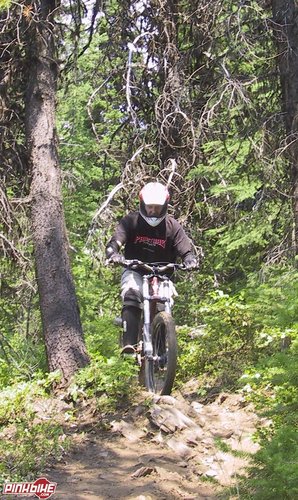
After a few runs down Silver Star’s slopes I began to warm up to the bike and started to hit more technical double black downhill runs, this where the DH-One was bred to be. I found myself confidently opening it up with greater speed in sections where less plush and sophisticated bikes would have left me feeling on edge. The bike’s weight and super low centre of gravity coupled with its forgiving progressive suspension let you make “point and shoot” line decisions. Standing on the pedals while riding steeps gives you the feeling – no doubt due in part to its gobs of stand over height - that you’re floating down the grade with your feet just above the ground.
Perhaps the most telling tale of the swing arm’s design is that you don’t even noticing that it’s at work, even when hammering on the pedals through rough rooty and rocky sections. In short it makes a very smooth and stable ride out of the most technical rock garden, which translates into better traction under power delivery.
The next weekend I took the bike up to Whistler, grounds I was more familiar with and while there I got an appreciation for the DH-One’s ability to corner, thanks again to its low “c of g”. Taming turns is super easy with this bike, ride into the corner, get your weight right, bank and the bike sticks to the trail whether there is a berm there or not. In fact you don’t even have to hit dirt to get an understanding of this with the DH-One, just carving turns in the parking lot gives you an idea of how far you can lean the bike over. I’m sure that the only wheeled machine to balance as well as this is the Segway.
The bike’s weight and super low centre of gravity coupled with its forgiving progressive suspension let you make “point and shoot” line decisions...
I spent the day ripping it up on the DH-One, it aired the step-ups and step downs and railed the corners on “Dirt Merchant”, it stayed stable in the air over the tables and drops on “A-Line” and felt clean through the technical sections on “Joyride” and “Schleyer”. The only time that I encountered a hitch was when the chain somehow managed to work its way off the chain ring after the rock drop on A-Line, which was strange considering the MRP seemed to be set up correctly.
During the next week I managed to squeeze in a trip to North Vancouver to ride Mt. Seymour on the ‘Shore before I had to send the bike back. Riding down CBC and Ned’s I found the only negative traits I could come up with on the DH-One.
One was that the plush long travel swing arm exhibited a tendency to “unfold”, or go through excessive travel, while riding slow technical step sections as the front wheel would leave the elevation that the rear wheel was on, causing the bottom bracket housing and chain guide to occasionally contact objects on the trail. It wasn’t so bad that the bike wasn’t ride-able, but enough that I elected to walk some sections that I could have ridden if the remote reservoir hose wasn’t routed under the bottom bracket. In all fairness to PDC the reservoir hose is to be relocated on production bikes (of course this will be a non-issue with Romic equipped rigs), and it turned out that the Avalanche had developed a nitrogen leak that no doubt didn’t help the shock’s ability to damped compression.
The other trait that I and others who briefly threw a leg over the DH-One weren’t so wild about was the amount of effort required to get the front end up. It felt like the plushness of the rear end wanted to soak up any attempt at lifting the front wheel. The only time I had any real trouble with this however was in Fernie before I had any time on the bike, I failed at a slow wheelie drop as I attempted to pull up, though the tough to lift front end didn’t help through the slow technical sections on Seymour either. Again this is most likely attributable to the nitrogen low Avalanche.
All in all I thoroughly enjoyed the DH-One, in fact I wish I could have had it longer before having to send it home to Vancouver Island. It definitely fit the bill that it was designed for, fast technical big hit downhill trails, and that’s where it felt most at home, though I’m sure with the changes to the production run swing arm and a properly dialled shock – which is always difficult to set up on a multi-rider demo bike – it would handle better in freeride applications.
The DH-One is a high speed super stable downhill platform that corners like a Lotus, I’m sure that it’ll see many a bike jockey on the podium. If you’re in the market for a downhill bred race bike, make sure that PDC Racing is on your “to check out” list.
Visit the PDC Racing website, and for more information contact Kyle Kusznieryk.
Check out PDC Racing's booth at Interbike this year.
Posted In:
Author Info:
 Abbotsford, BC, Canada
Must Read This Week
1 Comment
- 10
colenichol
(Nov 8, 2017 at 17:35)
OOOoooo that will catch on
Login or Sign Up