Stories posted under Pinkbike Community blogs are not edited, vetted, or approved by the Pinkbike editorial team. These are stories from Pinkbike users.
If a blog post is offensive or violates the Terms of Services, please report the blog to Community moderators.
Fox 36 TALAS RLC 2011
Fox Forks need no introduction. The new Kashima coated forks have created much anticipation since their sightings on the racing circuit by Fox sponsored riders. The Fox 36 is a standard with the All Mountain/Freeride class of bikes. For 2011 the 160 TALAS comes with the FIT HSC Cartridge, Lockout and Low Speed Compression Settings.Weighing in at 4.67 lb / 2.12 kg for the 1-1/8th steerer the 36 Talas RLC is competitive in the weight category. The two-step TALAS system adds only 80g over the standard 36 Float and is 210g lighter then the 36 Vanilla. It is 140g lighter than last year, and still boasts as one of the stiffest single-crown forks around.
The easy to use, the screw-through 20mm axle has a pop-out handle to turn it in and out, with a quick-release on the front of each leg to clamp the dropouts closed. Seal, cartridge, bushing and general reliability is great too. The LSC and lockout dials are easily accessed at the top right leg, the air spring and travel adjust on the left. Rebound has moved to the lower right leg.
![photo]()
![photo]()
![photo]()
Design and Construction:
160 RLC
4.67 lb
6.3 inches / 160 mm - (2011 TALAS [2-position] 160-120)
Axle to Crown 545.3mm
Tire Limit - 26X2.8
External Adjustments:
- Low-speed compression
- Lever actuated lockout
- Lockout force adjust
- Travel - TALAS [2-position]
- Air spring pressure (max 150psi)
- Rebound
FIT Damper
Kashima coating on 36mm Stanchions
- 20QR thru axle system,
- Post style disc brake mounting
- Straight 1 1/8" or tapered steerer
- Air Sprung
- Designed for All Mountain, Freeride and Downhill applications.
![photo]()
Design Features:
New for the 2011 fork is the two step TALAS, Kashima coating FIT Cartridge and Lockout.
Changes from 2010 TALAS.
4.99lbs
RC2 - adjusments on the lower right leg, LSC and lockout moved to the upper right leg
2010 HSC 16 clicks vs FIT Cartridge in 2011
2010 LSC 17 clicks vs 8 clicks for 2011
2010 rebound 15 clicks
2010 160-130-100 3 step height adjust vs 160 - 120 for 2011
HSC replaced by FIT Damper
Lighter crown and tubes
2011 has a lockout force adjustment. This allows you to set the the hardness of the hit for the fork to 'blowoff' to make it more firm or keep it more reactive when locked out. 10 clicks for this adjustment
Kashima
Developed by the Miyake Company of Japan to improve the characteristics of aluminum by making the surface harder, more abrasion resistant and offer less friction then untreated hard anondized aluminum. Proven in the motorcycle industries for many years to offer low-friction and wear resistance properties.
In the Kashima Coating process, lubricating molybdenum disulfide is deposited via electrical induction into the billions of micropores on the surface of hard-anodized aluminum. Since 2009 when it was first introduced into the international mountain bike racing circuit, the distinctive gold colored Kashima coated stanchions have been reported to offer better lubrication characteristics, attain a level of hardness and abrasion resistance four times tougher than standard hard-anodized aluminum in lighter weight package.
On paper the Kashima coating does reduce friction on the stanchions. I did not notice this on the TALAS fork. Having a 2010 non Kashima TALAS to directly compare it was tough to notice a difference based on the Kashima. This could be due to the inherent stiction of the TALAS negating a noticable feel of the Kashima.
Previous All Mountain Forks used:
2005 36TALAS, Lyrik DH Solo Air, Lyrik 2-step
![photo]()
Setup:
Suggested air pressure for my 150lb weight was 50lbs. I found this to be too firm and I did not get full travel. I reduced the air pressure by 5lbs and was able to get full travel. This resulted in a much plusher fork. Rebound was set 5/15 clicks in for the North Shore.
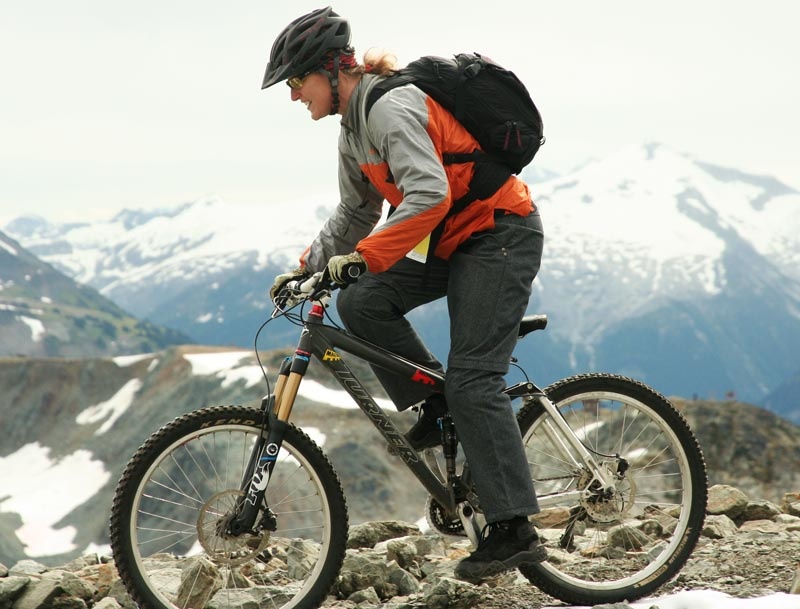
This fork was on a Turner 6pack and Knolly Endorphin with a 68o Head Angle at 160mm. Sag was set to 21% with 50lbs air, low speed compression (LSC) was 4 clicks clockwise. The bike was set up for me by Suspensionwerx.com.
Once the air spring was set for my weight and compression was adjusted I kept it as for for the review.
I would only adjust the rebound depending on the type of trail I was riding.
![photo]()
Performance:
I found this fork to be very firm and responsive.
Rolling on flat terrain the fork was firm, but I could feel feedback at all LSC settings.
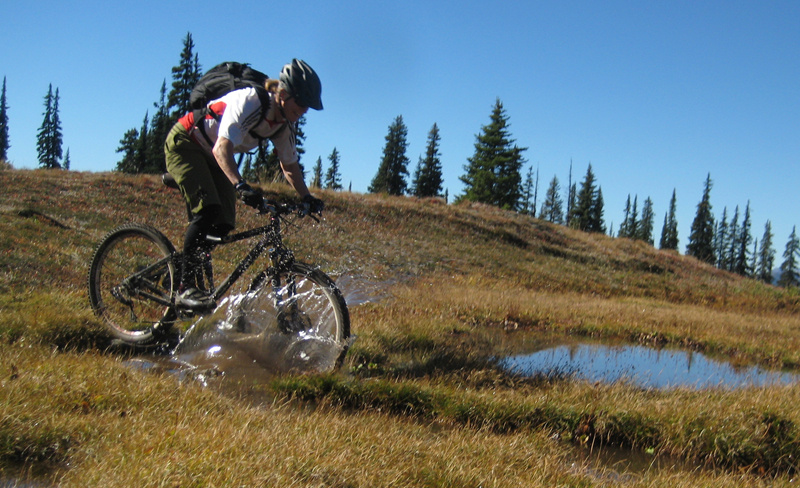
On non technical descents it would soak up the small bumps well, I did have some hand feedback in this situation. On slow technical descents the fork would absorb the terrain and dive was easily accommodated by the LSC. The fork stabilized the bike to set up for subsequent technical sections. I was able to slow the bike right down and let go of the brakes over whatever chunder came before me. The fork had a progressive feel as it went lower into its travel, I never felt any sharp changes in travel.
On fast high speed descents the fork soaked it all up and really smoothed out the ride and provided a lot of pop. Square edge hits were accomodated well. Even through rough terrain the fork did not flex or jar exlemplifying good torsional and for-aft rigidity
Out of curiosity I went onto a rough rocky descent with stairs to play with the LSC settings.
1/8-3/8 clicks in felt similar, no real impression.
4/8-6/8 felt more firm and responsive, lively
7/8-8/8 way more bouncy
Increasing LSC increased the poppyness of the fork.
The fork felt similar in 120 and 160 travel mode with changing LSC settings. The bike was more responsive and quicker handling at the lower travel setting as expected. It was fun to use different travel settings on the same descents to get a different feeling bike. The bike was equally competent while descending at both travel settings.
I really appreciated the travel adjustability to give the bike flexibility to climb efficiently and descend confidently.
![photo]()
Overall Impression:
The fork was firm and responsive. Sudden braking did not produce fork dive even on steep terrain. Climbing was firm with little bob even without lockout engaged. Climbing was much more effecient at the lower travel setting. Lockout was only necessary when peddling or climbing aggressively and you didn't require a lot of fork action.
The easy to use, the screw-through 20mm axle has a pop-out handle to turn it in and out, with a quick-release on the front of each leg to clamp the dropouts closed. Seal, cartridge, bushing and general reliability is great too. The LSC and lockout dials are easily accessed at the top right leg, the air spring and travel adjust on the left. Rebound has moved to the lower right leg.
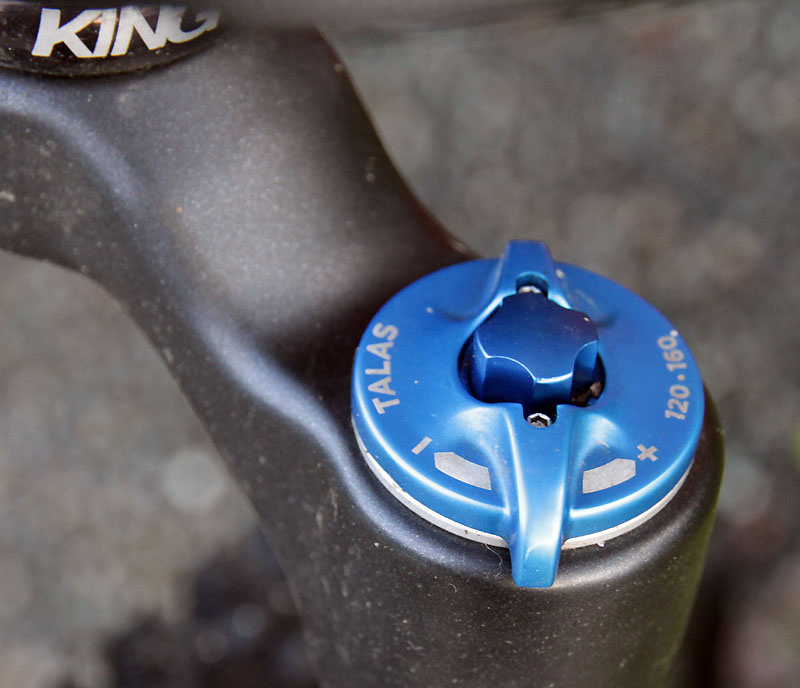
Air Spring and Travel Adjust on Left Leg
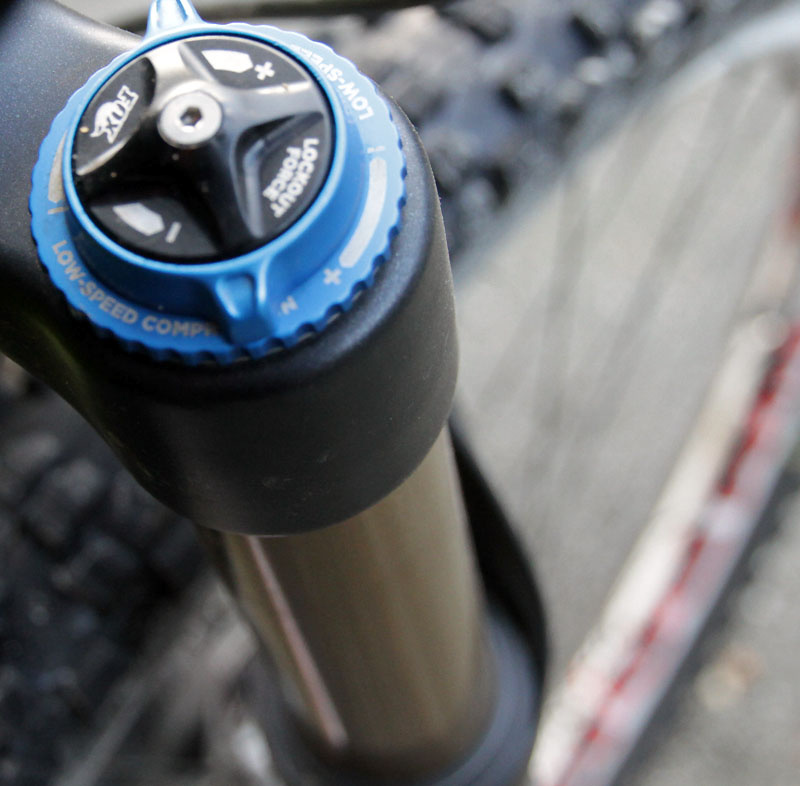
LSC and Lockout on Right Leg
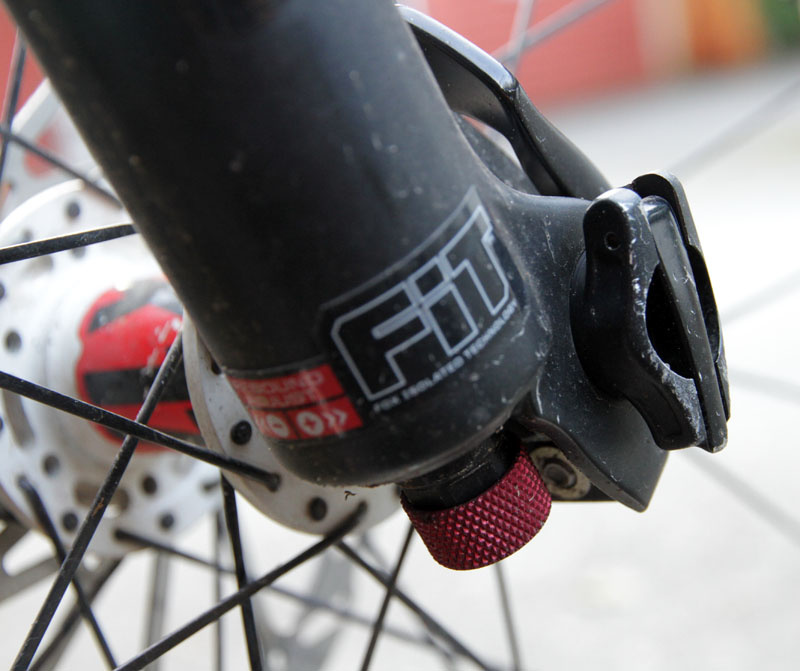
Rebound on the lower Right Leg
Design and Construction:
160 RLC
4.67 lb
6.3 inches / 160 mm - (2011 TALAS [2-position] 160-120)
Axle to Crown 545.3mm
Tire Limit - 26X2.8
External Adjustments:
- Low-speed compression
- Lever actuated lockout
- Lockout force adjust
- Travel - TALAS [2-position]
- Air spring pressure (max 150psi)
- Rebound
FIT Damper
Kashima coating on 36mm Stanchions
- 20QR thru axle system,
- Post style disc brake mounting
- Straight 1 1/8" or tapered steerer
- Air Sprung
- Designed for All Mountain, Freeride and Downhill applications.
Design Features:
New for the 2011 fork is the two step TALAS, Kashima coating FIT Cartridge and Lockout.
Changes from 2010 TALAS.
4.99lbs
RC2 - adjusments on the lower right leg, LSC and lockout moved to the upper right leg
2010 HSC 16 clicks vs FIT Cartridge in 2011
2010 LSC 17 clicks vs 8 clicks for 2011
2010 rebound 15 clicks
2010 160-130-100 3 step height adjust vs 160 - 120 for 2011
HSC replaced by FIT Damper
Lighter crown and tubes
2011 has a lockout force adjustment. This allows you to set the the hardness of the hit for the fork to 'blowoff' to make it more firm or keep it more reactive when locked out. 10 clicks for this adjustment
Kashima
Developed by the Miyake Company of Japan to improve the characteristics of aluminum by making the surface harder, more abrasion resistant and offer less friction then untreated hard anondized aluminum. Proven in the motorcycle industries for many years to offer low-friction and wear resistance properties.
In the Kashima Coating process, lubricating molybdenum disulfide is deposited via electrical induction into the billions of micropores on the surface of hard-anodized aluminum. Since 2009 when it was first introduced into the international mountain bike racing circuit, the distinctive gold colored Kashima coated stanchions have been reported to offer better lubrication characteristics, attain a level of hardness and abrasion resistance four times tougher than standard hard-anodized aluminum in lighter weight package.
On paper the Kashima coating does reduce friction on the stanchions. I did not notice this on the TALAS fork. Having a 2010 non Kashima TALAS to directly compare it was tough to notice a difference based on the Kashima. This could be due to the inherent stiction of the TALAS negating a noticable feel of the Kashima.
Previous All Mountain Forks used:
2005 36TALAS, Lyrik DH Solo Air, Lyrik 2-step
Setup:
Suggested air pressure for my 150lb weight was 50lbs. I found this to be too firm and I did not get full travel. I reduced the air pressure by 5lbs and was able to get full travel. This resulted in a much plusher fork. Rebound was set 5/15 clicks in for the North Shore.
This fork was on a Turner 6pack and Knolly Endorphin with a 68o Head Angle at 160mm. Sag was set to 21% with 50lbs air, low speed compression (LSC) was 4 clicks clockwise. The bike was set up for me by Suspensionwerx.com.
Once the air spring was set for my weight and compression was adjusted I kept it as for for the review.
I would only adjust the rebound depending on the type of trail I was riding.
Performance:
I found this fork to be very firm and responsive.
Rolling on flat terrain the fork was firm, but I could feel feedback at all LSC settings.
On non technical descents it would soak up the small bumps well, I did have some hand feedback in this situation. On slow technical descents the fork would absorb the terrain and dive was easily accommodated by the LSC. The fork stabilized the bike to set up for subsequent technical sections. I was able to slow the bike right down and let go of the brakes over whatever chunder came before me. The fork had a progressive feel as it went lower into its travel, I never felt any sharp changes in travel.
On fast high speed descents the fork soaked it all up and really smoothed out the ride and provided a lot of pop. Square edge hits were accomodated well. Even through rough terrain the fork did not flex or jar exlemplifying good torsional and for-aft rigidity
Out of curiosity I went onto a rough rocky descent with stairs to play with the LSC settings.
1/8-3/8 clicks in felt similar, no real impression.
4/8-6/8 felt more firm and responsive, lively
7/8-8/8 way more bouncy
Increasing LSC increased the poppyness of the fork.
The fork felt similar in 120 and 160 travel mode with changing LSC settings. The bike was more responsive and quicker handling at the lower travel setting as expected. It was fun to use different travel settings on the same descents to get a different feeling bike. The bike was equally competent while descending at both travel settings.
I really appreciated the travel adjustability to give the bike flexibility to climb efficiently and descend confidently.
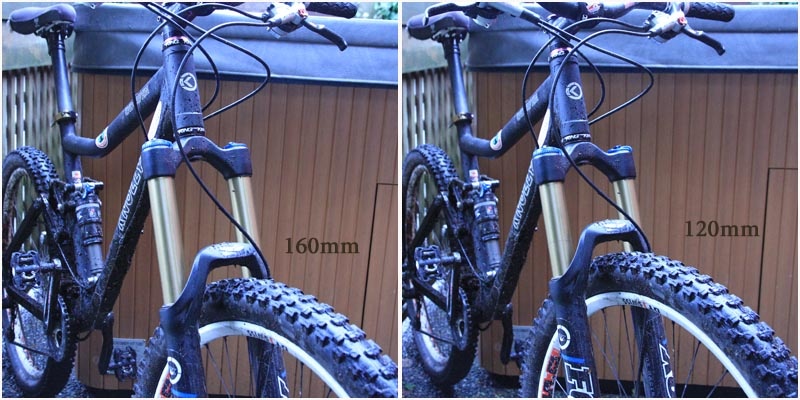
Travel Adjust was really nice
Overall Impression:
The fork was firm and responsive. Sudden braking did not produce fork dive even on steep terrain. Climbing was firm with little bob even without lockout engaged. Climbing was much more effecient at the lower travel setting. Lockout was only necessary when peddling or climbing aggressively and you didn't require a lot of fork action.
Author Info:
 North Vancouver, BC, Canada
Must Read This Week
0 Comments
Login or Sign Up