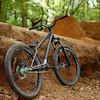
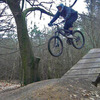
Hey guys. I am having trouble explaining standover height's importance. I am arguing that a mountain bikes standover height is fairly important for allowing one to safely dismount on a climb or descent. I am also stating that standover height is about as important as frame size. The other guys in the forum are saying it's not important at all. Have a read through the thread for more clarification but I need some input from guys who MTB all the time and who have plenty of experience.
I started to read the posts but it hurt my eyes. Standover height and frame size are synonomous - isn't that one of the first measurements that should be made?
There's a very good reason why I typically ride slightly small-ish frames... for the stand over clearance... which IS important.
I've been riding XC for over 20 years, with clipless pedals, and have had my fair share of close calls with "the boys". My current frame is a titch smaller than I prefer, as the optimum for me is a 17.5", and I'm 5'8" with a 32" inseam.
Sadly, from the bit that I did read in the posted link, I'm afraid that you'll never be able to convince them.
So whats the general rule of thumb? Do you need an inch or two of clearance between your top tube and your manhood? Or as long as you can stand flat fooded you're good to go?
Back in the day, the standard rule was to straddle the bike ( stand over the top tube in a non-sexual way ), grab the bike by the nose of the saddle and stem and lift it straight up... if you could see an inch or two under the tires, then you were good. I went more with a two inch clearance, but ultimately, it's what you feel comfortable with.
Now, frames tend to have a more sloped top tube, and the longer travel bikes will indeed have a higher standover.
the general rule for a mountain bike is 3 inches clearance between the top tube and your seat bone, on a road bike it is 1 inch. For something more AM style I would not go smaller than 3 inches, It is noticeable when the top tube is too high, You find your voice is higher for longer.
Alot of bikes these days have a drooping top tube. When I replaced my dented 2002 Kona bear frame with a 2008 Kona Dawg I was skeptical of the new drooping design. What I've found is that the drooping top tube allows for alot more side to side motion when going into corners, riding through slow technical sections and crashing. You can really lean the bike over in preparation for corners, so much fun!
I have to say I love it, I can throw my bike around more so than ever. It really adds a whole new dimension into how I pilot the bike.
My knees don't get banged up, when I crash exiting the bike with feet ready is easier. When I ride my larger XC bike with a standard top tube I can't ride the same & it makes a difference.