Powered by Outside

Coil shock for a 130mm travel bike?

PB Forum :: All Mountain, Enduro & Cross-Country
Coil shock for a 130mm travel bike?

Author Message
Posted: Jun 18, 2018 at 6:21 Quote
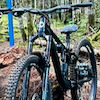
Just got my 2018 Transition Scout and absolutely love it.

Toying with the idea of putting a coil on the rear instead of the DPX2 to try and get a bit more rear-wheel traction. I noticed myself sliding out on corners that I've never had an issue on before. I also could feel the bike drifting a bit at high speeds over some of the "slick rock" on my local trails.

My sag is setup correctly and my LBS helped get it tuned correctly but I think a coil might help the rear tire track the ground better.

Of course, before I do any of this, I need to switch over to tubeless and reduce my PSI but I'll get to that later. I really just want to know what people think about putting a coil shock on this bike and more generally on bikes with 130mm of rear travel.

Thanks!

Posted: Jun 18, 2018 at 10:46 Quote
Travel is not the only factor to count, but somewhere, there is a review of a scout with a cc il coil and says it's doable and actually really good!

Posted: Jun 18, 2018 at 10:47 Quote
https://www.bikeradar.com/mtb/gear/category/bikes/mountain-bikes/full-suspension/product/transition-scout-carbon-review-51391/

Posted: Jun 18, 2018 at 11:39 Quote
It's a new bike, so there is more than just rear sag that can affect handling balance.

O+
Posted: Jun 18, 2018 at 12:07 Quote
I'd actually suggest getting a custom shock tune before you get a new shock altogether. To be clear, I don't mean volume spacers, air pressure, and rebound settings. What I'm talking about is sending your shock to be re-valved for your weight, frame, and terrain preference. If you're shrewd, you can get this done for like $150.

Posted: Jun 18, 2018 at 12:50 Quote
If you want to do it, then do it.

Posted: Jun 18, 2018 at 13:01 Quote
So after double checking my o-rings. Looks like I'm using about 4.625 inches (117.475mm) of my fork travel (150mm) and 1.9375 inches (49.2125mm) of my rear shock travel (55mm shock stroke).

Any suggestions on how to get that tuned to be using full travel? Still pretty new to understanding suspension and tuning it.

Posted: Jun 18, 2018 at 13:47 Quote
It depends on your weight and what you’re riding.

If you’re new to full suspension, you may not really be testing it yet.

Posted: Jun 18, 2018 at 14:02 Quote
MHE1993 wrote:
So after double checking my o-rings. Looks like I'm using about 4.625 inches (117.475mm) of my fork travel (150mm) and 1.9375 inches (49.2125mm) of my rear shock travel (55mm shock stroke).

Any suggestions on how to get that tuned to be using full travel? Still pretty new to understanding suspension and tuning it.

Play with your air pressure and make sure your compression dial is fully open

Posted: Jun 18, 2018 at 18:09 Quote
Is there a way to find the leverage curves of Transition bikes? From what I understand, the leverage rate of a bikes' linkage is indicative of what kind of shock or shock tune would work best with it. Would it not be necessary to have this information if you were trying to change shocks on your bike?

Posted: Jun 19, 2018 at 2:51 Quote
Take a shock pump to a trail you know, has the terrain you like to ride, and is easy to session. Change one thing at a time so you can feel what works and what doesn't. Look at changing air pressure first, then rebound and compression damping.

Ideally you want to be using all your travel on the biggest stuff you normally ride, without bottoming out. Small changes can have a big effect.

Posted: Jun 19, 2018 at 7:25 Quote
What effect does air pressure have on suspension performance? Only asking to make sure I understand it all properly. Reducing air pressure would increase my sag right, and soften the shock? Whereas increasing air pressure would stiffen the shock.

PSI does not affect the leverage curve, just the amount of force is take to move the shock through it's travel right?

Posted: Jun 19, 2018 at 8:36 Quote
Increasing pressure in a shock means that you’re putting more energy into it. That means that it will have more resistance to compression, and all other things being equal, it will sit higher in its travel and rebound more quickly. As the seals will be holding more pressure then there will also stiction resisting initial movement so the shock will feel harsher.

FL
Posted: Jun 19, 2018 at 15:11 Quote
MHE1993 wrote:
What effect does air pressure have on suspension performance? Only asking to make sure I understand it all properly. Reducing air pressure would increase my sag right, and soften the shock? Whereas increasing air pressure would stiffen the shock.

PSI does not affect the leverage curve, just the amount of force is take to move the shock through it's travel right?

Sort of... the way an air shocks work, yes adding more air will increase the force needed to get the shock moving, but also the force needed to move it through it's travel and achieve bottom out (using all of the travel). Think about it this way... the part of the shock or fork that holds the air is a sealed chamber, that air doesn't go anywhere when the shock moves through it's travel, instead the air is compressed. So if you put say 100psi into a shock, as it moves through it's travel, the PSI grows as the chamber is shrunk and you compress the air which say bottoms out at 300psi. So, if you instead start out at 125psi, compressing the air through to bottom out at a higher pressure (say 325psi)... so the leverage curve may not change but the force both at the start of travel and to get to bottom out is higher.


This is why tokens for forks and spacers for shocks were created. You can adjust the leverage of your fork or shock by adding tokens or spacers. Spacers and tokens are just volume reducers, so as you add them, the air space inside the tube is reduced and the leverage curve is steepened.

So back to the previous example, say you start out with 100psi in your shock, you like the initial small bump plushness and travel, but you blow through your travel to bottom out too easily. Then you try 125psi and you have more mid stroke support and don't bottom out as easily but the initial travel and small bump complacence is harsh. The solution is to insert some tokens/spacers so that you can combine the best of both worlds. You can set it up at that initial psi of 100, take advantage of the small bump compliance, yet the bottom out pressure will be higher with the spaces/tokens so you also end up with mid stroke support and don't bottom out too easily.

This is all theoretically how it's supposed to work of course and the psi's mentioned have no bearing on what you should use or proper leverage ratios, just pulled from my ass for ease of explanation. Your weight, your terrain, how aggressively you ride, tokens/spacers, low speed compression adjustment, high speed compression adjustment, rebound adjustment and personal preference will all be factors in how you set-up your suspension. As the other person mentioned, put a shock pump in your back and try lots of different scenarios.... have fun!

  • Previous Page
  • Next Page


Copyright © 2000 - 2026. Pinkbike.com. All rights reserved.
dv56 0.009924
Mobile Version of Website