Pinkbike.com
Powered by Outside

mtbscientist
- Member since Nov 10, 2017
-
 San Diego , California
 - 0 Followers
- 0 Trailforks Points
Recent
mtbscientist seb-stott's article
Jan 30, 2026 at 22:03
Jan 30, 2026
Big Wheels, Big Claims: 32" Wheels Are Actually Faster (According to Science)
Simple math: if the rider maintains the same pedal cadence (assuming unlimited power to sustain it), a comparison of 29" vs 32" wheels with 2.2" tires gives effective diameters of 33.4" (29" + 2 × 2.2") and 36.4" (32" + 2 × 2.2"). The corresponding circumferences are approximately 105.0" for the 29" wheel and 114.4" for the 32" wheel. With a 32-tooth front chainring and a 30-tooth rear cog, the rear wheel rotates at about 96 rpm (90 × 1.067). This results in speeds of roughly 9.55 mph (15.4 km/h) for the 29" wheel and 10.4 mph (16.7 km/h) for the 32" wheel. this is a theoretical 9% speed advantage for the larger wheel. This difference represents the theoretical speed gain at a fixed cadence on flats or climbs. However, if the rider applies the same power and the wheels have identical weight, rolling resistance, and aerodynamic drag, steady-state speed would be identical. Larger wheels mainly affect acceleration due to increased rotational inertia, but the more power the rider can produce, the less this matters on flats or climbs. Downhill, added weight can provide an advantage by helping maintain momentum. With modern carbon rims and lighter tires, some now under 1,000 grams, larger wheels carry less of a weight penalty, making it exciting to see how big tires and wheelsets evolve in the coming decade, combining speed, stability, and rollover capability. In the end it is mostly a tradeoff between weight and available power to maintain same rpm. Should be easy to be able to model a max power curve from the rider and size of tire (and by estimating weight) and how fast one can go at 90rpm. Riders with the most power will benefit from everlarger wheels (on flats and uphill).
mtbscientist seb-stott's article
Dec 10, 2024 at 8:43
Dec 10, 2024
Burning Question: Why Are XC Tires Getting Bigger?
@waltworks: yes the studies I found showed 2.4% in field on course when going from 26 to 29. So after weight and rpm changes the theoretical speed increase for 26 to 29 from 11% becomes roughly 20% of predicted. So increase in size helps. There are also riders not yet limited by power. For those riders increase in diameter will be even faster than what was seen in the studies I found on this topic. The article is talking about smaller changes. And going from 2.4 to 2.6 is not close to being a gear change - so question will be how much larger before gear change becomes more efficient? This could be readily calculated. From the discussion I don’t think our viewpoints are too dissimilar. It is a glass half full vs half empty argument. Weight matters as mentioned above and as you posted elsewhere where you experienced yourself - a boat anchor feeling when going to larger heavier tire. I agree. You also agreed speed will increase with increase in size of tire and I agree with you not as much as the theoretical limit. For racers every second counts, for KOM hunters every second counts. For every day riders they just want to be comfortable and enjoy. I am, however, kind of curious what the limit will be for power vs speed -hence your 36 inch tire idea - albeit meant as a funny comment / that you mentioned would likely work to break some speed records by the strongest riders - especially on straight downhills with limited turns and braking but what will be the limit? I don’t know. Have we reached the limit? I don’t know but so far ever tire size increase - including the small increases- has only helped speed. I can’t wait to learn these answers over the upcoming decade as the tire development continues.
mtbscientist seb-stott's article
Dec 9, 2024 at 20:40
Dec 9, 2024
Burning Question: Why Are XC Tires Getting Bigger?
@waltworks: not trolling - just like thinking about the more subtle impacts. I also welcome counterarguments based on the science but this has not yet been provided. I would love to learn where my logic is wrong based on physics. What is the math behind the reasoning that is supposedly not correct? Note that I did not propose 36 inch but simply considered increase in size of tire to also increase its circumference to go faster to be plausible and would work. It will need more power to get going as they are heavier but also once at speed it will retain its momentum for longer-this is a perfect DH scenario. It will also roll over larger rocks with more grace. Any argument against it is similar as the transition from 26 to 27.5 and then 29” as well - which were regarded just as ridiculous at those times but in each case they were faster. Although early 29ers the geometries were less than ideal. It partly why 27.5 bikes are so fun still - they are lighter. However at some point human capability to deliver power vs weight of tire becomes problematic. It will be different for everyone and there will be some super stars that have more power available than others. Just put same size tires on your bike but make it heavier and it makes it harder to get going. So the statement is backed up by historical changes that have withstood the test of time and is consistent with fundamentals of physics as far as I’m aware. By my calculation -in my head- so may be off a bit a 2.2 inch tire vs a 2.4 inch tire at 90 rpm (in mtb this ranges from 0 to 300 rpm in downhills) results in going from 8.95 mph to 9.05 mph. This also is likely not sufficient to have to change gears yet- which was a very good point made after my initial comment. Not big differences but may be important enough for racers as long as the rolling resistance of the tires remain the same and enough power to get moving - the Ke=1/2mv2 thing. This is why I liked the comment in the article that they are working on tires to make sure the rolling resistance does not go up. IMO they are spot on based on what I can tell bc the larger tires should be faster.
mtbscientist seb-stott's article
Dec 8, 2024 at 20:45
Dec 8, 2024
Burning Question: Why Are XC Tires Getting Bigger?
@waltworks: I bet there are people that would have enough power to do really well on those. Straight DH could be very interesting :) the rollover alone …..
mtbscientist seb-stott's article
Dec 7, 2024 at 20:55
Dec 7, 2024
Burning Question: Why Are XC Tires Getting Bigger?
@thekaiser: fair point and adds another dimension I did not consider. But this means that since gears are much larger gaps there will be an optimum of to size of tire before a rider will benefit from shifting gears (and will be specific to the gears that are on the bike). Perhaps there is really a balance that is needing to be achieved. It would be fun to model and test this. Should be straightforward to do. After this optimum is found then all other aforementioned considerations are relevant.
mtbscientist seb-stott's article
Dec 7, 2024 at 8:31
Dec 7, 2024
Burning Question: Why Are XC Tires Getting Bigger?
I am surprised none of them described that if you have engines that are powerful enough (i.e. the super human pro riders) that the little added weight has negligible effect (this was mentioned). What this means is that they can maintain the same pedaling speed. Thus going from 2.2 to a 2.6 inch tire the circumference increases and thus one will go ~1.5% faster assuming the friction stays content. This has very significant impact on a race. It was nice to read the thinking that larger tires should be engineered to have similar grip to the smaller tires so that rolling resistance remains the same. The concern is when they get too large the tires will begin the squirm when cornering requiring stiffer walls or other solutions. It will be fun to learn with pro riders - ie super human engines that can maintain power for a long time -when they go to 2.8, 3.0 inch or higher that based on circumference increases alone will be much faster. The question will be when the weight of the tires begins to affect the speed they can maintain in a race. And don’t ask how mortals - such as week-end riders - will fare. It will be interesting to see where the balance will be struck in terms of tire weight, rolling resistance and tire stiffness to reduce squirming and rider power vs speed that can be possibly achieved by increasing the circumference of the tires. Such a fun engineering problem and looking forward to see what the tire manufacturers will come up with in the next decade.
mtbscientist seb-stott's article
Dec 7, 2024 at 7:51
Dec 7, 2024
Burning Question: Why Are XC Tires Getting Bigger?
@VegemiteSandwich: it depends. Is it on or not? Or was it just on or not? That is the burning question.
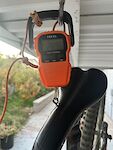
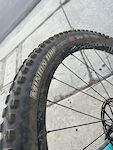
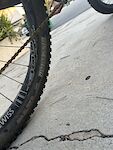
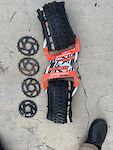

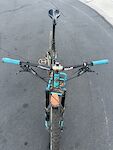
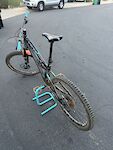
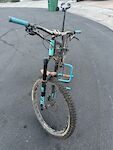
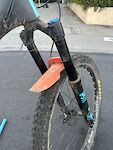
Selling
Nov 10, 2024 at 17:19
Nov 10, 2024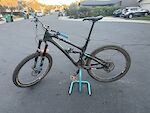
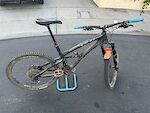
Large Yeti SB6 + extras
$1799 USDFor Sale: 2018 Yeti SB6 Trail Bike
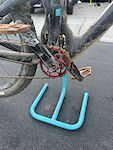
I'm selling my beloved Yeti SB6, originally purchased from North of the Border in 2018. Though it was initially classified as an enduro bike, with its 65.5° head tube angle and 29 lb weight, it now fits well into the trail category. This bike is incredibly fun to ride and handles long, challenging rides with ease—perfect for 50-mile mountain rides without holding you back. It’s the only bike that gets me through the "Stairway to Hell" segment on San Diego’s classic Noble Canyon trail!
I’m selling it because I’m now riding more XC trails. I'm open to a trade for a Santa Cruz Blur or a Blur frame.
Extras Included:
The bike comes with two additional unused tires (Maxxis DHF and DHR) and extra front chainrings.
Specifications:
Cockpit: Renthal carbon handlebars, 35mm Renthal stem, Ergon grips, SRAM R brakes
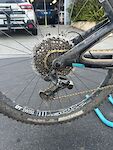
Wheels: DT Swiss M1900 wheels, Maxxis DHF front tire, Maxxis Dissector rear tire, 180mm rotors front and rear
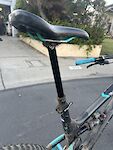
Seat: WTB-Yeti saddle, BikeYoke 185mm dropper post
If you're local and interested in a test ride, I’d be happy to meet at a trailhead to let you take it for a spin.
Drive train: X01 shifter, rear derailler, cassette, GX cranks, Stamp 7 Al pedals.
Photos are included—please reach out with any questions!
mtbscientist Dario-DiGiulio's article
Dec 22, 2022 at 7:46
Dec 22, 2022
What to Carry to Fix Most Things On Your Bike in the Smallest Toolkit Possible
Make sure the gummy bears are sugar-free. It will make you go really fast. It is worth reading all the reviews on this product. I have had the good fortune to experience it first hand on the plane https://www.amazon.com/review/RZFIYJTPVUZ94
