Technical Tuesday: Chain Lube Explained
Today's Tech Tuesday takes a closer look at chain lube. There is a great video inside explaining the differences in lubes, as well as showing you the proper technique to use when lubricating your chain. If you think nothing of spraying your chain with WD40 then this is the Tech Tuesday for you! Inside you'll find information on:
• Which types of lube to use for your conditions
• What never to put on your chain
• How to properly lube your chain
Read on...For a lot of riders it is a victory if they simply have some sort of lube on their chain, but using the right kind of lube for the conditions at hand can actually make a big difference to how your drivetrain performs. Applying the wrong kind of lube can cause all sorts of problems, from a gummed up and slow shifting drivetrain, to one that won't be quiet, but the end result is always accelerated wear that will cost you time and money in the long run. But that is only half the battle... How you lube your chain can have just as big of an effect, if not more so, than what lube you are using. You won't be doing yourself any favors if you are going to town with a can of spray lube and have shaky hands from downing too many energy drinks. In fact, you're doing more harm than good by overdoing it as excess lube will only attract dirt and grime. The key is to only apply the right amount in the right places.
Watch the video to learn all about lube and how to properly put it on your chain:
Teflon based lubes are by far the most common type of bicycle chain lube used, and for good reason. The name Teflon is actually DuPont's brand name for what is known as "PTFE" in the chemistry world, or polytetrafluoroethylene. Teflon has an incredibly low coefficient of friction when used between two solid objects like chain plates and rollers and is used to lube much more demanding mechanics than our simple bicycle chains. In order for the PTFE to properly penetrate into the inner workings of a bicycle chain, as well as stick around long enough to be useful while still having self cleaning properties, it can be mixed with many kinds of oils and solvents depending on the conditions that it has been designed to perform best in. The general rule of thumb is that the thicker the lube is, the longer it will last in wet conditions, but the stickier and messier it will be. If you live in a rainy environment like we do here on the West coast of B.C. you will be best off using a thicker lube because it will last much longer and not require as many reapplications. If your home trails are dry and dusty, then you'll be much better served to use a thinner lube that won't collect as much dirt that would gum up your drivetrain and create a mess like a thick lube used in that sort conditions would.
![photo]()
The other common option are wax based lubes. Just like Teflon chain lubes, wax lubricant can come in many different kinds of mixtures depending on the conditions that it is intended to be used in. Wax based lubes are generally thought of as a cleaner option to Teflon, but they have some drawbacks of their own. While they certainly collect less dust and dirt, you must be very conscious of how much wax lube you are using because it does have a tendency to build up and create a mess. Picture big globs of wax caught up between your pulley wheels and derailleur cage and you'll get the idea. Wax lubes also require the chain to be quite clean before you apply them for best results, and even then they won't last as long as their Teflon based competition.
There are all sorts of lubes and concoctions that you shouldn't use on your chain, most of them are either two thin or two thick. One example would be the popular Phil's Tenacious Oil. It is the perfect lube for inside of freehub bodies, but far too thick and stringy to be used on a chain. While it would last much longer than standard chain lube, the mess and build up that it creates can be quite nasty. On the opposite end of the spectrum is the ever popular WD40... this is not a lubricant for bicycle chains! WD40 is far too thin and acts as a solvent that actually strips the chain of any lube that may be present. Use WD40 to free up old and rusty parts, but not to lube your chain. You are far better off heading down to your local shop to pick up some proper lube designed for where you ride. If you're not sure what to get it is worthwhile to ask.
I know a lot of you are happy just to have a chain that doesn't squeak and scare away fellow riders, but by properly applying lube to your chain you can limit the amount of dirt and trail grime that it picks up, which will increase chain life and cost you less money down the road. Oh, and as a side benefit your bike will also be quieter, shift better, and you'll be less likely to be that one annoying guy who's bike can be heard from a kilometer away. Below is how I like to lube my chain, your method may differ and there are countless ways to do it, but the goal is always the same: to apply the right amount of lube to the right places.
Step by step instructions
What you need: Chain lube and a rag.
![photo]()
![photo]()
![photo]()
![photo]()
![photo]()
Past Tech Tuesdays:
Technical Tuesday #1 - How to change a tube.
Technical Tuesday #2 - How to set up your SRAM rear derailleur
Technical Tuesday #3 - How to remove and install pedals
Technical Tuesday #4 - How To Bleed Your Avid Elixir Brakes
Technical Tuesday #5 - How To Check And Adjust Your Headset
Technical Tuesday #6 - How To Fix A Broken Chain
Technical Tuesday #7 - Tubeless Conversion
Technical Tuesday #8 - Chain Wear
Technical Tuesday #9 - SRAM Shift Cable Replacement
Technical Tuesday #10 - Removing And Installing a Headset
Have you found this tutorial helpful? Share any of your hints or tips below!
Visit Parktool.com to see their entire lineup of tools and lubes.
• Which types of lube to use for your conditions
• What never to put on your chain
• How to properly lube your chain
Read on...For a lot of riders it is a victory if they simply have some sort of lube on their chain, but using the right kind of lube for the conditions at hand can actually make a big difference to how your drivetrain performs. Applying the wrong kind of lube can cause all sorts of problems, from a gummed up and slow shifting drivetrain, to one that won't be quiet, but the end result is always accelerated wear that will cost you time and money in the long run. But that is only half the battle... How you lube your chain can have just as big of an effect, if not more so, than what lube you are using. You won't be doing yourself any favors if you are going to town with a can of spray lube and have shaky hands from downing too many energy drinks. In fact, you're doing more harm than good by overdoing it as excess lube will only attract dirt and grime. The key is to only apply the right amount in the right places.

Types of chain lube
Teflon based lubes are by far the most common type of bicycle chain lube used, and for good reason. The name Teflon is actually DuPont's brand name for what is known as "PTFE" in the chemistry world, or polytetrafluoroethylene. Teflon has an incredibly low coefficient of friction when used between two solid objects like chain plates and rollers and is used to lube much more demanding mechanics than our simple bicycle chains. In order for the PTFE to properly penetrate into the inner workings of a bicycle chain, as well as stick around long enough to be useful while still having self cleaning properties, it can be mixed with many kinds of oils and solvents depending on the conditions that it has been designed to perform best in. The general rule of thumb is that the thicker the lube is, the longer it will last in wet conditions, but the stickier and messier it will be. If you live in a rainy environment like we do here on the West coast of B.C. you will be best off using a thicker lube because it will last much longer and not require as many reapplications. If your home trails are dry and dusty, then you'll be much better served to use a thinner lube that won't collect as much dirt that would gum up your drivetrain and create a mess like a thick lube used in that sort conditions would.
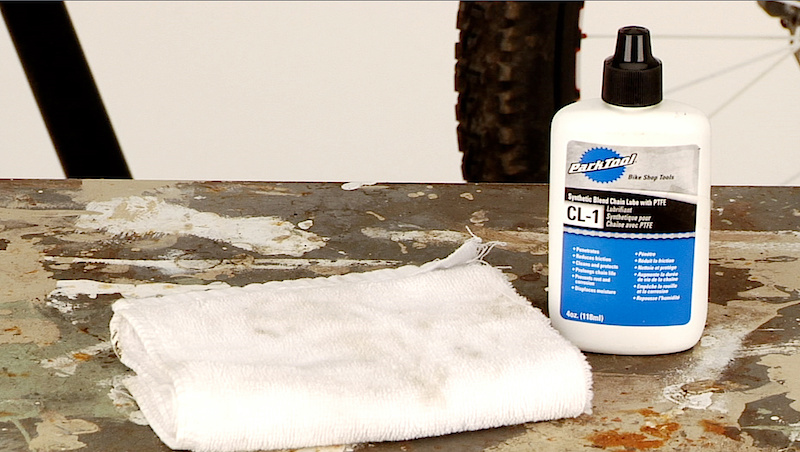
We used Park's Synthetic Lube with PTFE as it works great for the dry weather that we're coming into
The other common option are wax based lubes. Just like Teflon chain lubes, wax lubricant can come in many different kinds of mixtures depending on the conditions that it is intended to be used in. Wax based lubes are generally thought of as a cleaner option to Teflon, but they have some drawbacks of their own. While they certainly collect less dust and dirt, you must be very conscious of how much wax lube you are using because it does have a tendency to build up and create a mess. Picture big globs of wax caught up between your pulley wheels and derailleur cage and you'll get the idea. Wax lubes also require the chain to be quite clean before you apply them for best results, and even then they won't last as long as their Teflon based competition.
There are all sorts of lubes and concoctions that you shouldn't use on your chain, most of them are either two thin or two thick. One example would be the popular Phil's Tenacious Oil. It is the perfect lube for inside of freehub bodies, but far too thick and stringy to be used on a chain. While it would last much longer than standard chain lube, the mess and build up that it creates can be quite nasty. On the opposite end of the spectrum is the ever popular WD40... this is not a lubricant for bicycle chains! WD40 is far too thin and acts as a solvent that actually strips the chain of any lube that may be present. Use WD40 to free up old and rusty parts, but not to lube your chain. You are far better off heading down to your local shop to pick up some proper lube designed for where you ride. If you're not sure what to get it is worthwhile to ask.
Lubing your chain
I know a lot of you are happy just to have a chain that doesn't squeak and scare away fellow riders, but by properly applying lube to your chain you can limit the amount of dirt and trail grime that it picks up, which will increase chain life and cost you less money down the road. Oh, and as a side benefit your bike will also be quieter, shift better, and you'll be less likely to be that one annoying guy who's bike can be heard from a kilometer away. Below is how I like to lube my chain, your method may differ and there are countless ways to do it, but the goal is always the same: to apply the right amount of lube to the right places.
Step by step instructions
What you need: Chain lube and a rag.
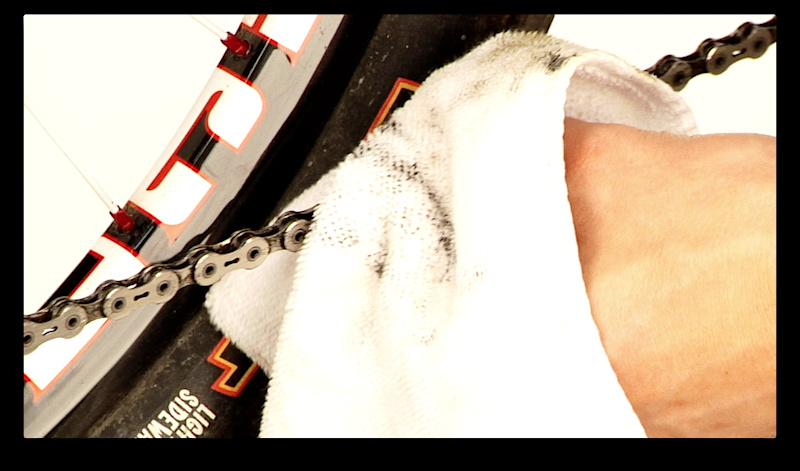
Step 1. Begin by shifting the chain to the middle ring and a middle cog for a straight chain line. Use a rag to clean any dirt or grime that may be on your chain before you add more lube
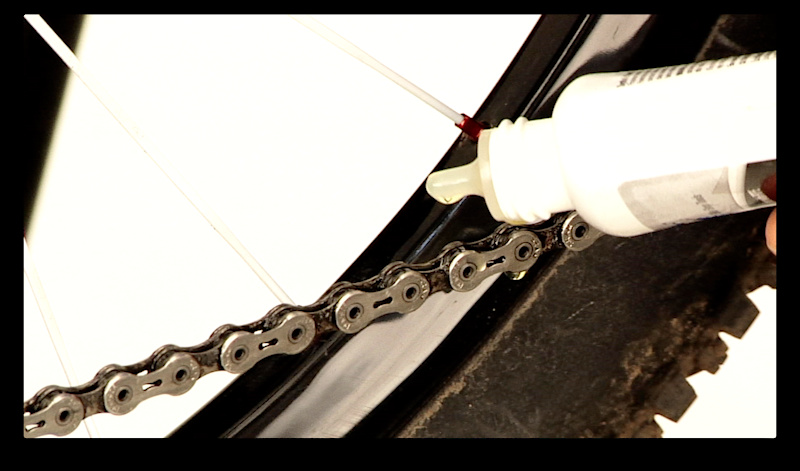
Step 2. I prefer to use a drip bottle as it is far more precise than an aerosol can
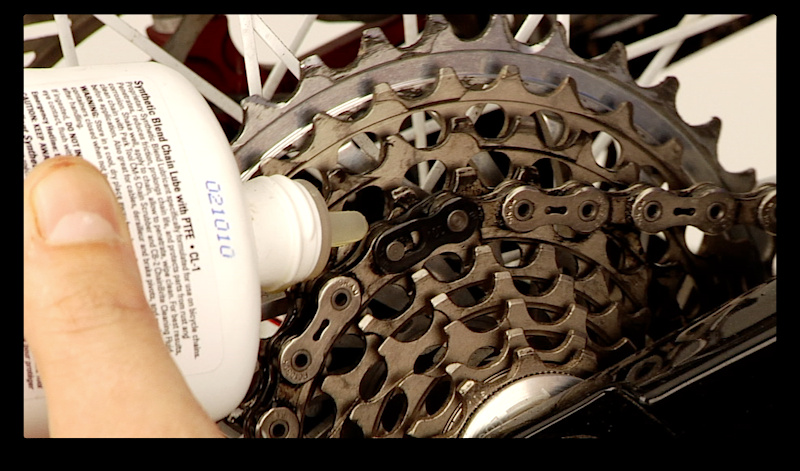
Step 3. Apply lube sparingly to each roller on both the top and bottom sides of the chain while pedaling in reverse
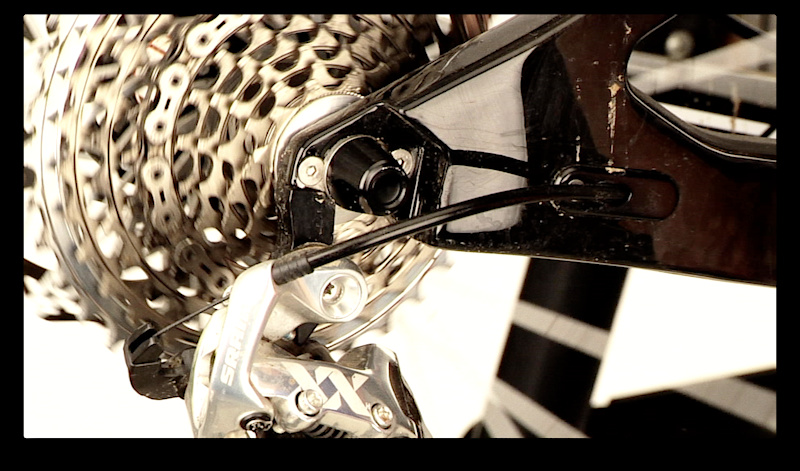
Step 4. Keeping it in the same gear while you pedal the bike for a few minutes to let the lube penetrate into the chain's inner workings
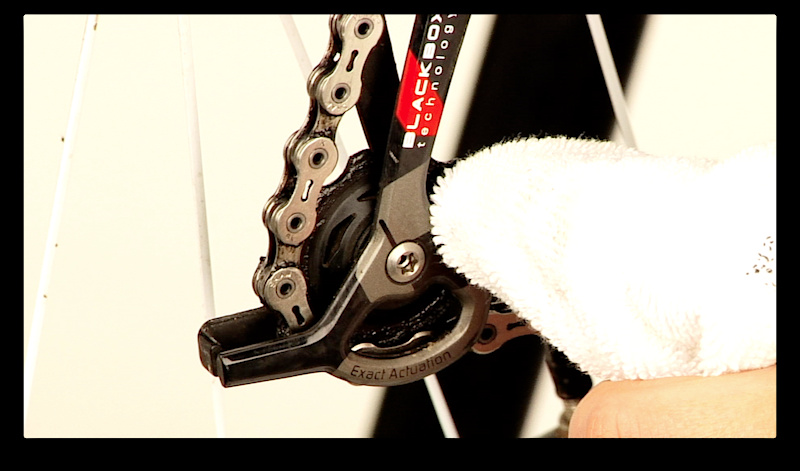
Step 5. Use a clean rag to wipe off any and all chain lube that may be on the outside of the chain, including the side plates and the derailleur's pulley wheels. Extra lube will only attract dirt and create a mess. The only lube that you want on your chain is in the rollers and between the chain plates
Past Tech Tuesdays:
Technical Tuesday #1 - How to change a tube.
Technical Tuesday #2 - How to set up your SRAM rear derailleur
Technical Tuesday #3 - How to remove and install pedals
Technical Tuesday #4 - How To Bleed Your Avid Elixir Brakes
Technical Tuesday #5 - How To Check And Adjust Your Headset
Technical Tuesday #6 - How To Fix A Broken Chain
Technical Tuesday #7 - Tubeless Conversion
Technical Tuesday #8 - Chain Wear
Technical Tuesday #9 - SRAM Shift Cable Replacement
Technical Tuesday #10 - Removing And Installing a Headset
Have you found this tutorial helpful? Share any of your hints or tips below!
Visit Parktool.com to see their entire lineup of tools and lubes.
Author Info:

Must Read This Week
Sign Up for the Pinkbike Newsletter - All the Biggest, Most Interesting Stories in your Inbox
PB Newsletter Signup
i have a single speed,
andd i just use somee of my dads mechanic thingyy...is that badd :O
andd i used wd-40 on my old hard-tail haha
I don't know why you have to be such an ass about it? It seems hard for me to believe that you're (zackmorris) trying to make a difference everyday.
...being environmentally conscious apparently makes me a b!tch.
Nice article - thanks to pinkbike for all the tech tuesdays!
Don't sit there and worry about your chain lube because at the end of the day the only difference is a little voice in your head that makes you feel better about yourself. "Eco Friendly" is just one of the worlds newest industry out to grab your hard earned cash at a premium price! There are bigger things to worry about thats all I've been trying to say here.
Did you guys know soybean productions has a greater carbon footprint then chicken farming, Eco friendly bio fuels are creating food shortages in some countries which are driving the cost of rice,soy and corn prices up making it hard for some people to stay alive.
The world will go on way after we are gone. The only point in protecting it is for ourselves. Regardless in 5 billion years the sun will burn up and our solar system will be lifeless!
Hope that helps, if i've missed anything let me know and i'll do my best
Craig
as a side note what are so opinions on ceramic lube ?
Leave a clean rag on your tire/seat/etc, then before you go ride wipe the excess lube off. This allows for good penetration of the lubrication into the inner workings of the chain.
As for cleaning the build-up off the pullies, I found dental picks work wonders (hard to get sometimes, but one of my favourite piece of gear in my toolbox).
No more Hepatitis shots for me!
Still: how about we make this MacGyver contest: Fix a broken chain without a chain breaker using only what you find in the woods
WD40 Bike Lube dry lube is supposed design for derailleur and brake?!?
Yes... Ofcourse it is. Thats why almost every chain lube uses teflon, PTFE, isn't it... Cant believe how utterly stupid and ignorant people can be. Keep using engine oil... Enjoy your filthy gummy chain. Moron.
How mature of you to apologize to me, now I can sleep at night. Thank ya Jesus!