Scott Genius 720 - Review
TESTED
SCOTT
Genius
720
Genius
720
WORDS: Mike Kazimer
PHOTOS: Ian Hylands
PHOTOS: Ian Hylands
Scott has been at the forefront of the recent push for 650B wheels, with Scott Swisspower athlete Nino Schurter racking up World Cup wins aboard a hardtail running the in-between wheel size. While race results can help prove the viability of a product, Scott's engineers performed further tests to determine if 650B wheels were worth pursuing. Through their testing, they found that 650B wheels weighed only 5% more than 26” wheels, compared to 29” wheels, which weighed 11% more than 26” wheels. Plus, the 650B wheel size could be used on longer travel bikes, such as Scott's Genius line of trail bikes, and could more easily fit smaller riders. Lab tests and the race results of super-fit cross-country racers are one thing, but how a bike handles in the real world is another. We managed to get our hands on a Genius 720 to see if its trail performance matched up with Scott's lab results.
Details
The Genius lineup has undergone numerous refinements since its introduction ten years ago, and for 2013 the Genius is available in 650B or 29” wheels sizes. The 650B wheeled bikes, which Scott calls their 700 series, have 150mm of travel, while the 29ers (the 900 series) have 130mm of travel. The Genius 720 has a carbon front triangle, a Shimano XT/SLX gruppo, and weighs in at 30.03lbs (size large) without pedals. MSRP is $4729.99 USD. SCOTT Sports.
• Purpose: all-mountain/trail bike • Carbon IMP/HMF front triangle • Rear wheel travel: 150mm (5.9 inches) • Tapered head tube • FOX 34 Talas 650B Evolution CTD Air | • DT Nude2 rear shock / 3 modes: Lockout-TC-D • Shimano XT/SLX 3x10 drivetrain • Shimano SLX brakes w/ 180mm rotors • Weight: 30.03 pounds (w/o pedals) • Sizes: S, M, L (tested), XL |
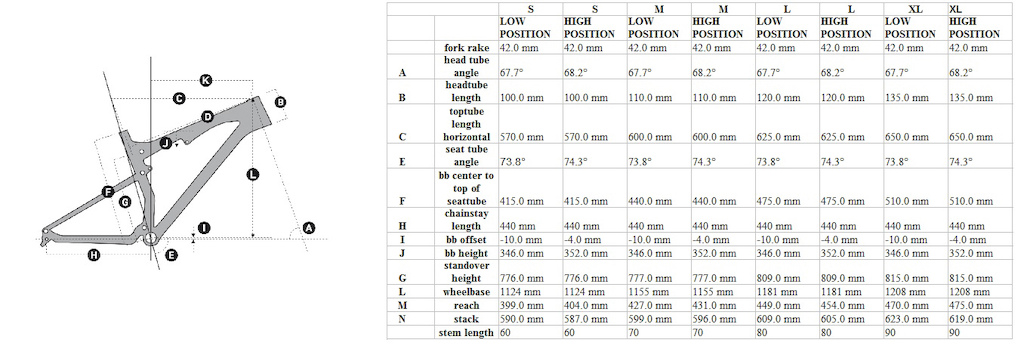
Scott Genius 720 Geometry
 |
Frame Design
Scott is no stranger to making bikes out of carbon fiber, with over twenty-one years of experience, beginning with the Endorphin model that was unveiled in 1992. The Genius 720 features a carbon front triangle constructed using Scott's proprietary Integrated Molding Process (IMP), which involves using high modulus fibers oriented and layered to achieve the optimum strength-to-weight ratio. The bottom bracket area, which uses the PF92 standard, is visually impressive, looking like something from a stealth fighter, a shapely mass of carbon designed to be laterally stiff so that pedaling input is translated into forward motion, not wasted on side-to-side flex. The shift cables and rear shock control are internally routed, disappearing into the frame just behind the tapered headtube before reemerging at the rear shock and bottom bracket area.
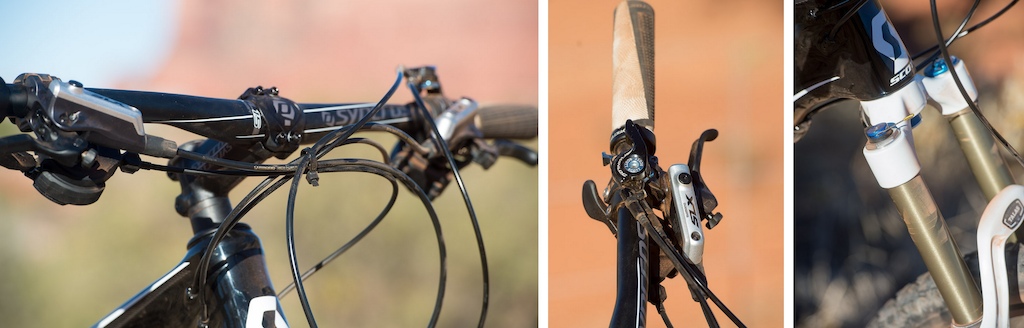 |
 The Genius 720's command center. It looks busy, but everything has a purpose. The TwinLoc lever controls the Fox 34 front fork and DT Swiss Nude2 rear shock simultaneously. The Genius 720's command center. It looks busy, but everything has a purpose. The TwinLoc lever controls the Fox 34 front fork and DT Swiss Nude2 rear shock simultaneously. |
At first glance, the jumble of cables and housing coming off the front end of the Genius 720 looks overwhelming. With a dropper post installed (the 720 build kit doesn't include one, but does have routing for running a stealth post), there are a total of 7 lengths of housing originating at the handlebars. This includes the front and rear brake, front and rear derailleur, front and rear shock (which are both controlled by Scott's TwinLoc lever), and the aforementioned dropper post. Everything has a purpose, but it does take some time to get used to all the gadgetry in one place.
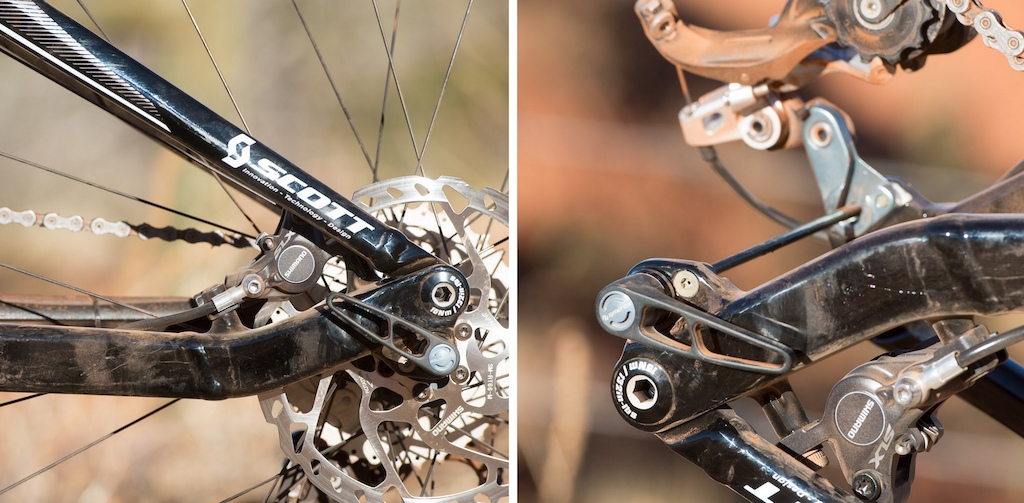 |
| The bike comes with a 135mm QR, but the dropouts can be switched, letting the Genius accommodate wheels with 142x12 or 135x12 spacing. The Genius also has a post mounted rear brake, a frame design feature that is becoming more common. |
The rear dropouts of the Genius are interchangeable, allowing wheels of 142x12, 135x12 or 135x10 spacing to be used. Big fans of creative acronyms, Scott calls this system IDS-SL, or Interchangeable Dropout System – Super Light. The Genius 720 comes with a 135x5mm DT Swiss RWS quick release, which threads into the drive side dropout.
Suspension Design

The Scott Genius 720 uses a link driven single pivot suspension design, with a forged link activating the DT Swiss Nude2 rear shock. The linkage has a chip that can be flipped to alter the bike's geometry, changing the bottom bracket height by 6mm and the head angle by .4 degrees depending on the chip's position. One touch that mechanics will appreciate is the bolt torque specs printed on the bearing caps, eliminating the need for greasy fingered internet searches.
While the Genius' suspension design is relatively basic, Scott takes it a step further with their patented TwinLoc system, which is controlled by the handlebar mounted lever. The three modes for the Nude2 rear shock are Lock, Traction, and Descend, which correspond with the Fox 34 front fork's Climb, Trail and Descend modes. When the lever is pushed to switch the Nude2 shock to Lock mode, the front fork is simultaneously put into Climb mode. Switching to Traction mode limits the rear shock's travel to 100 millimeters and puts the front fork into Trail mode. Compared to
how travel adjustable front forks work, which ride lower in their travel when they're put into short travel mode, putting the rear shock into Traction mode doesn't make it ride lower in its travel. Instead, the shock canister's air volume is reduced, creating less sag, which in turn raises the bike's ride height, and slightly steepens the head angle. While the Genius' suspension design is relatively basic, Scott takes it a step further with their patented TwinLoc system, which is controlled by the handlebar mounted lever. The three modes for the Nude2 rear shock are Lock, Traction, and Descend, which correspond with the Fox 34 front fork's Climb, Trail and Descend modes. When the lever is pushed to switch the Nude2 shock to Lock mode, the front fork is simultaneously put into Climb mode. Switching to Traction mode limits the rear shock's travel to 100 millimeters and puts the front fork into Trail mode. Compared to
Component Check
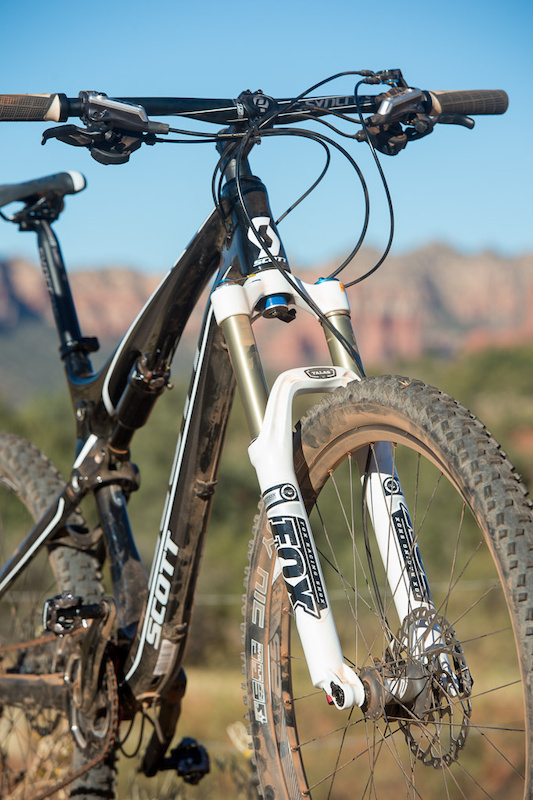
The Genius is decked out with a mixture of Shimano XT and SLX components, along with a variety of Syncros products, which isn't surprising considering Scott purchased the company early last year. Front suspension duties are handled by an Evolution Series Fox 34 TALAS with CTD that can be run at 150 or 120mm of travel, while the DT Swiss Nude2 rear shock provides up to 150mm of rear travel. It was nice to see a pair of proper pedals (Shimano M520) included with the bike. While not everyone rides Shimano (or even clipless) pedals, it's better to have them included than needing to tack on another $80 or more to the final price of the bike. We would have preferred a double ring setup in the front versus the triple that the Genius is equipped with - less shifting equals more time to focus on the trail. Shimano SLX brakes keep the Genius' speed under control, and Schwalbe's 2.25” Nobby Nic tires are seated on Syncros branded rims and hubs (although the hubs are made by DT Swiss).
|  | ||||||||||||||||||||||||||||||||||||||||||||||||||||||||||||||||||||||||||
Riding the Genius 720
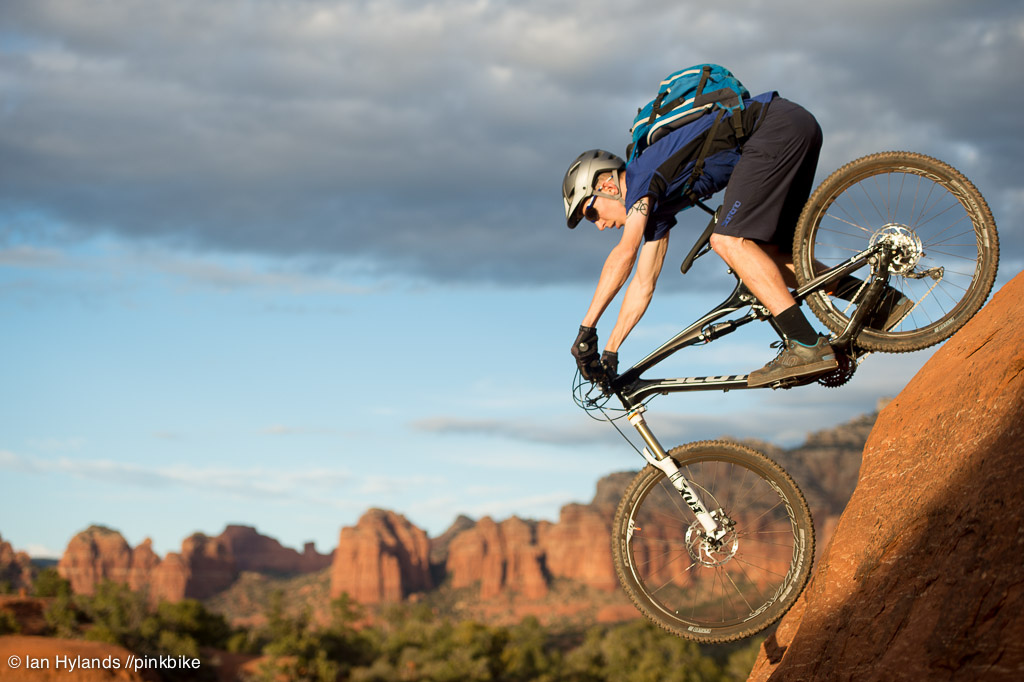 |
| The Genius 720 didn't have any trouble making its way down the steep rock rolls we found in Sedona. |
On level and rolling terrain, the Genius' geometry put us in a relaxed and upright position that could be maintained for hours on end, with the sloping toptube providing enough clearance for maneuvering the bike when the trails turned technical. We did end up installing a RockShox Reverb dropper post and a slightly shorter stem on the Genius to make our time on Sedona's rolling terrain even more fun.
 |
| There was a bit of a learning curve when trying to find the perfect climbing position. Remaining seated seemed to have better results than an out of the saddle approach. |
Climbing
Finding the perfect climbing position on the Genius 720 proved to be more of a challenge than expected. The sweet spot, that point of optimum traction, could be elusive at times, causing us to spin out or lose forward momentum on more than one occasion. It was most noticeable when climbing out of the saddle – if we switched the TwinLoc remote into Traction mode and stayed seated the climbing performance improved. The geometry numbers of the Genius 720 are very similar to other bikes in this class: a 67.7 degree head angle, 17.3 inch chain stays, and a 73.8 degree seat tube angle, but there was some combination of elements that were working together to make the ideal climbing position hard to find.
It's worth mentioning the weight of the Genius at this time. With pedals and the RockShox Reverb dropper post installed, the bike weighed in at 31.6 pounds, which was more than we expected, especially considering the Genius 720 has a carbon front triangle and a fairly light build kit. A few years ago a 150mm trail bike at this weight would have been heralded as 'the next big thing', but the trail bike category has become extremely competitive, with a number of companies offering bikes with similar amounts of travel at lower weights.
After the initial learning curve, we came to terms with the Genius' climbing manners, and began spending more time seated when climbing rather than our preferred out of the saddle climbing position. This worked, and we were able to make our way up several technical rock sections that had stymied us on other rides. The 650B wheels didn't seem to climb any better than their 26” counterparts – there wasn't that feeling of the tires spanning the distance between obstacles that 29” wheels provide.
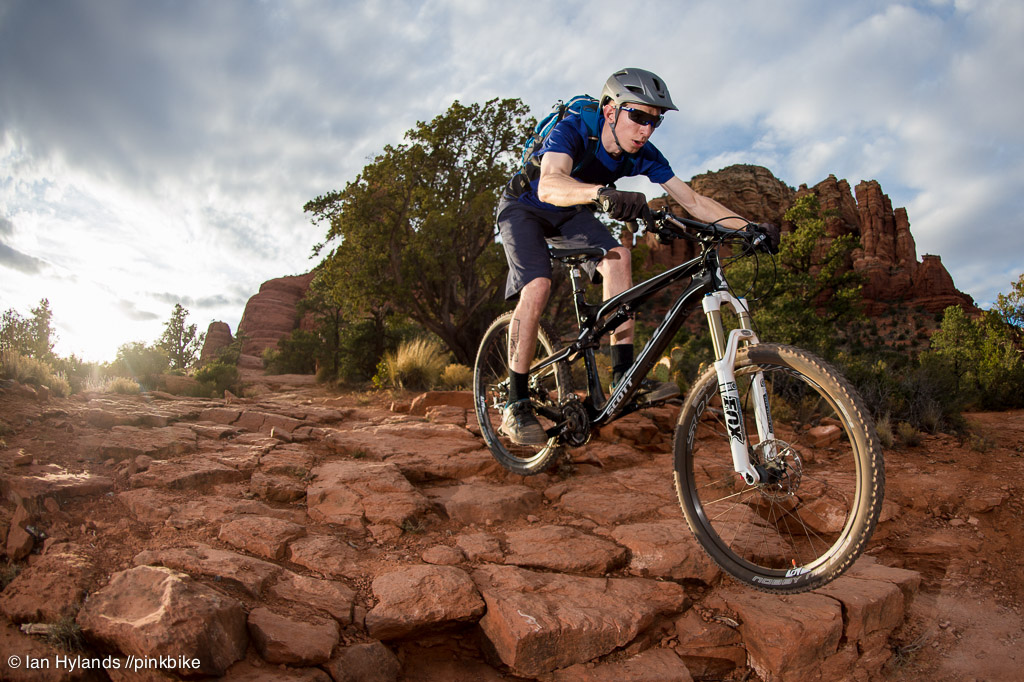 |
| While not as plush as other bikes in this category, the Genius behaved well on the descents, especially when the speeds increased. |
Descending
The Genius 720 was well-mannered and predictable when descending in both travel modes, although we never felt like we were getting the full amount of travel, despite the o-ring on the rear shock telling us otherwise This was particularly noticeable when riding through extended sections of rough terrain. We experimented with different air pressures, but were never able to make the Nude2 rear shock feel as plush as we'd have liked. Towards the end of our time aboard the Genius, the shock started to make a horrendous squeaking noise when it was switched into Traction mode. The noise would go away after cycling the shock a few times, but it would return the next time we switched from Descend to Traction mode. We spoke with Scott, and they attributed this issue to incorrect cable tension between the TwinLoc remote and the shock. There are marks on the pulley which assist in dialing in the proper tension to ensure the shock functions properly - adjusting the bike's cable tension would likely have remedied the noise we experienced.
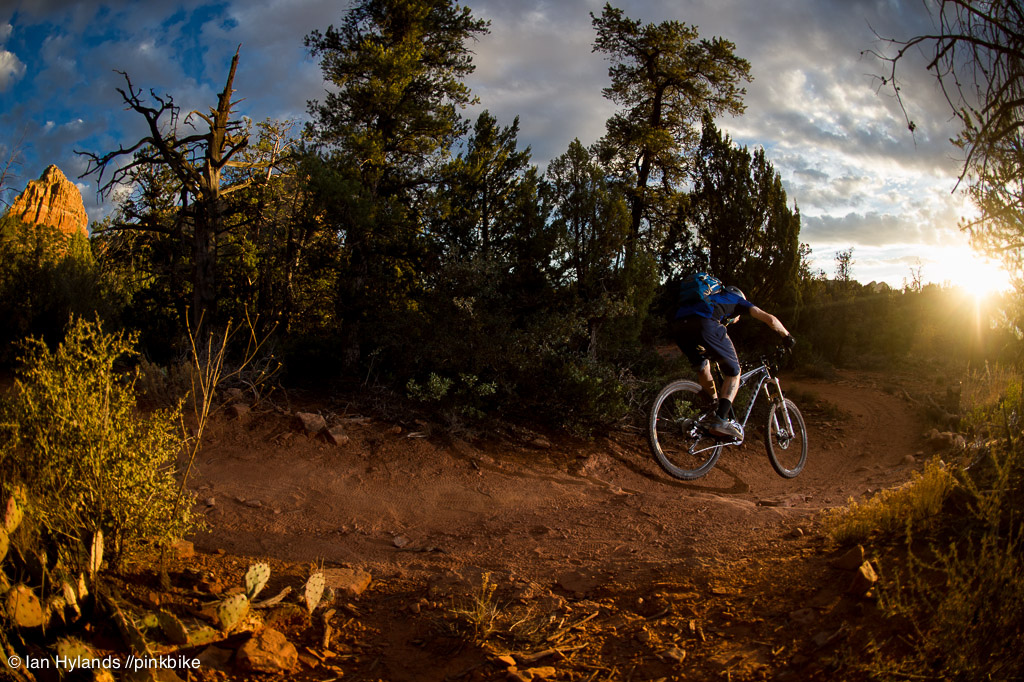
It was easy to forget to switch the TwinLoc lever into long travel mode, but luckily the bike handled well in both settings. The shorter travel setting actually felt better in some instances – the stiffer suspension and higher ride height made the bike feel snappier and quicker in the turns. While some bikes have a playful quality to them, encouraging the rider to pop off every possible trail feature, the Genius 720 has a serious feel to it. It gets the job done, but it didn't inspire us to get sideways or to double up trailside features. The Genius will get airborne, and handles well in the air, but it does take some coaxing to get the wheels to leave the ground. At higher speeds the bike shook off some of its serious demeanor, and felt more nimble and easier to whip around. One of our test tracks had a section of sweeping, bermed corners that dove in and out of small gullies. This was where the Genius felt most at home, traveling at high speeds on terrain that wasn't overly technical, but that required a lot of bike movement – quick uphills, followed by equally quick downhills.
 |
Ride Notes
• The Fox 34 was a smooth operator from the start, and the extra stiffness of the larger diameter stanchions was appreciated when cornering through rocky terrain. We rarely used the TALAS feature, preferring how the bike felt in the longer travel mode.
• We mention it in nearly every review, but that's because bikes are still being spec'd with narrow handlebars, like the 700mm bars on the Genius 720. It's easy enough to shorten a handlebar, but lengthening one? Not so easy. A pair of wide bars would be an excellent addition to the Genius.
• Shimano's SLX brakes worked flawlessly throughout the test. Even after a hard crash that had the brake levers dragging over solid rock, they continued operate perfectly.
• Schwalbe's Nobby Nic tires weren't the best choice for the Sedona slickrock. The tall side knobs had a tendency to buckle, especially on off-camber terrain, causing the wheel to slide. On softer terrain it seems like they would be a decent performer, with plenty of room between the knobs to shed mud, but they had a bit too much side knob for the desert rock riding.
Pinkbike's Take:
 | Scott has packed a veritable Swiss Army knife's worth of features into the Genius 720. We're not sure where the little toothpick is, but we have no doubt it's mounted somewhere on the handlebars. All joking aside, the Genius 720 is a versatile bike that can go from 150mm of travel to 100 with the push of a lever. Technically savvy riders that aren't daunted by the array of controls on the Genius will find themselves switching travel modes multiple times throughout a ride, dialing in the right setting to match the terrain. While we appreciate the time and effort that has gone into developing the TwinLoc system, in reality it seems the bike would perform better with a Fox CTD rear shock. Plus, for those who love their levers, Fox makes a remote lever that works in a manner similar to the TwinLoc lever. Better rear suspension and a bit of a diet could wake the Genius from its slumber, turning it into the trail-slaying bike we wanted it to be. As it is, the Genius 720 never came alive for us, remaining a capable, yet subdued trail bike whose mild manners left us wanting a more lively ride. - Mike Kazimer |
Author Info:

 Bellingham, WA, United States
Must Read This Week

Lee, what bike did you ride? the US demo that came up to BC for Crankworx? Did you take time to set the shock pressure? Or was your first ride like mine.. uber excited to get out on a fancy newfangled 650b bike and neglect to spend any time preparing it? - my bad.. still enjoyed it though.
I put 3 rides on that large demo, 3rd ride and some work setting pressures, it was dialled, not 'plush' like my Spark's Nude2 can be, but dialled.
That being said, there are a couple of 26" inch wheeled all-mountain bikes currently being tested in the mud and snow - stay tuned for the reviews over the next few months.
In the past, I was vendeur.Dans sale, we all fesait to highlight the novelty, because it is an opportunity to increase turnovers. I left this area for the purpose of selling it to a max figure (I was even asked to lie to people!) even if the bike is not suitable for clients.
With "pseudo-new" it really takes people for fools, because nothing concrete and prices still rising.
Vive consumer society!!
Mnah, when is 650A and 650C coming?
#1 The effective diameter comparison depends on the tire width because that effects the casing size, but the rims being 1" larger (than what 26" balloon tires use)means for an equal width, you're never going to have less than 1" increase in diameter of tire. Now if he'd said "effective radius" he'd be right... assuming he even understood the difference, which its clear, he doesn't. Hell, he could even get the math of conversion of inches to mm correct. It takes 8 seconds to ask the internet how many mm in 1" (25.4) if you don't know.
#2 Modern 650B mountain bikes as most PB members would think of them (suspension, disc brakes, etc) didn't exist at all until 2007 because no company was offering tires for it any longer, then Kirk Pacenti comes along and orders a production run of tires made and the snowball took off down the hill. Within a year, dozens of riders are building their own bikes around Kirk's tires and initially Velocity Blunt rims onto whatever compatible frames & forks they could find. Within 2 years and fork companies are stepping up to the plate and the first mid-size bike brand is jumping into the action with production models (haro). Another year and Jamis and KHS join the fray, and Kenda and WTB and Schwalbe and IRD all have tire alternatives and we're getting full suspension bikes also. At five years, the tires have won two silver medals at the olmpics, placed 3rd in the redbull rampage, and won the XC world championship and XC World Cup overall titles. That isn't disillusionment, nor is it peer pressure, nor is it some beige in-between colour. Those are facts. 29ers took two to three times as long to get to that stage of development and still haven't done anything like the redbull results in the gravity fields.
As to my not liking specialized, its not the bikes that's the problem, its how the brand is run. They cheat, they lie, they steal. I see no reason to support them when they behave like that. In many ways, they're the big-oil of the bicycle world. Its going to become amusing in a year when the horst-link patent expires in the USA and all the euro brands that employ it, suddenly arrive in the USA marketplace and start stealing market share from them in a big way. Companies like Ghost, Cube, Lappierre, and more.
As to what the market is asking for... for forks and parts and bikes... the AM market might be asking for 34s, but the XC market is not, and its the XC market that drove the 650B development to where it is at now. But even in the AM market, Fox forks are porky compared to other makes. And as is often reported, they either have problems achieving full travel, or on rare occassions, they blow thru their travel. Now since the guts to the forks are pretty much identical, part wise... this comes down to a fundamental issue of quality control in the manufacturing end, and Fox has nobody to blame for that but themselves.
No I don't use much informaton, it is you who rely on it, so I am not misinformed. All I need is a diameter on the wheel - then I use a thing called thinking and imagination to judge what works, can work and what's an utter bullshit. People or Market as you call it - is not asking for anything, companies don't do much polls, they design something and market it, inflate needs and expectations - it is 99% proactive. Reactive design and manufacture can happen in no less than 3,4 years when people got familiar with the product, so we can talk about actual market demand for 650B earliest in 2016 you economy-illiterate oik. Market demand, you idiot... yea billy sits at home and writes e-mails to companies to revive a wheel size, or Bobby thinks, hmmm, wouldn't 35mm bar clamp be great? I got to call Easton!
As in PM: Google the term useful idiot. There is even a BBC program about such personality. You fit big time!
Being objective is usualy reserved to people who can think and really know what they are talking about. Making a big deal out of tiny advantage in tiny area of use is truly showing a finger up while having marketing penis in their mouth.
Wake the f*ck up...
www.bikekulture-mag.com/V2/26-27-5-VS-29-part-II-L-avis-de.html
Shall I applaud when Fox34 gets 17,5mm axle? Nothing wrong with that?
It's a cheap way for them to "innovate", I'd prefer them to sit more on stuff like dropper posts, gearboxes, cleaner production or bringing production back home, so they make money and people get jobs.
So, 2015 - gearbox or 650C?
650c is smaller than 650b. 650c is the same outside diameter as a 26" offroad tire, with a road tire mounted. Basically the same thing. 26"=559mm + 2"(50.8mm) tire, 650c is 571mm + 23mm tire. So assuming a basically round tire for simplicity, the diameters are 609.8mm or 594mm. Approximately 16mm in diameter difference. When tires were 1.5-1.75", they were basically the same size. The reason for the 650b was using the same outside diameter as a road wheel/tire, with larger rubber for off road use. I don't feel like doing the math for you. Its easy to look up if you like.
In my very own opinion (which is similar to the one of some big heads in MTB skill coaching) people should not ride tyres smaller than 26x2.25" if they are not racing XC or Marathon. For grip and cushioning. At the same time tyres bigger than 2.25" on larger diameter start to provide too much innertia. Sure -you can go thin on sidewalls but that compromises stability of the tyre in the corners and on the loose rocks. That's my whole point of utter pointlessness of 650B wheel size - TOO LITTLE DIFFERENCE
I tried Spec Epic 29 and own Niner EMD love'em! But I treat is as a better way to take long rides to see nature. I applaud the uphill grip and crusing speed. Still, for short intense rippage, 26" is simply more rewarding and allowing for more creativity to bake different cakes from what trail throws at you. Also talking feelings, you are fast on a 29er, yes... on the clock. Feelings wise - things feel slower. TOO MUCH SCIENCE - wake up, absorb the world with your senses, not only eyes reading numbers...
Will 275 be better on Enduro racing? Might be, but such a tiny bit of advantage it will be random as hell. Both are here to stay, but none will dominate, I am almost certain of it. I'd rather say it will be much bigger discussion whether to take a 29er or not. I think Enduro in terms of bike tech will be mostly about reliability, then light weight, and then at the end of the black tunnel - everything else. If there will be a proof ((I doubt it) that 650B provides better puncture resistance, then yea, that will be a huuuuge point.
But bigger wheel means bigger rotating mass at larger arm of the force (inertia), even in WRC - late braking and acceleration out of the corners is everything. That's why DH might never pick it up. There is just too much to the suspension to take the job of bumps and keep those wheels down. In XC - uphills and average speed away from the corners are everything, downhills in XC is just dressing the cake - make sure your sugar topping is fine so you don't crash and if you can put a cherry up there - good for you! But you better make sure the the dough and filling are right. I think way too many MTBers treat their sport like F1, raw data, little variables, lab tsts - and sorry it is road racing that gets closest to that.
"dave: I haven't ridden any 650B bike and I don't think I ever will"
So.... absolutely zero actual experience with the topic of discussion. Anyone who reads beyond this with any of his messages about 650B might as well be watching pro-wrestling, you know the outcome is pre-determined and its just as meaningless to the real world. Not even worth debunking his pseudo-science at this point, people who are gullible will positive prop him anyway, and people who aren't, are in the minority here apparently.
The only thing I respect about you is that you're a perfectly example of a internet forum troll.
Oh I wish I had better things to do... but I love to ruin it for you
So... an useful idiot, you and the next big thing, 650B in that respect - is first of all a person who considers himself as a intelectual, not stupid at all, in fact he isn't, he usualy truly is more intelligent or at least knowledgeable than average. However what makes him weak and therefore easy to exploit as a puppet to propagate of certain ideas is that he is easy to flatter and bribe (paid testing?). You see what makes us different is that being anti 650B, XX1 or anything gives me absolutely nothing - makes me independent. You on the other hand might get benefits from doing it, so you are way more likely to be biased.
I love this quote: "Some ideas are so stupid that only an intelectual might find them interesting..."
Where's the relevance - I don't knooooo - just please reply. You're the last thing I have!
Waki: worry my friend, we lost Deeight and company can not find them anymore, too lobomotisés by marketing discourse with blinding joile make a brainwashing the way! This proves that the manufacturers are well educated in their new customer, as they sell them anything easier!
Well, I played that ball so many times that I return it again with precision of Novak Djokovic at 100mph - .... Wait for it.... Wait for it.... Hmmm... Ahmmmmmmm....
You're wrooong!
Your both being trolls.
Go ride ya bikes; instead of trolling each other over stupid wheel sizes ....
Seriously!
In short, most of the bikes perceived advantages emanate from the twinlock system, and were you to remove that from the bike and then compare it to other similar rides I believe it would't hold on the descents or be any better on the climbs. Fit a remote lockout such as fox's CTD system to another bike and it would do exactly the same thing. The suspension seems to be designed around the twinlock remote, using it to overcome any short falls of the suspension design instead of engineering it out a different way. If you like covering up the design faults with a lockout, and are willing to use it, then it is just fine. If you want to ride without having to hit a lockout every time a climb approaches to make the bike climb properly like other bikes do without the lockout, then look elsewhere.
BTW options are great. Give your 26" horn blowing a rest...
The Power does not belong to them!
@Willie1... there's an often talked about piece in the industry that made the rounds at Interbike last fall, about a certain large known brand having a new full suspension 26" frame model all set to go to production (all the testing, R&D, prototyping had finished) and they abruptly cancelled it, much to the probable annoyance of the factory they use for production, because they'd rather eat the loss of money already spent, than be stuck with thousands of unsold bikes because the customer base clearly isn't there anymore for them.
21.9 lbs, almost 10 lbs lighter. I'm waiting for the Pinkbike review... :-D
Cube STEREO SUPER HPC 160 SL £3999.
The SLT that you've listed is a LOT more expensive (£6599) than the Genius, but the SL is closer to it price vise. Apart from that, it is much better spec'd, has a better suspension system (four bar) and is 2.3 kilos lighter, and still much cheaper.
I would take that Cube over the Genius any day!
-Comes with a dropper post
-750mm bars
-Hans Dampf instead of Nobby Nic
-Is actually full carbon (Genius has alloy rear end)
-DT Swiss wheels
-About 400 GBP more expensive.
I'd agree and say the Cube wins in everything except price. That is one hell of a bike.
From what ive read i can see the logic behind the bigger wheel size, but when a manufacturer pushes it because the new wheel size is supposedly better (like the above bike) and then in the review it isnt.. its simply a waste of everyones time (and money) which i think this is why so many 26" people on these forums are a little peeved off.
Obviously other manufacturers may have done a better job with the new wheel size, but when a large manufacturer who has been supposedly developing 650B from the start cant even get it right it makes you wonder even more that its just another marketing ploy.
check it fiveten.com/products/bike/gravity-spd