Video: Trails For All Seasons - A Trail Builder's Success Story
It's great to see riding communities grow in an area where it sometimes is a challenge.
When one thinks of good mountain biking destinations from around the world, Denmark is probably not the first place that comes to mind. It probably wouldn't even make the top twenty list for most people. That is, for those of us who even know where Denmark is, and that's it's actually not a nation of Dutch people. Unlike its larger Scandinavian brothers (Norway and Sweden), Denmark has not been blessed with mountains. It's also wet, and easily rivals cities like Vancouver for per annum precipitation. But despite its moistness and lack of vert, Denmark has a vibrant - and still growing - community of mountain bikers.
![Photographer Andr Andersen]()
As with other places in the world, mountain biking took hold here in the late eighties and early nineties. There were no official trails, as it was mostly a small group of renegades riding around the forests in the mud and rain. If you told the average person what you did for fun, they would think you were crazy. A rider and his bike covered in mud would, without fail, draw bizarre looks as you rolled back through the streets of Copenhagen on your way home from the forest.
![Photographer Andr Andersen]()
The first official mountain bike trail (the Red Trail) was opened in Hareskov (Hare forest) north of Copenhagen in 2001 by the ministry for the environment's forestry commission. Since that time, it has had a few reroutes to move sections of wet trail to higher ground. But otherwise, trail days were far and few between, and consisted mostly of a handful of people trimming back branches that hung at eye level during the summer months. Mud, and often hub-deep pools of water, were the accepted norm. Low-gear spinning was the only way to plow through long sections of trail during the winter months.
Slowly, this began to change, but "flow" as we understand it today was not yet a part of the mountain biker's vocabulary. Some of us were inspired by the ladder bridges and log rides of the North Shore and wanted to implement such structures on our trails, but were met by resistance. The adversaries were both purists that felt that ankle-deep mud and granny grinding were an essential part of the sport, and the forestry commission that at that time disallowed any unnatural materials to be used in the forest (i.e., nails) and generally frowned upon the idea of man-made structures.
![Photographer Andr Andersen]()
By 2009 mountain biking had exploded in Denmark and interest in the sport was continuing to grow. Nowhere was this more evident than on the trails that were now becoming heavily eroded. They resembled ugly black scars cutting across the landscape. But after several years of attempting to create better and more trail days, backed by information from the likes of IMBA and NSMBA, we finally got through. A meeting was set up between a few of the diehards and the forestry commission’s head ranger for the Hare forest. Our wishes were no longer falling on deaf ears and the environmental aspect of proper trail building and maintenance could no longer be ignored by the rangers. We agreed on work guidelines, signed an agreement, and Trail Builders Copenhagen (TBC) was born.
![photo]()
Since then, TBC has moved on to a popular trail in a neighboring forest, where they've managed to win overwhelming support through their noticeable trail improvements, creative building, and dispersal of information about trail building and maintenance through their own and other mountain bike forums. They’re working to make sustainable trails that can be ridden year round. They've already set a new standard for how trail days are conducted and have attracted a large volunteer base to draw from. More recently, local clubs and businesses have begun showing their support through donations and sponsorships. They've even been nominated for the 2012 Danish Bike Awards as "mountain biker of the year."
Certainly this isn't a new story, but every success story is one worth sharing. Trail closures are still a very real threat in many countries, whether due to liability, user conflicts or just plain ignorance, so every happy ending plays its role and can be used as a shining example of sustainability and cooperation in places that are struggling with the threat of closures. And the struggle is far from over here, as the positive momentum has really only just begun. TBC has a long road ahead of them, but through continued advocacy and a growing volunteer base, it looks like the future will be bright. A true happy ending will be one where the mountain biking community is truly a community that works together toward a common goal, and where Trail Builders Copenhagen isn't just a small group of renegades, but a collection of people that includes everybody who rides the trails north of Copenhagen.

When one thinks of good mountain biking destinations from around the world, Denmark is probably not the first place that comes to mind. It probably wouldn't even make the top twenty list for most people. That is, for those of us who even know where Denmark is, and that's it's actually not a nation of Dutch people. Unlike its larger Scandinavian brothers (Norway and Sweden), Denmark has not been blessed with mountains. It's also wet, and easily rivals cities like Vancouver for per annum precipitation. But despite its moistness and lack of vert, Denmark has a vibrant - and still growing - community of mountain bikers.
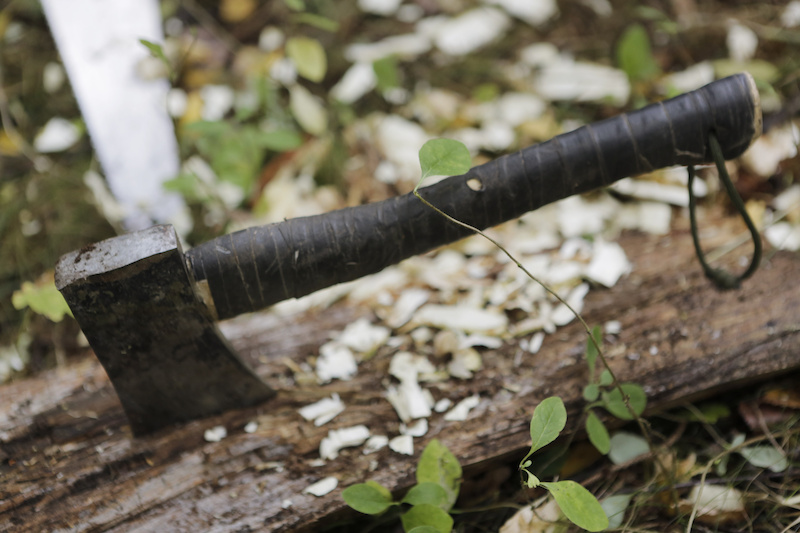
Tools of the trade
As with other places in the world, mountain biking took hold here in the late eighties and early nineties. There were no official trails, as it was mostly a small group of renegades riding around the forests in the mud and rain. If you told the average person what you did for fun, they would think you were crazy. A rider and his bike covered in mud would, without fail, draw bizarre looks as you rolled back through the streets of Copenhagen on your way home from the forest.
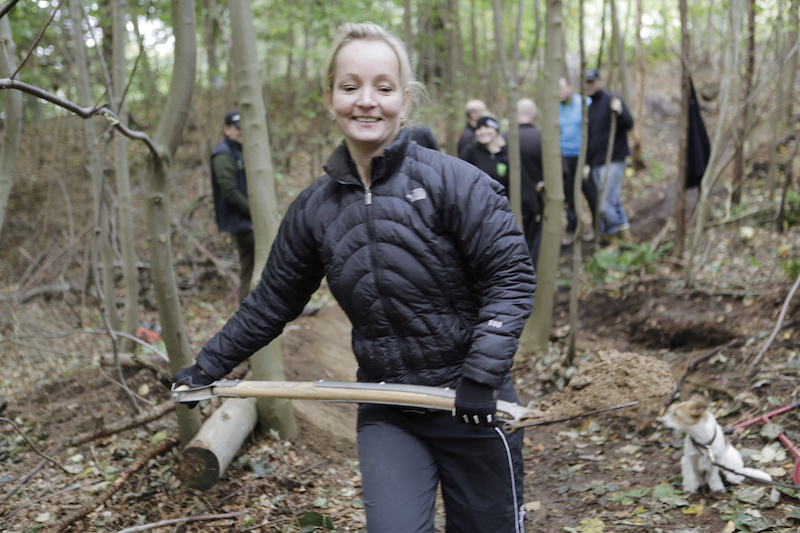
Gold digger
The first official mountain bike trail (the Red Trail) was opened in Hareskov (Hare forest) north of Copenhagen in 2001 by the ministry for the environment's forestry commission. Since that time, it has had a few reroutes to move sections of wet trail to higher ground. But otherwise, trail days were far and few between, and consisted mostly of a handful of people trimming back branches that hung at eye level during the summer months. Mud, and often hub-deep pools of water, were the accepted norm. Low-gear spinning was the only way to plow through long sections of trail during the winter months.
Slowly, this began to change, but "flow" as we understand it today was not yet a part of the mountain biker's vocabulary. Some of us were inspired by the ladder bridges and log rides of the North Shore and wanted to implement such structures on our trails, but were met by resistance. The adversaries were both purists that felt that ankle-deep mud and granny grinding were an essential part of the sport, and the forestry commission that at that time disallowed any unnatural materials to be used in the forest (i.e., nails) and generally frowned upon the idea of man-made structures.
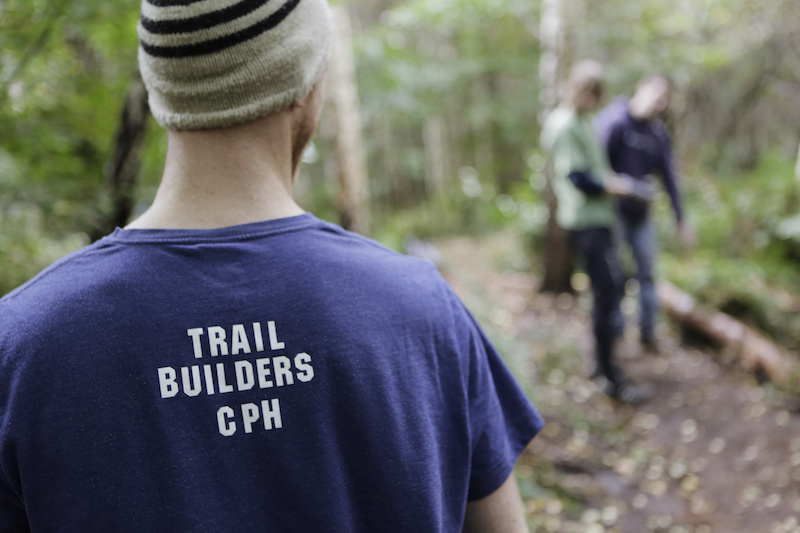
Representing!
By 2009 mountain biking had exploded in Denmark and interest in the sport was continuing to grow. Nowhere was this more evident than on the trails that were now becoming heavily eroded. They resembled ugly black scars cutting across the landscape. But after several years of attempting to create better and more trail days, backed by information from the likes of IMBA and NSMBA, we finally got through. A meeting was set up between a few of the diehards and the forestry commission’s head ranger for the Hare forest. Our wishes were no longer falling on deaf ears and the environmental aspect of proper trail building and maintenance could no longer be ignored by the rangers. We agreed on work guidelines, signed an agreement, and Trail Builders Copenhagen (TBC) was born.
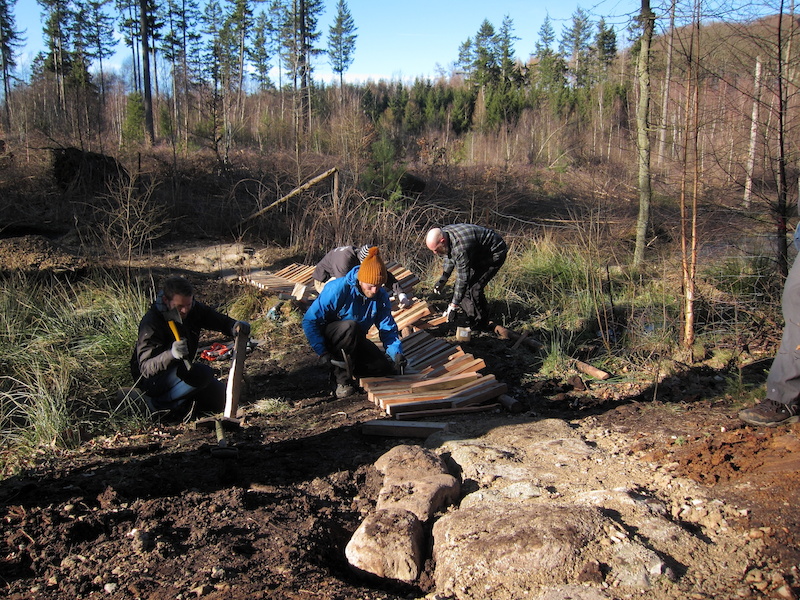
Bermed bridge in progress
Since then, TBC has moved on to a popular trail in a neighboring forest, where they've managed to win overwhelming support through their noticeable trail improvements, creative building, and dispersal of information about trail building and maintenance through their own and other mountain bike forums. They’re working to make sustainable trails that can be ridden year round. They've already set a new standard for how trail days are conducted and have attracted a large volunteer base to draw from. More recently, local clubs and businesses have begun showing their support through donations and sponsorships. They've even been nominated for the 2012 Danish Bike Awards as "mountain biker of the year."
Certainly this isn't a new story, but every success story is one worth sharing. Trail closures are still a very real threat in many countries, whether due to liability, user conflicts or just plain ignorance, so every happy ending plays its role and can be used as a shining example of sustainability and cooperation in places that are struggling with the threat of closures. And the struggle is far from over here, as the positive momentum has really only just begun. TBC has a long road ahead of them, but through continued advocacy and a growing volunteer base, it looks like the future will be bright. A true happy ending will be one where the mountain biking community is truly a community that works together toward a common goal, and where Trail Builders Copenhagen isn't just a small group of renegades, but a collection of people that includes everybody who rides the trails north of Copenhagen.
Posted In:
Author Info:
Must Read This Week
Sign Up for the Pinkbike Newsletter - All the Biggest, Most Interesting Stories in your Inbox
PB Newsletter Signup
Anyways, nice video, awesome country! would definitely move there, if they had some mountains
Where I'm from in Texas, there is a rivalry between the guys who want to build jumps on trails, and the guys who like more of the cross country aspect. No such thing as middle-ground or compromising. It's simply that the 29er hardtail's rule the place, and us, with any sort of desire to make the trail into something other than a fitness loop are "rowdy little kids." It's nice to see that in some parts of the world, people have the intelligence and ability to come together as just mountain bikers working towards a common goal.
But I got an new one from the warranty
Though there is two more good stories on the Danish bike scene. In the other end of the country there is Denmark's biggest dirtjump park:
www.pinkbike.com/video/273138
www.pinkbike.com/video/278226
And one of Denmark's best freeride trails:
mpora.com/videos/4K7KUqiUM
Mountain bike is a sport in progress!
Blue Mountain is a different story being a private company and all. Really confusing how all that went down. Don't you sign a waiver anyway?
Kudos to Trailbuilders CPH for a great video and what look to be some awesome trails! Denmark is on the destination list! I'll bring axe if they'll let me on the plane with it.
it's awesome what denmark has done and i hope to do the same here in ontario one day...
It was because of this douchebag that brought this fear into many trail associations and municipality in Ontario. After this many areas tore down illegal stunts and non-sanctioned trails. But also - it did bring the mtb in ontario together. Many associations and imba associated clubs came together to build many more trails together with many municipalities.
Remember guys - if you dont like the trails around you, dont bitch here. Go join a sanctioned trail crew and help pitch in. When you earn respect and learn more about trail builidng then you can also have your input into your local trails.
actually i was up in kolapore this fall (the lawyer incident trail) doing a little bit maintenance with the new user group. it is a common misunderstanding that the kolapore incident raised liability concerns that changed municipal polices. it was the success of mountain biking and all the informal trails being built reached a tipping point that it could no longer be ignored. lots of the land managers where unprepared about what to do plus they where long time public employees with not a lot of formal training in sustainable recreation land use management. they also ran their areas independent from most policies and mandates of the parent organization. the easiest thing to do for them was to shut it down and sweep it under the rug (which didn't work). luckily this old guard is moving on/retiring and new land managers are filling the ranks. the new land managers are better educated, progressive, follow polices/mandates/standards, engage the public and see the value of the diverse mtb community as a recreation resource. actually it is looking good and i'm very happy to work with some of these managers.
now i would definitely show up to help out on a trail day, but i wouldn't be in a hurry to join a mtb club. make sure that the mtb club you join supports the trails that you want to ride. some clubs no not promote technical/feature trails and are more fitness/xc/race oriented. but don't let this stop you from contributing and helping out (and bitching to the land manager).
JÄVLIGT BRA JOBBAT !
Looking forward to try it out
www.pinkbike.com/photo/8962795
The section of trail in the video has seen more rubber than an Amsterdam brothel. It will end up like this unless we 1) ban mountain biking in the forest entirely or 2) fortify the trail. It would be very easy to remove decommisioned structures after they rot and transfer them to a landfill btw. Your bmx track was once nature, too, and it could have been a nice, green park.
The bridge in the video is longer than 10 ft, and we don't build them 7 ft high because of liability issues. We have to concede to the land manager's wishes and guidlines, and build according to ridership, which is predominantly xc. I'm not sure how you judge flow by what you see on the video, but the bridge has plenty of good flow. You'll just have to take my word for it.
Thanks for the input. :-)
Blue Mind • Alexi Murdoch
Little Black • Submarines
The Black • Keys
Burial Miike • Snow
Thanks!
Stilhs BR550 replaced the rake --- although l do still use rakes, the BR500 will blow a trail 5 times as faster as doing the same with a rake.
chainsaw replaced the handsaw --- still use handsaws from time to time -- depending on where l am.
screws replaced the nails --- nails don't last as long so although screws cost more, the stuff we build will hold up a lot longer. professional grade hand held drill replaced the hammer
magnifying glass was replace by a lighter and a container of some sort of accelerator (aka same gas we use for the power tools).
the sledgehammer, shovel, pick-ax are still the same
example --- www.pinkbike.com/photo/8911292 l would never try to build that with nails ---- l'm sure it would get all wobbly pretty quick. it hit the 90 foot long mark a while ago, l have since built more onto it. maybe another 40 feet or so longer