A Small History of Enduro
 | Probably all of us, when we bought our first bike, didn't think to do races or know much about international-level mountain biking. The first thing we did with our mountain bikes was climb up hills so we could have fun going down them. That is the philosophy of enduro. - Franco Monchiero |
For an Italian, Franco Monchiero is direct with his words. The founder of Italy’s Superenduro series has a clear vision of what he thinks enduro should be. Start talking to the people behind enduro races and this kind of language is common, words like spirit, fun and essence crop up again and again. Fred Glo, the man who first called a race an enduro says simply, “I just wanted to organise a race I would like to participate in. I wanted more riding in a weekend, more fun and good trails.”
They aren’t the kind of words you hear coming from the mouths and pens of many race organisers any more. In downhill and cross-country the language of racing talks solely of challenge, victory and defeat. The rise and progression of mountain bike racing has been nothing short of meteoric. Franco’s partner in Superenduro, Enrico Guala, recalls that “in the 1980s there wasn’t this extreme specialisation of XC and downhill. I remember the bike I used in the 80s with a rigid fork. You did everything on that bike, climbing and descending. Then came the specialisation, by the time we reached the 2000s you couldn’t do every discipline well.” Today you’d be brave to take an XC race bike down a world cup-standard downhill track, and lugging a 40lb DH race bike around a 30 mile loop would be painful. The same goes for the people who race those disciplines, the levels of fitness and bike handling you need to race at those top levels are mind-bending. Yet for most of us, this is a long, long way from what we actually do on our bikes. This is where enduro fits in. As Fred puts it, “enduro is the heart of mountain biking – the link between technical and fitness riding. It is the only bike you need in your garage. Maybe it’s not the best bike to ride XC, but you can, maybe it’s not the best bike to ride downhill or the bikepark, but you can.”
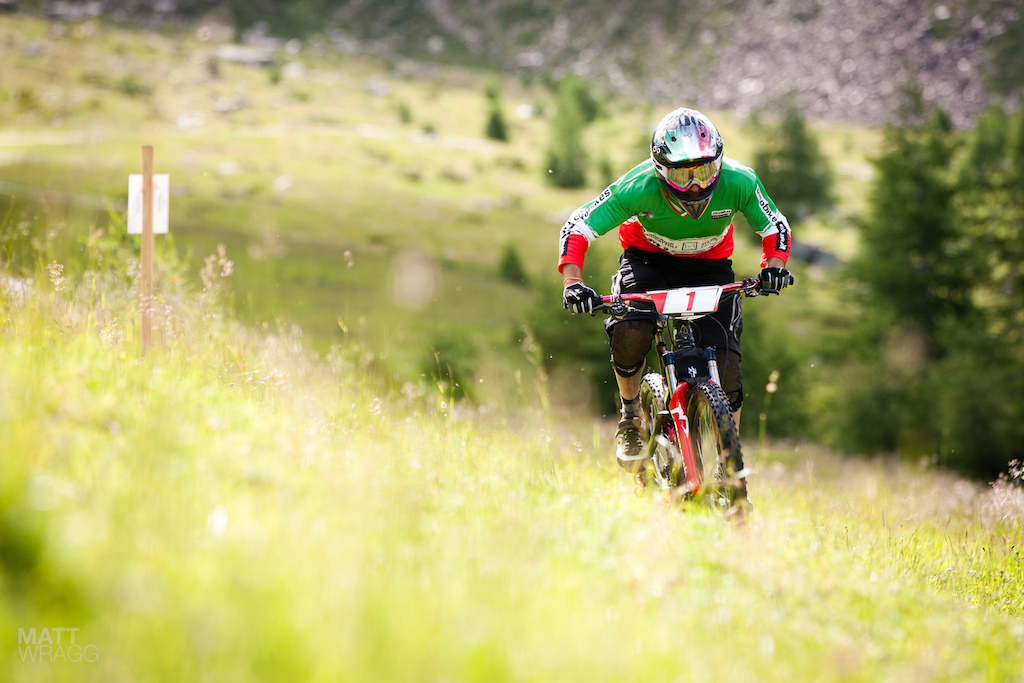 |
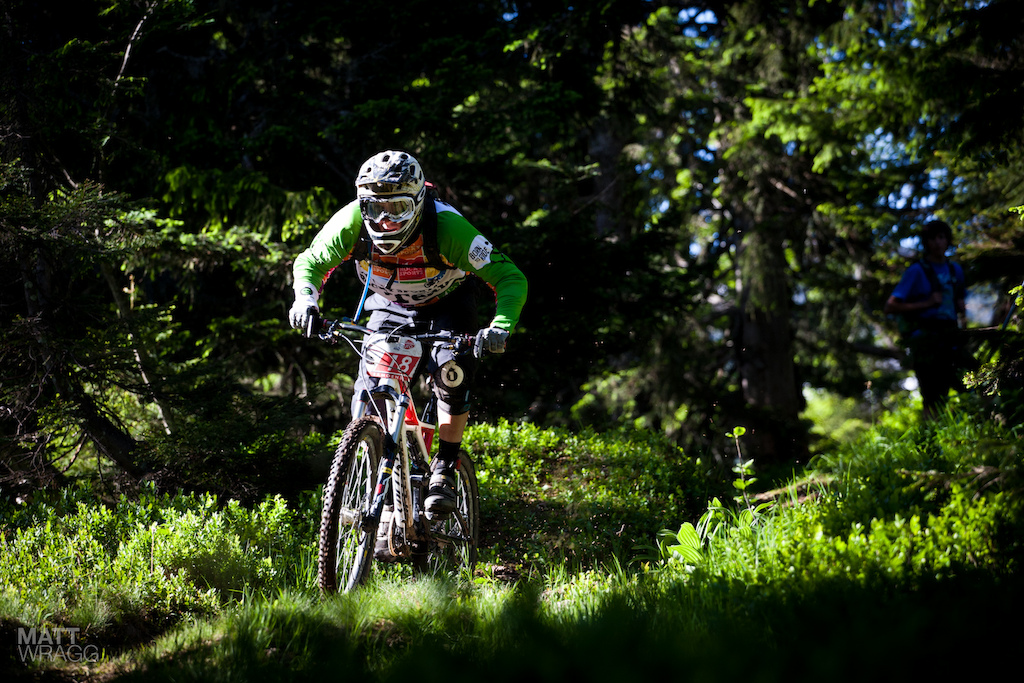
“Untimed uphill and timed downhill” is how Ash Smith, the man behind the Trans-Provence stage race, describes the format on its most basic level. He goes on, “people were realising, right from the beginning of mountain biking that we socially ride around with mates. There has always been a thing where you ride around together, have a bit of a break at the top and try and beat each other down the descents. For me, enduro is a recognition that you might as well formalise the race that you would do anyway with your mates – so you have a time and can see who did actually win.” What that works out to is a format where you race over a series of timed special stages that are mostly downhill. Those stages will be less full-on than downhill racing and could well involve some going uphill. Depending on where you are in the world, getting to the top can mean pedalling, a chairlift or a combination of both. Whoever has the fastest combined time over the special stages wins. Races tend to be fairly relaxed outside the top ten, with the focus on getting quality time out on your bike with your friends.
In the some countries, like the UK, there is need for some clarity – in the last few years some events called themselves enduros, long-distance races that didn’t use the timed stages and untimed liaisons which define enduro. As Gravity Enduro series organiser Steve Parr jokes, “the UK are lazy bastards, instead of saying endurance, they said, ‘oh, enduro, it’s shorter!’ They just shortened it and it stuck because it’s cool, it’s a nice name.” Ash isn’t shy in condemning this either, “it has caused a lot of confusion. In my opinion, and I’ll admit it is quite an extreme opinion, it has contributed to why it’s been slow to take off in the UK.” To get stuck into the definition of enduro would also rule out something like the Brechfa Enduro from being described as an enduro, as even though they use the timed special stage format, it includes an uphill climbing stage.
 |
Tracing the birth of the enduro format is in one way utterly simple, yet in others nearly impossible. In August 2003 Fred Glo held the Tribe 10,000 at Val D’Allos – the first mountain bike race called an enduro. There is genesis, the point where enduro began. Although Fred will tell you, “I don’t think we invented anything, we just adjusted things.” So to find the roots of enduro we must look further back and if we keep going all the way we end up in Carlisle in 1913. It was there that the first motorbike Six Day International Enduro was held, the oldest date on the FIM world calendar. With the format so well-established for motorbikes, it should come as no surprise that two of the men who pioneered the mountain bike enduro format, Fred Glo and Franco Monchiero, have their backgrounds there and it was these experiences that shaped their visions of mountain bike racing.
Early race histories are inevitably hard to nail down as they are held among groups of friends, recorded on cigarette boxes and all the results will have been lost when someone moved house. What is certain is that in the late 1980s a format called rallye emerged in France, based on the idea of timed special stages and untimed liaisons. Where this differed from modern enduro is that they tended to be more cross-country-orientated. On the 1001sentiers.fr website there is a snippet of results from the 1989 Rallye de Crete d’Auron. Only a few details have survived, but it clearly describes a race over five special stages, the last one being an obstacle course around the Auron ice rink. At the same time, among the vineyards of Alba in Northern Italy, Franco was holding small, local races around his house that used an enduro-style format. There are examples of these kind of races dotted throughout mountain bike history: Finland has had these kind of races for a long time now; New Zealand had the beer-fuelled, self-timed Real Railing Rally Racing as part of the infamous League of Gentlemen unrace series; in the UK we had the annual timing cock-up that was the Kona Mash-up. It is hard to talk about enduro without talking about the Megavalanche either. While it isn’t a true enduro event, it influenced every major enduro event organiser out there with its focus on long descents that tested both bike handling and fitness.
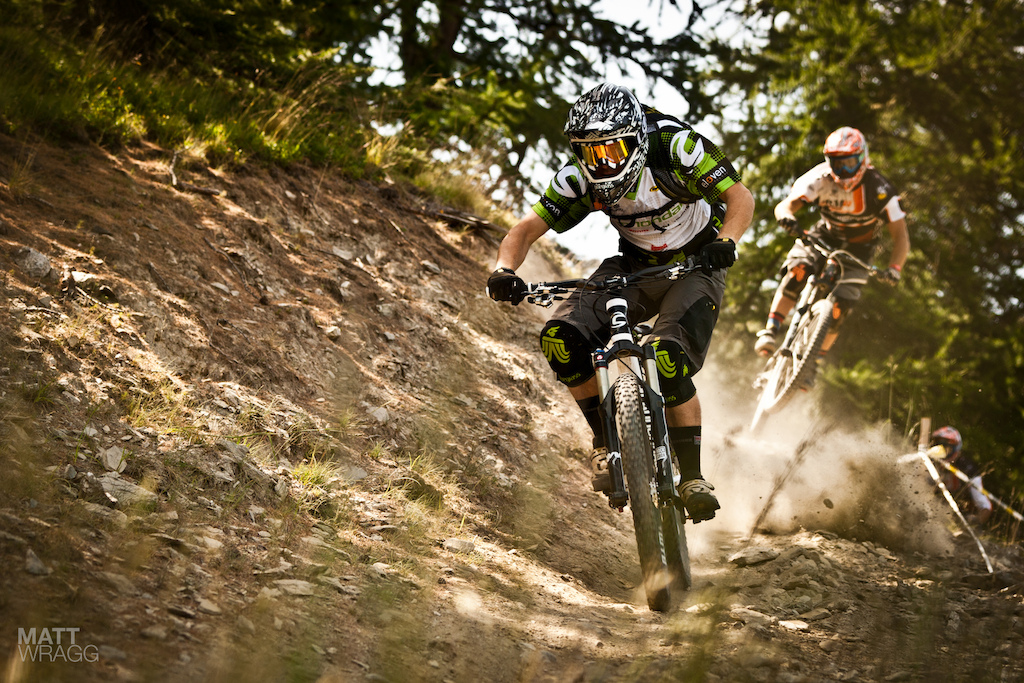 |
This is where Fred Glo’s Tribe 10,000 becomes important again – it is where this mass of ideas solidified and the point from which the modern enduro format began to grow. That first race had a format that might initially seem very different from what you recognise as enduro. As Fred explains, “in the Alps it would be too much to pedal up the hills – it wouldn’t be fun, so we used the lifts to go up. There were ten timed stages per weekend, on Sunday it was usually more all-mountain, on Saturday more enduro-DH. The goal was always to have about 90% down and 10% up. At the end you had more than two hours time trial over a weekend – it’s a lot. When I put the word enduro on the Tribe 10,000 half the guys didn’t understand what I meant. I had huge complaints because they came with DH bikes. In their heads, it was just going to be ten downhill runs in a weekend, but this is not downhill. Enduro is longer, more physical.”
By 2008 Franco Monchiero decided there was a need for an enduro series in Italy and held his first Superenduro race. To make it work in Italy the format had to be adapted to suit the terrain. Fred’s Tribe enduro races were always held in ski resorts, but Franco explains, “it would be very difficult to hold them in Italy – there are maybe three or four places where you could hold this kind of race, we couldn’t hold that kind of race in somewhere like Punta Ala.” With its spread into Italy, you can start to see the different visions of what enduro should be, as Franco feels strongly that “the fundamental essence of enduro is to enjoy the ride, but to reach the top of the mountain by pedalling.” As enduro grows it is this kind of format where you climb under your own power that has been picked up far and wide, in no small part because few of us are lucky enough to live near ski lifts.
 |
That adaptation has come full-circle and as of this year Fred’s Tribe races are adopting the format for one round, spurred on by another first for them – they are the first series to be officially recognised as national cup. “Since 2005 we have been running our series and in 2011 the French Federation asked us to represent enduro racing today in France. After our races a lot of clubs and racers wanted to organise their own races and events in their village or area. Because there were no lifts or high mountains, there was adaptation to the territories. At the beginning when everyone took the name of enduro and put the name on this other format I believed in two formats: enduro with ski lifts and rallye enduro for everywhere else. But in the end it’s normal, everything was not under my control. Everyone put the name enduro on their local race and now things are very different and we have to consider what enduro is ten years later. When the federation asks ‘what is enduro racing today?’ you have to consider all the aspects of enduro. For this year in our four race weekends we have the classic format, with no pedalling, one where we mix pedalling and lifts and one round with no lift.” Italy is also keeping pace with these developments and crowned a National Champion of enduro in 2011.
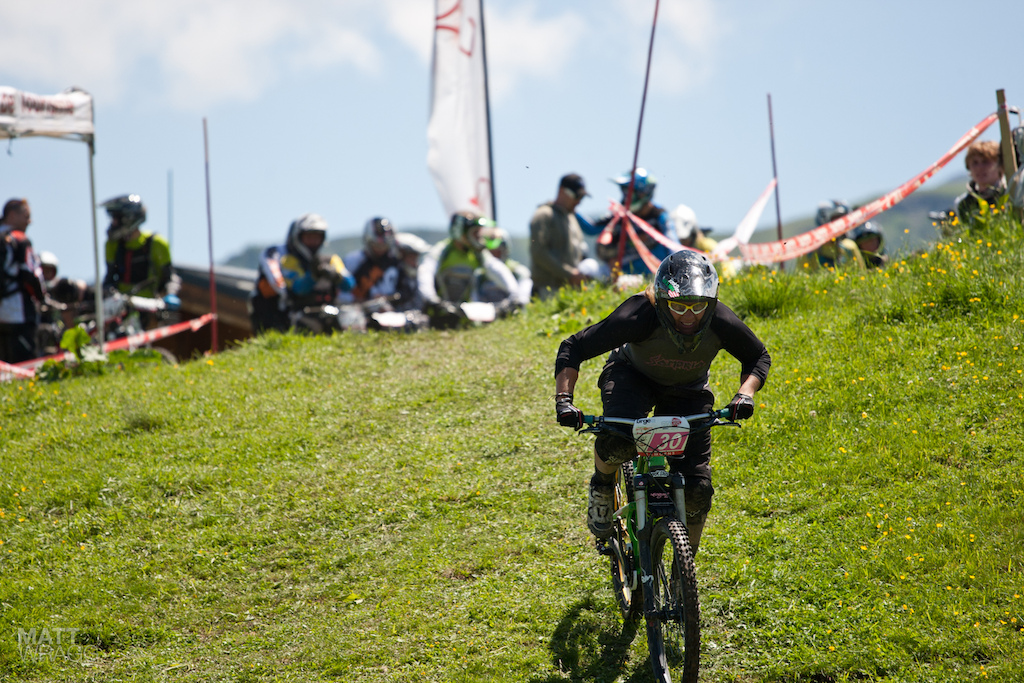
This leads us to the inevitable question, what does the future hold for enduro? For Trans Provence’s Ash, there is a simple answer, “the absolutely essential thing is that it doesn’t get too serious. It’s so important that it doesn’t become so focused on the results and too serious about the racing. The whole attraction is having a good crack; we must keep the good atmosphere and high-quality trails.” For Fred there is a more specific issue too – practice. Keeping true to style of the original motorbike enduros, in his races riders take the courses without practice runs. “If tomorrow we have something similar to downhill, I’m not sure it’s the same spirit. For me discovering the trail and anticipating was important in our enduro discipline. If everything is under kilometres of tape and you can practice as much as you like, for me it is not the spirit of enduro.” While at first it may sound like a crazy idea and few other race organisers are willing to join him in running races without practice, when you start working it through it speaks to one of the core ideas of the discipline – accessibility. Everybody arrives on race day on a level playing field.
 |
Yet there won’t be an easy balance to find, in the UK Steve Parr can already see the level of attention the format is getting, “you should have seen the pits at Innerleithen [round one of the UK’s Gravity Enduro series this year]. People went holy shit, this is mental, look at the size of it and it’s only the second year. And it’s only going to get bigger. It’s going to get more professional with the likes of Tracy Moseley and Dan Atherton coming over.” Enduro’s first professional racer, Remy Absalom, sees much of the same, “I think enduro is going to develop because more and more XC and DH riders prefer to change to enduro. The level is going to evolve into a great championship.” Yet he caveats that, even a top-level racer like him who depends on enduro for his living says, “I think and I hope the atmosphere will stay good and we can always keep the enjoyment in riding.”
Balancing the tensions between the demands of an increasingly-professional race format and what most people want as mountain bikers is going to be a challenge for enduro race organisers. Franco Monchiero, a former Italian motocross and downhill champion, sees the future of enduro paralleled in the sport it originally developed from – motorbike enduro. “If we make a comparison between the worlds of mountain bikes and motor bikes – downhill would be motocross and Superenduro would be enduro. Today, I am not a motocross rider at a good-level. I couldn’t think of racing because I would be lapped after two laps, they would all be jumping over my head and I would look like an idiot. It is the same with downhill. I don’t have the technical capacity to do it any more. With enduro moto they put all the riders in together, top riders with lower and middle-level riders in the same race because there aren’t too many technical sections, the jumps aren’t too big, the trails aren’t too extreme. With this approach, for your first race, you could race together with the top riders. It is the same for mountain bike enduro. At round one of Superenduro this year I was talking to people racing who were doing their first race and they were in with the top riders. In downhill or XC it would be impossible.” This is echoed by Steve Parr, “it’s a fine balance. I always say, if I can’t ride it, it can’t go in and I class myself as Joe Average.”
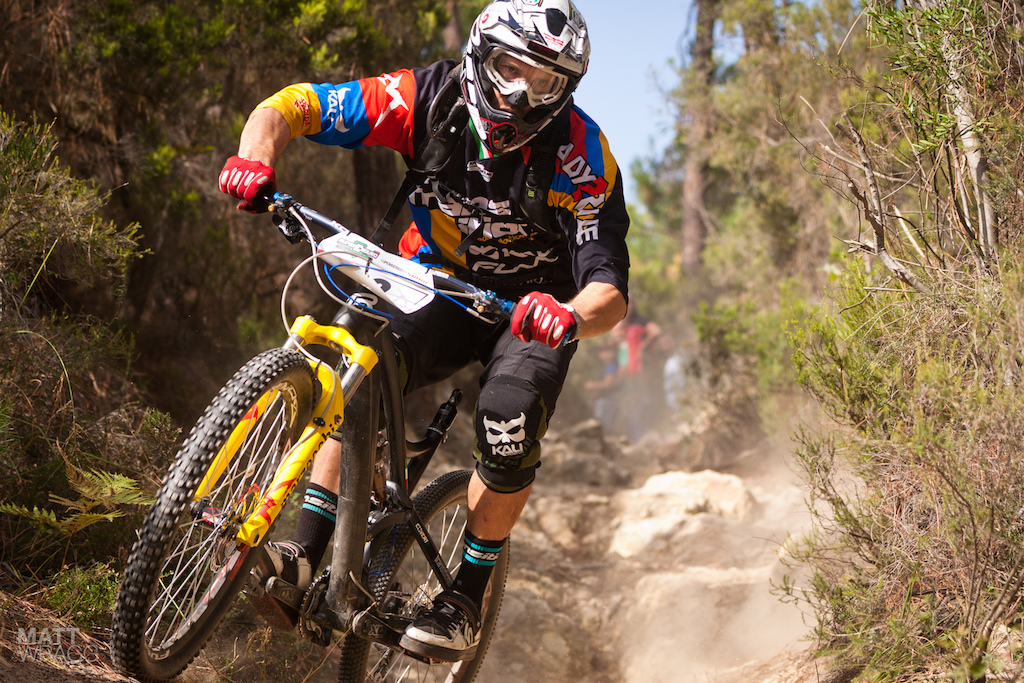 |
What is certain is that it is here to stay, as Steve observes, “you just have to go to a trail centre at a weekend – there are hundreds, thousands of five to six inch trails bikes out there. All you’ve got to do is put a chain device on and you can come racing.” And as long race organisers keep talking about things like fun, spirit and essence, it’s going to open racing up to people who just want to enjoy riding their bikes and don’t want to give up their entire lives chasing some far-off victory.
Author Info:
 Member since Oct 29, 2006
Must Read This Week
Sign Up for the Pinkbike Newsletter - All the Biggest, Most Interesting Stories in your Inbox
PB Newsletter Signup
it's a new thing being tested out. Flick of a switch and the seat pops out :-s
Interesting tire choices too, looks like a small block 8 on the rear and maybe a Nevegal in front? Is that an "Italian Mullet"?
I WAS RIDING ENDURO BEFORE IT WAS COOL!
Thank you.
wolfeyebrows.files.wordpress.com/2010/11/picture-122-e1289508980548.png%3Fw%3D640
They are too mainstream!
I have probaply never heard of this before!
He drank his coffee before it was cool..
He went ice skating before it was cool..
Many of you got some nasty PMs from me, because at least in such way we can solve tensions without shitting all over this place. I am honestly surprised there is no antiWAKi thread on forum. And really, if such low-life ragging is what you got to get me out of here, please get that hint: you will be more effective if go and write PMs to Pinkbike moderators. They are kind intelligent people who answer mails quite quickly. They can remove me from here anytime if they only wish so. I wanted to leave many times, but my creativity levels went down and I felt kind of laughing less.
Cheers! always yours, always here.
WAcek KIpszak -WAKi
P.S. Look, I can leave until my Dashboard goes to (100) notifications, at least that's this little I can do for you
in the main stream
That is the meanest comment i have read on pinkbike. Ever.
This issue keeps touted so much it needs to be corrected. In Finland we had first nation wide MTB-Enduro Cup in 1996. Has been raced every year since then. First Enduro races were held few years earlier.
Here you can find some results from year 2000 (couldn't find results from the -90 since it was before internet was common):
gamma.nic.fi/~ppp-97
-> click "Tuloksia" from top
-> scroll down the page
-> click "TURKU Sprintti-Enduro 2000:n tulokset,2.9.-00" for an example
Few words in English:
www.mtb-enduro.net/in-english
The French implemented the format a bit differently, and I must say in a better, more fun and modern way, but the ideas and thoughts about how the race events should feel like were very same.
The French sure made Enduro internationally known and we are very happy about that!
Let's keep it growing.
DH requires very specific venues and equipment and involves a lot of risk that those of us with families don't feel like taking. XC is, well, XC is just road suffering and road mentality transferred to dirt. Type A guys and gals who have to measure and plan everything in their lives and like to ride really painful machines to beat other like-minded people on similar equipment - people who weigh their socks. Go for it - I'll move over on my full squish fun machine.
Imagine a sub 30lb bike that is adjustable between 200mm and 160mm of travel with all the right angles and dialled suspension in either mode. V10 already has a similar spread in travel adjust and is approaching that kind of weight with the right build. How pimp could you build your bike if you only had one?
More importanty, the geometries are only just starting to trend in the direction that suit Enduro more (and suit me better). Currently I'm running a -1.5D angleset on my Nomad to slacken and drop the BB. It's very effective, but why are there so few lightweight and tough bikes with numbers like that already? I've had to put a push link on my Nomad as well to make it play nice (very nice indeed) with a coil shock. Bottom line, there are very few bikes with 160mm travel that are very light, strong, slack, low and dialled for coil suspension. I'm hoping that enduro will make bikes like this common. XC was never going to make it happen; they are too busy with wagon wheels, paper thin rubber and 69D HA's.
I rode AM before it became Enduro
I used to just call it Mountain Biking.
I can't believe I used to go into the mountains with a DBR Zetec Pro, 130mm stem, 21" bars, XTR V-Brakes, Kujo and Elgato and ever come out alive.
- really? i've watched a superenduro series by redbull and there are lots of almost vertical obstacles with lots of jugged boulders... you call that not too extreme?...
on the last Pic:
I'm more interested with the SB8 on the rear than the dropper/saddle. ^_^
2012 saw the inaugural Gravity Enduro series in Ireland and it was a blinder....lots of interest for the 2013 series.
gravityenduro.ie
- more downhill than uphill
- expect uphill and flat sections
- both down & uphill sections timed
- no mass start
Why Enduro because its FUN and suits most of the riding I do with my buddies on my awesome Ibis HD...not XC, but if I want too I can, not downhill or bikepark, but if I want too I can...
In addition, Enduro should personify what MOST of us have experienced on a MTB - pedaling up a hill to reach a trail head, taking a deep breath and swig of water, and then plunging into the trail that starts to flow with all the natural goodness a mountain trail brings; flowing sections, some flat and technical climbs (ideally not as long and steep as XC racing), then some rough and rocky section, natural switch backs, another flowing section to rest up a bit and as an added bonus, mother nature has provided along the trail some drops and jumps to mix things up a bit, heehaa.
For a bit of controversy - should 29'er bikes be band from Enduro racing? Or, do you think a 29'er bike will faster in an Enduro race in the hands of say a Dan Atherton?
As to your controversy (topic is so munched that it's hard to be one) I think all tech should be allowed including electric motors to assist uphilling. No sarcasm, I want to see it. If anyone wishes so, please get´em to XC racing as well, just toss it in. Give fans of the sport all they want it, and they want harder, better, faster stronger. I want that sorts of needs to be catered.
This is the draw to "enduro" for me as an American. With the Oregon enduro circuit emerging, and other like minded events, it gives me, a solid weekend rider, hope and something to look forward to. Fun is the reason I ride, Fun is the reason most of us got on a bike to begin with.
Also whoever wrote the article used 's' instead of 'z'. maybe i'm used to spelling things wrong. XD (" Then came the specialisation".A little example)
www.xmbchallenge.fr
Like a XC race with enduro-like trails, all timed and more D- than D+
This brings out all the bad people and culminates in what I call "Armstrongism": Lying and cheating pain addicts - sociopaths - ruining everything for everybody for nothing except a bit of moohla and eventually jail time.
It is the antithesis of what sport is in 2013 and I just will not watch Dirt de France - and will not buy from companies that finance anything like that.
ps: thanx Lance!!!
ps2: in Chile we already have 5 stages enduro races, including night stages, cheers
Yes, it was called Endurance and was road legal mx bikes (head/tail lights ,road tax etc) racing on and off road over pretty long distances.
Not really the same.
Oh, wait : It's not part of Enduro World Series, so it's not part of Enduro history !
I also think that Mega did more than : "influenced every major enduro event organiser". For me Mega and Transvesubienne are the real foundation stones of modern Enduro.
Have you seen the price for the complete group set?
Hah! You're no better m8
People who can dope or cheat in some other way will always do it or try to find ways to get around rules while not "actually" break them. SO PLEASE don't let that discourage you from trying a race or three because Enduro is really fun!
One great thing about Enduro is by its very nature (untimed up, timed down) a "Fun" race you can take it seriously or just get your buddies together and have a fun day trying to crush each others times under "controlled" conditions on a set course.
You do not have to be super fit crushing it 100% of the time, puking your guts out XC/Roadie to be competitive in Enduro at your local level. Yes there may be a small handful (expert & pro's) who show up like this but for the most part its just average guys having fun getting timed trying to beat there buddy!
5 guys all trying to best one another. This is what a small group of us do with DH racing and now we are getting into Enduro this way to. I have two seasons of Enduro under my belt and it is by far some of the most fun I have had in all the racing I have done.
I do not want to turn this into a huge anti UCI rant but if the past history and current news has proved anything it's the UCI does not look out for our sports best interest. They are not particularly interested in MTB, there organization is extremely corrupt, and if you believe the news from the past few weeks the UCI not only looked the other way for years but (if you believe the hype) helped top riders get away with doping in road racing.
Dear internet MTBers - the surge of hype is coming, either this or on next Sea Potter. You have all you need for Enduro right now and you know it. Not only in stock on internet store but most probably in your garage. The fact that there are no Enduro race specific components does not mean anything, just mix ones we have available, why have a badge on it? This is the kind of riding I believe I've been doing for 10 years, and it is very precious to me. Let's keep it relaxed and make sure we are really after having fun, not having stuff and opinions about it.
Dear certain hype inflating, virus of confusion planting, members of the Industry - I give you my vow I will do it as hard for you as possible to inflate a new bubble, I will try to connect people tired of your unnecessary farts, create a platform for them, glorify King companies giving us Hope that things we already have can be Strait adapted to new designs of your greed. I am in the Middle of Burning for it...
I'm ready for your bubble, are you ready for my Mountain Python with you as inspiration and main stars? Laughing is all good... you sure you want us smile while riding your stuff or just pop our eye balls out and scream "want" in grimace?
P.S. I would forget: Mohahahahah!