First Ride: Merida's Lithos eMTB Is Designed To Last
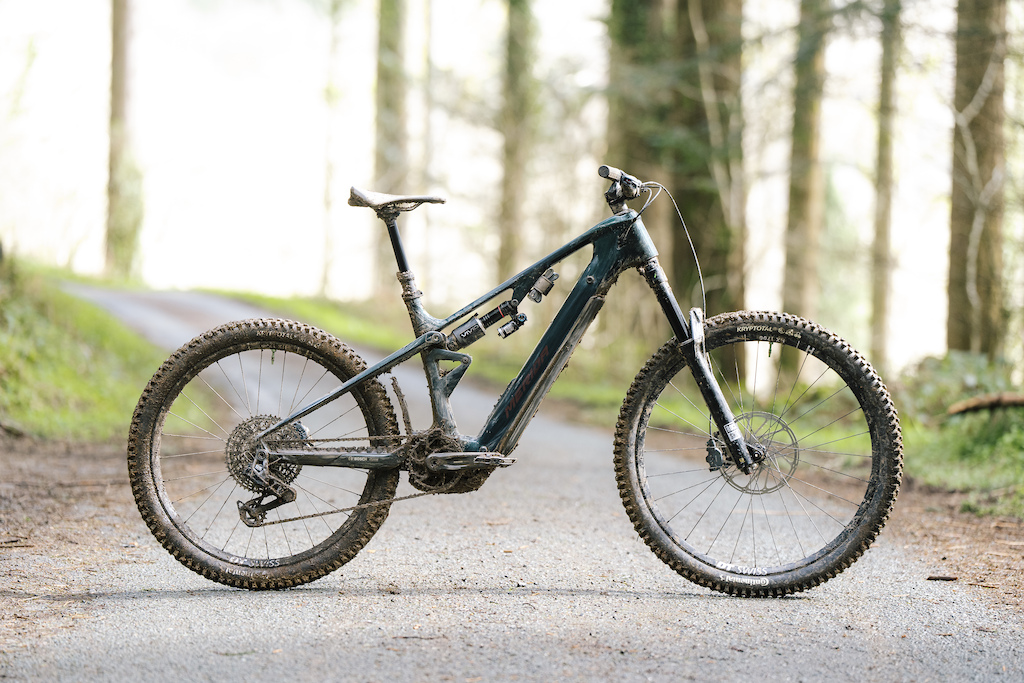
Most e-bikes are marketed on two specs: weight and power. With the Lithos, Merida say they prioritised versatility, durability, and reliability instead.
Rather than the controversial but coveted 1300 watt Avinox M2S motor released this spring, they chose the tried-and-tested 750 watt Bosch CX drive unit. They cite Bosch's track record of "proven performance, excellent reliability, worldwide service backup [and] their sustainable and responsible approach" for this decision.
On top of that, they've chosen a removable battery layout for ease-of-use, a flex pivot for reduced parts count and a yoke-free shock to minimize shock wear. The frame gets a pretty generous lifetime warranty and crash replacement policy, too.
Rather than the controversial but coveted 1300 watt Avinox M2S motor released this spring, they chose the tried-and-tested 750 watt Bosch CX drive unit. They cite Bosch's track record of "proven performance, excellent reliability, worldwide service backup [and] their sustainable and responsible approach" for this decision.
On top of that, they've chosen a removable battery layout for ease-of-use, a flex pivot for reduced parts count and a yoke-free shock to minimize shock wear. The frame gets a pretty generous lifetime warranty and crash replacement policy, too.
Merida Lithos Details
• Full carbon frame
• 600 Wh or 800 Wh removable battery
• (updated) Bosch CX motor: 750 W, 120 Nm
• MX wheels, 29" compatible with flip chip
• 174mm (r)/170 mm (f) travel
• 78.5° seat angle, 64° head angle
• Weight: unknown
• Lifetime frame warranty (original owner)
• Price: £8,500 / €10,000 as tested
• merida-bikes.com
• Full carbon frame
• 600 Wh or 800 Wh removable battery
• (updated) Bosch CX motor: 750 W, 120 Nm
• MX wheels, 29" compatible with flip chip
• 174mm (r)/170 mm (f) travel
• 78.5° seat angle, 64° head angle
• Weight: unknown
• Lifetime frame warranty (original owner)
• Price: £8,500 / €10,000 as tested
• merida-bikes.com
Frame & Motor
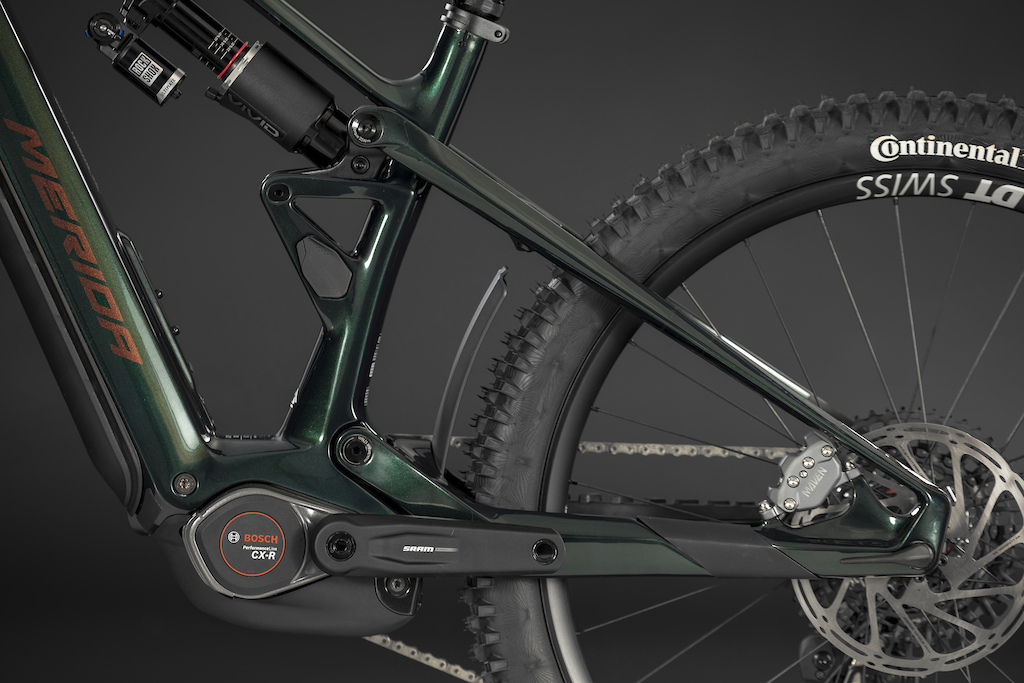
Following a recent software update, the Bosch CX motor can now serve up to 120 Nm of torque (up from 100 Nm), and an assistance ratio of up to 600% (up from 400%), but the power is still "limited" to 750 watts. That means you get more "oomph" when setting off, and the bike delivers more power with less effort from the rider, but the maximum power (how fast you can go up steep hills) remains unchanged. For context, the Avinox M2S delivers 1,300 watts & 130 Nm, rising to 1,500 W & 150 Nm in short bursts, and up to 800 % assistance. So it's still king if you want to cruise up an Alp, but the CX is hardly underpowered. And when it comes to reliability, the Bosch CX is more of a known quantity, with a more extensive service network.
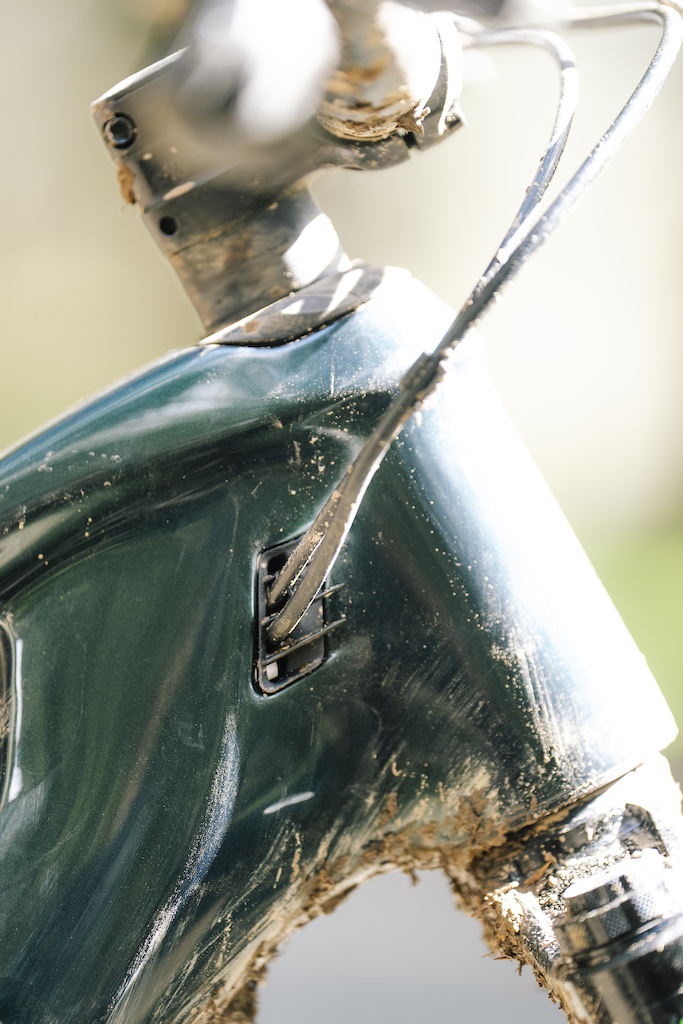
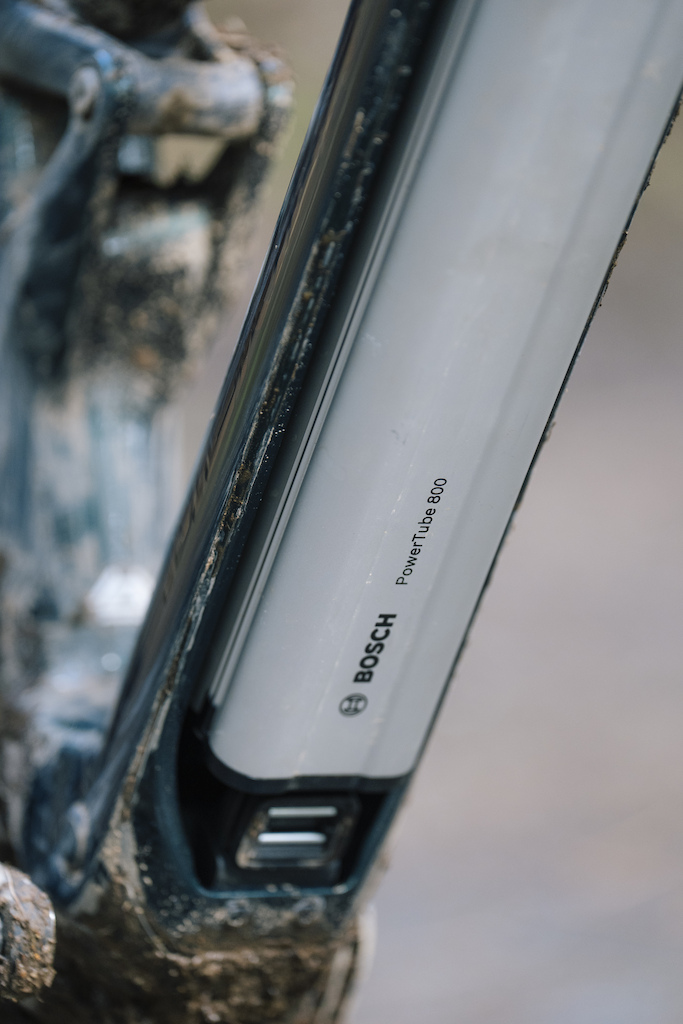
The down tube accommodates a 600 Wh or an 800 Wh removable battery. If you go for the smaller battery, which saves about 900 grams, there is a slightly slimmer cover for a cleaner look. Removing the battery allows for off-bike charging or transport, and provides access to the cables, which are fully guided for easier swaps. Merida ships the bikes with headset cable routing (sharp intake of breath), but the cables can be routed "semi-externally" via the ports on the side of the frame (and exhale).
Merida have years of experience with flex-pivot suspension, and sticks with the layout here. It's a single-pivot design where the seatstays bend slightly in place of a bearing-pivot above the axle. It allows for a lighter frame with fewer bearings to service. The rocker link connects to the frame far in front of the seat tube; this looks odd, but allows Merida to do away with a shock extender or yoke, which are known to increase buckling loads on the shock, which can accelerate wear.
Merida also experimented with lateral flex in the frame. Following blind, back-to-back testing with a wide variety of riders, Merida went for a slightly more compliant rear triangle than they used in the past.
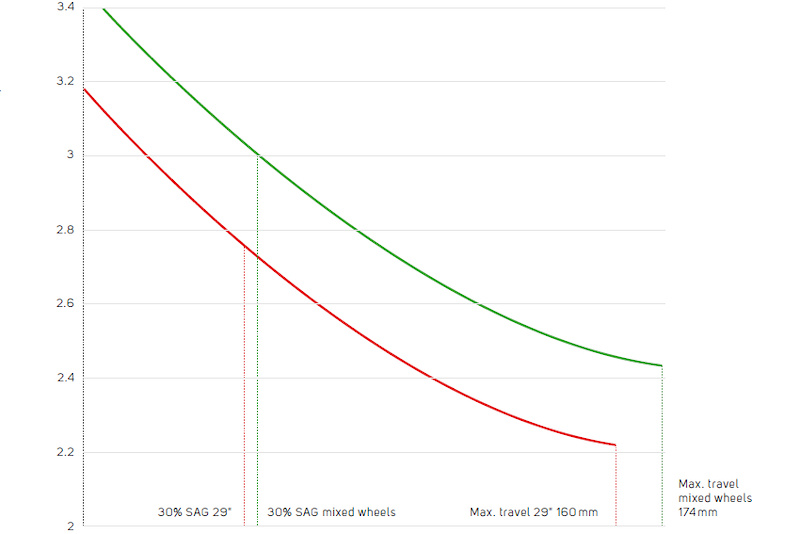
In the 29" setting (red), the progression curve is similar, but leverage is reduced, resulting in 160 mm travel rather than 174 mm being extracted from the 65 mm shock.
A flip chip makes it possible to convert the stock mixed-wheel setup to a 29" rear wheel without upsetting the geometry. This does, however, reduce the travel from 174 mm to 160 mm because it lowers the leverage ratio. Perhaps riders opting for bigger wheels prefer a stiffer suspension setup, or perhaps less travel makes frame clearance easier.
Rather than adapt a shock to suit a frame, Merida consulted RockShox on the best leverage curve to suit their shocks, especially the Vivid Air and Super Deluxe. It's designed to work with coil shocks, too.
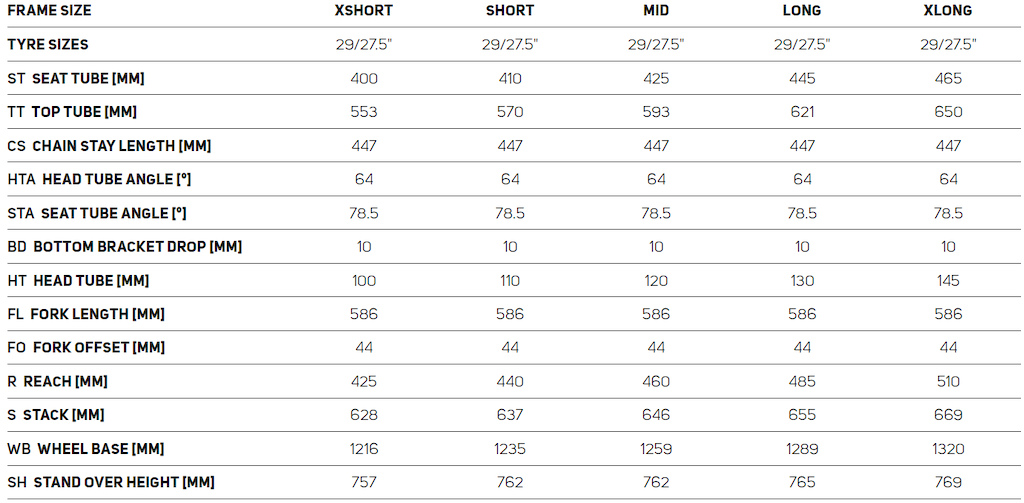
Geometry
Merida are offering five sizes, with fairly short seat tubes ranging from 400 to 465 mm. These are paired with Merida's own adjustable-travel seatpost, which can be set anywhere up to 230 mm of travel; the idea being that most riders will keep the collar slammed and set the seatpost travel to match their pedalling height. Compared to previous Merida bikes, the stack height has been increased, especially in the bigger sizes. This makes it easier for taller riders to size down (I rode a large at 191 cm / 6'3") without needing a custom Dakotah Norton handlebar.
Models & pricing
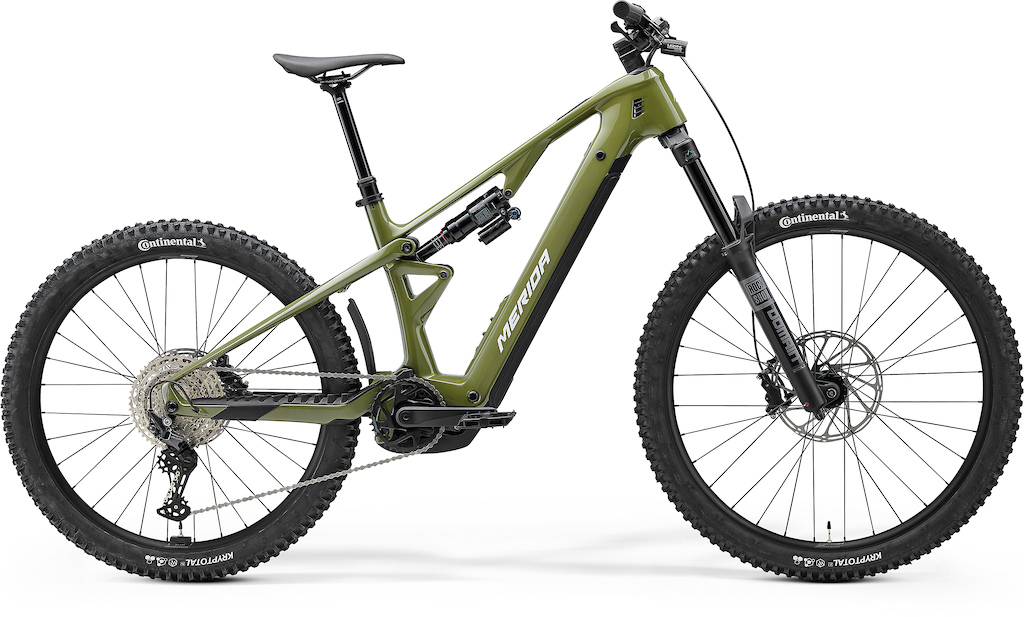
LITHOS 5000 - £5,250 € 6,000
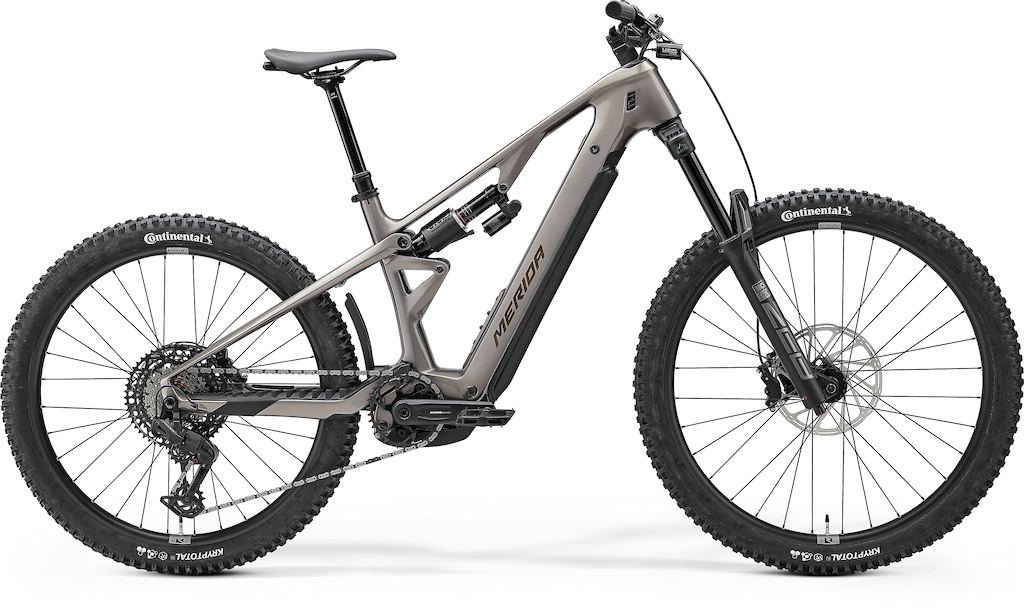
LITHOS 6000 - £6,500 € 7,500
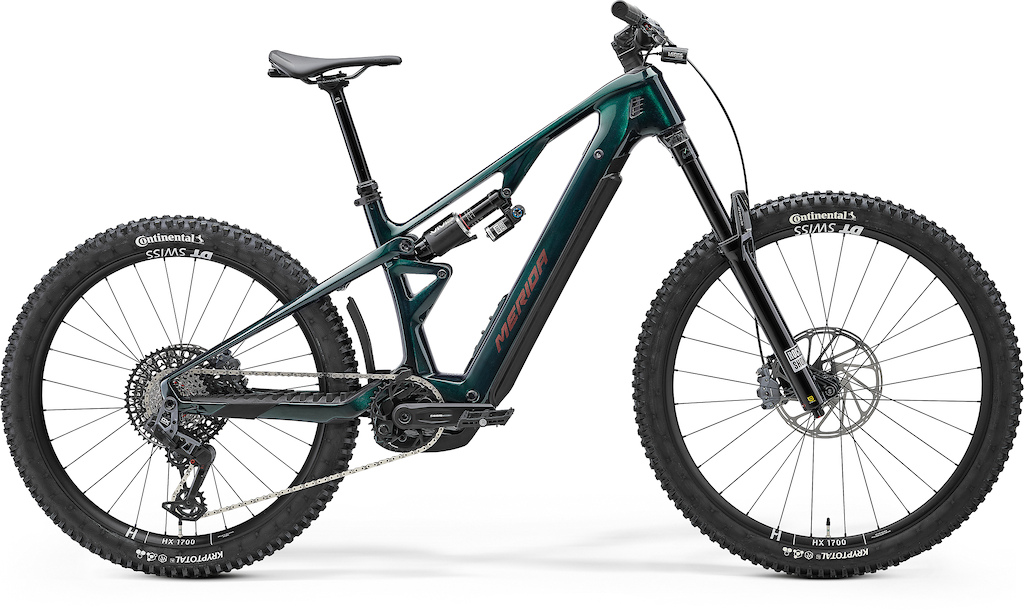
LITHOS 8000 - £8,500 € 10,000
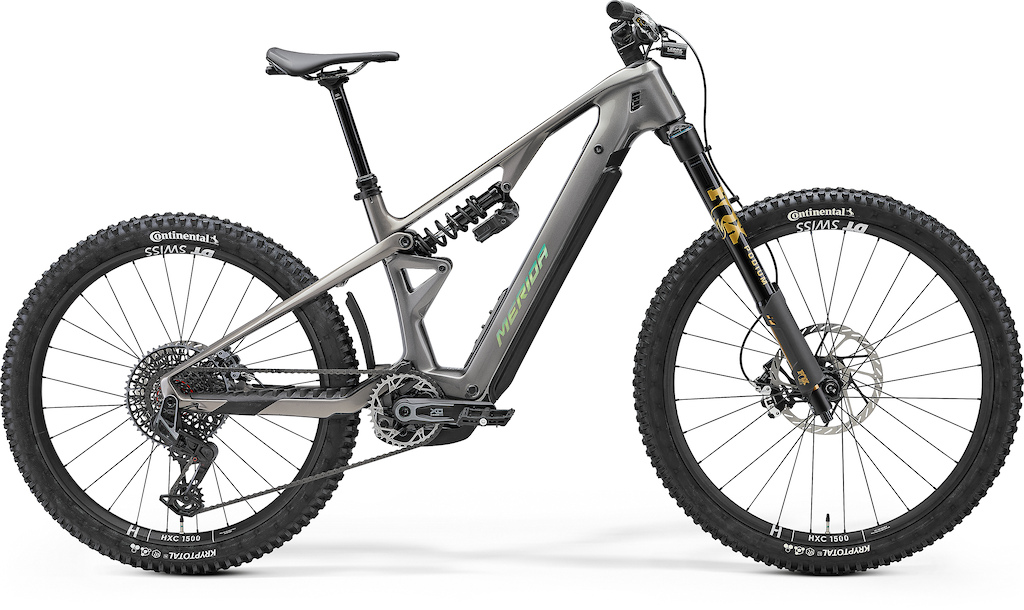
LITHOS 10K - £11,000 € 12,650
Ride Impressions
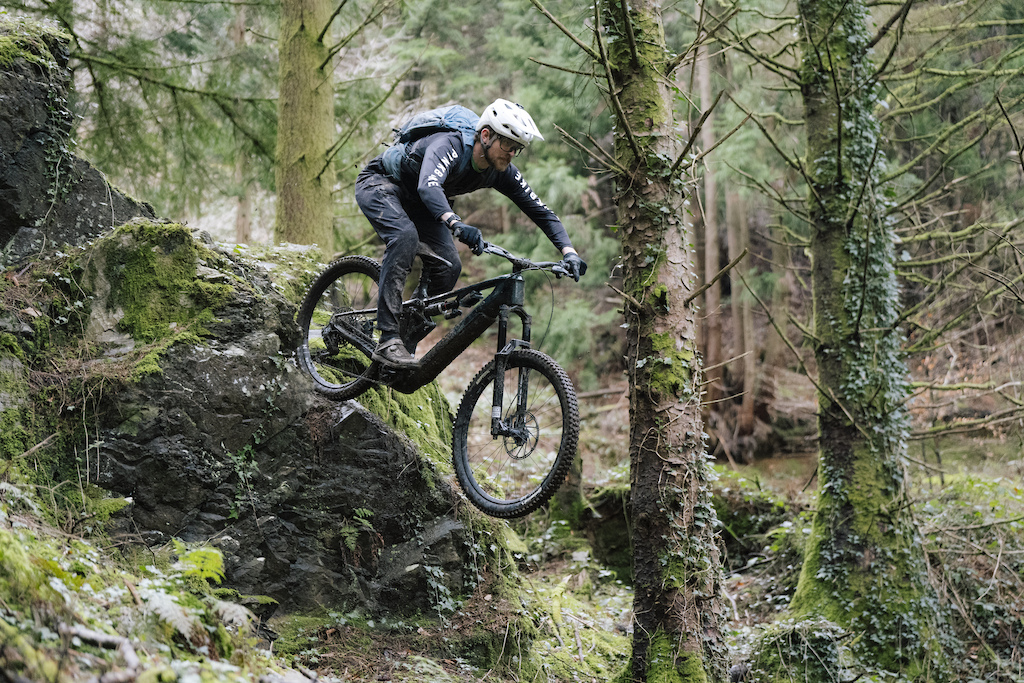
I rode the Lithos the day after testing the Atherton S.170E with its Avinox M2S drive unit. While the Bosch is noticeably less intense, it's got plenty of power in my view, and makes the 800 Wh battery last longer in terms of time, even if not necessarily in terms of distance. The recent software update also introduces jump stats with a little Super Mario noise every time you get some air. This seems gimmicky, and you can turn it off, but I must admit I enjoyed hearing the pings while collecting bonus side-hits and cheeky gaps.
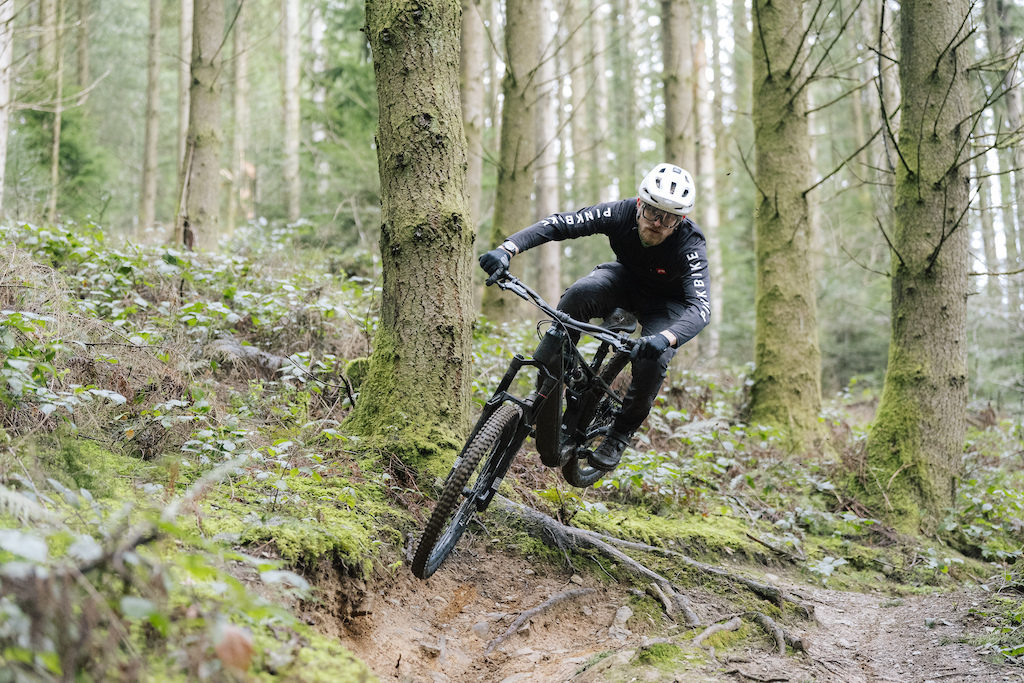
The RockShox Ultimate-level suspension on the Lithos 8000 was a highlight. The new Zeb hoovers up small bumps with plenty of bottom-out control thanks to the adjustable bumper, and the rear felt balanced with the fork, with good sensitivity and predictable support. I "sized down" to a large frame, and enjoyed how this complemented the extra bulk and low center of mass compared to an non-motorized bike. This, combined with the mid-length chainstays (447 mm), makes the bike feel very manageable on steep and hectic terrain. I didn't get a chance to weigh the bike for myself, but it doesn't suffer from the lethargic "passenger sensation" you get with some full-fat e-MTBS.
Author Info:

 Innerleithen, Scotland
Must Read This Week
[edit] I can see the "First Ride: The New Orbea Wild LT Uses a Heavily Modified Avinox Motor" as well :-/
News Settings
EXCLUDE news content from the front page:
✓ eMTB - ( do NOT show this content to me )
Solid as a rock, heavy as a rock?
I stand by what I said and I’m not wrong either
Of course the bearings are not, but compression rings and often the headset cups are plastic, and they crack very easily
Theres a few options now like adapters to run is41 bearings in a is52 frame. or things like the easybikeparts i52 which converts it but still uses IHSR(you can blank off the holes for use on like this bike, Spectrals etc
FYI, the original is52 compression ring which is plastic, holds up OK if you remove the plastic spacers/cover and dont allow the Pieces to flex.(this was the fix with the spectrals, To remove the plastic covers and replace with just the cover from the zs49 headset by cane creek + alloy spacers) - as soon as the headset parts flexes it will break the ring they do make an alloy version of that same ring for over 18 months now.
Canyon at first tried to use an IS52 with a Massive alloy compression ring + thin Cover and spacer, it flexed so bad it would cause ALL of them to wear the steerer tube really fast.(spectrals)
Then they go an use a normal good standard IS41 in the alloy spectrals and pair it with anther weak thin plastic compression ring.
I had this kind of garbage on a Canyon once. Never again.
I had this kind of garbage on a Canyon once. Never again.