Devlin Cycles Announces Jester V5 With Updated Geometry & 3D-Printed Parts
PRESS RELEASE: Devlin Cycles
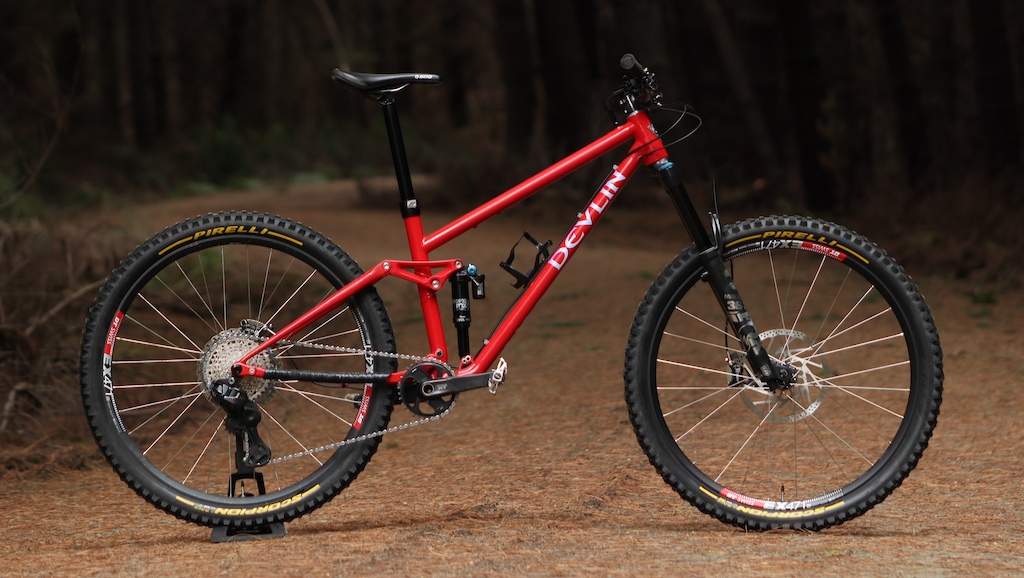
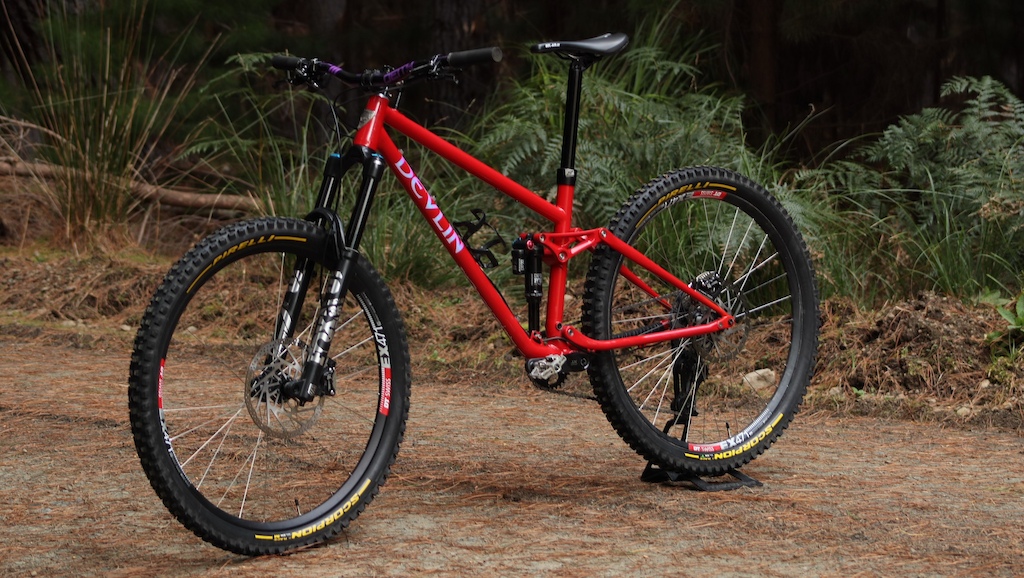
The Devlin Cycles Jester, a 170mm travel front and rear enduro race bike, has had a recent revamp and was unveiled at the Spoken Bike Show, Sydney, Australia, in June this year. The bike featured here is Devlin Cycles owner/builder, me, Sean Doyle's personal ride. Among other things was a complete reworking of the 3D printed parts and strengthening of the platform. Revised shock ratios to use a 230mm length size and the ability to swap between a full 29 and a mullet setup with one bolt, with no effect on geometry.
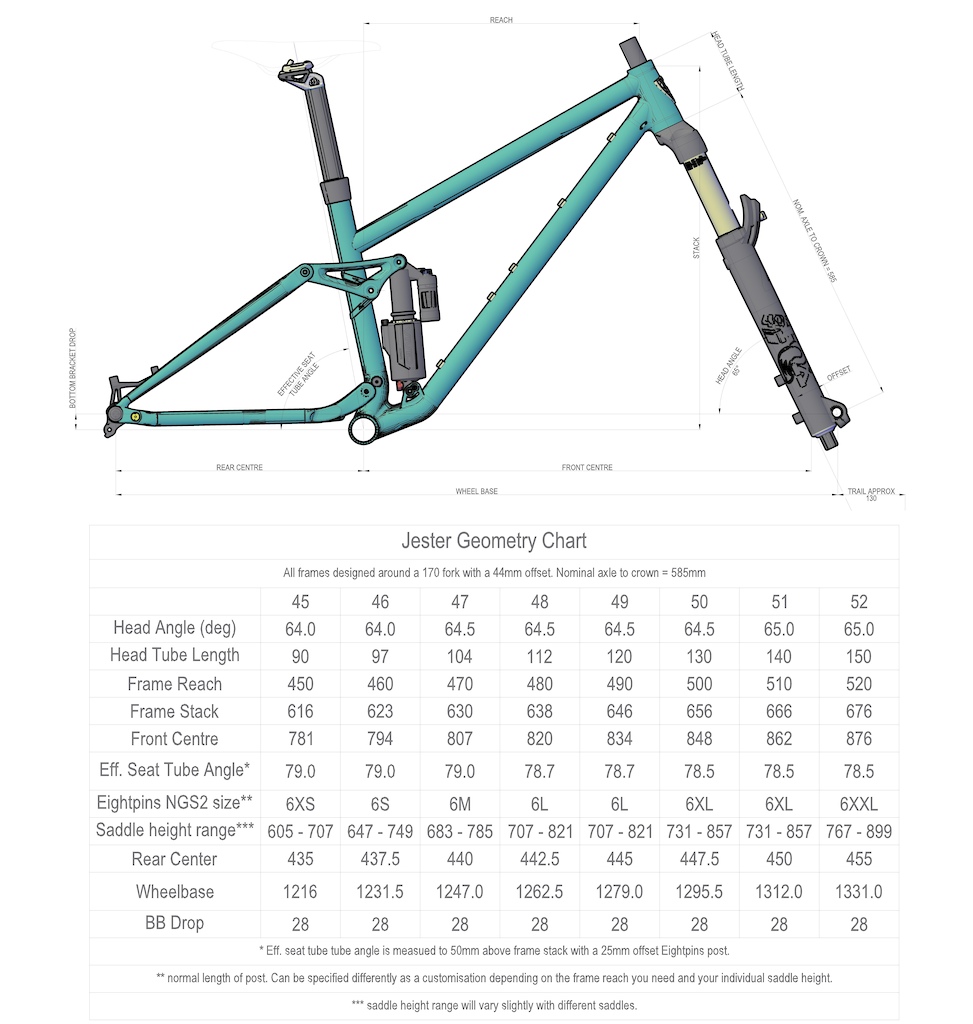
Speaking of geometry, I have made a minor tweak. After spending the last season in the Maydena Bike Park, where the workshop is located within view of the Hardline finish area, I felt the steeper, relentless trails of Maydena and the speed that can be achieved, compared to where the bikes were first designed and built, required a slight tweak of the front end. This has provided even better front-to-rear pitch control on the bike, allowing riders to push harder into the corners. The Jester is now sporting a half-degree slacker head angle across the range. Frame reach and stack are proportional, starting at 450 reach and increasing in 10mm increments to 520. There is an increasing head tube length, and the chain stay lengths start at 435 and finish at 455. This has been achieved through a lot of work, ensuring that the predictable and confidence-inspiring handling of the Jester is maintained across the size range.
Another unique feature is the different leverage ratios across the size range. Combined with different shock strokes for the 230 shock length, the idea is to keep the spring rate between 400 and 450. This range has come about after discussions with Nigel Reeve of NSR Racing and a former World Cup mechanic. The range of spring rate allows the shock to operate in the optimal range for stored spring energy balanced against damping control.
When ordering the bikes, there will be the ability to give details about weight, riding style, terrain, etc., so the final rocker geometry will give you the most travel possible, given the stroke for the chosen shock, to get as close to the range of spring rate mentioned above. The Fox DHX2 has 60 and 65 mm strokes, whereas the Ohlins has 57.5 to 65 mm in 2.5mm increments. So, more choices to get an optimal final tune if a shock model with more stroke options is chosen.
The Jester has always been an excellent platform to pedal. Its DNA is derived directly from the original Oisin trail model, which has itself proven to be a very capable bike. It has been raced in everything from local DH to 4- and 6-hour XC races. Off the back of that, the Jester is no slouch when it comes to standing on the pedals to sprint out of corners and is happy to spend all day climbing into the high mountains. It was designed primarily to be a dependable race platform, and the traits that I value here have resulted in a very capable, all-day, big mountain bike with a blistering turn of speed.
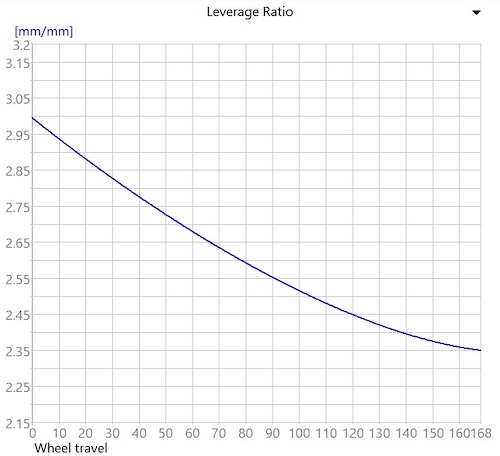
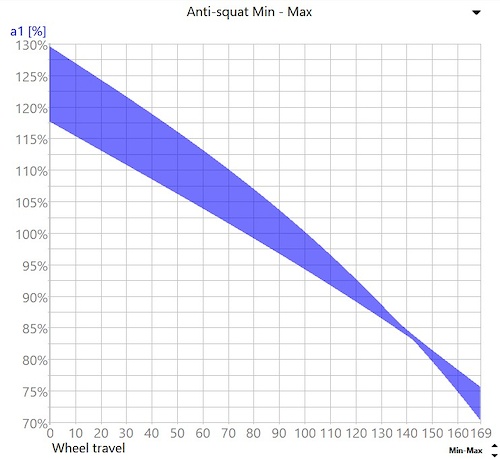
Avg. Shock ratio for approx.75kg rider
Anti-Squat with 34t chainring
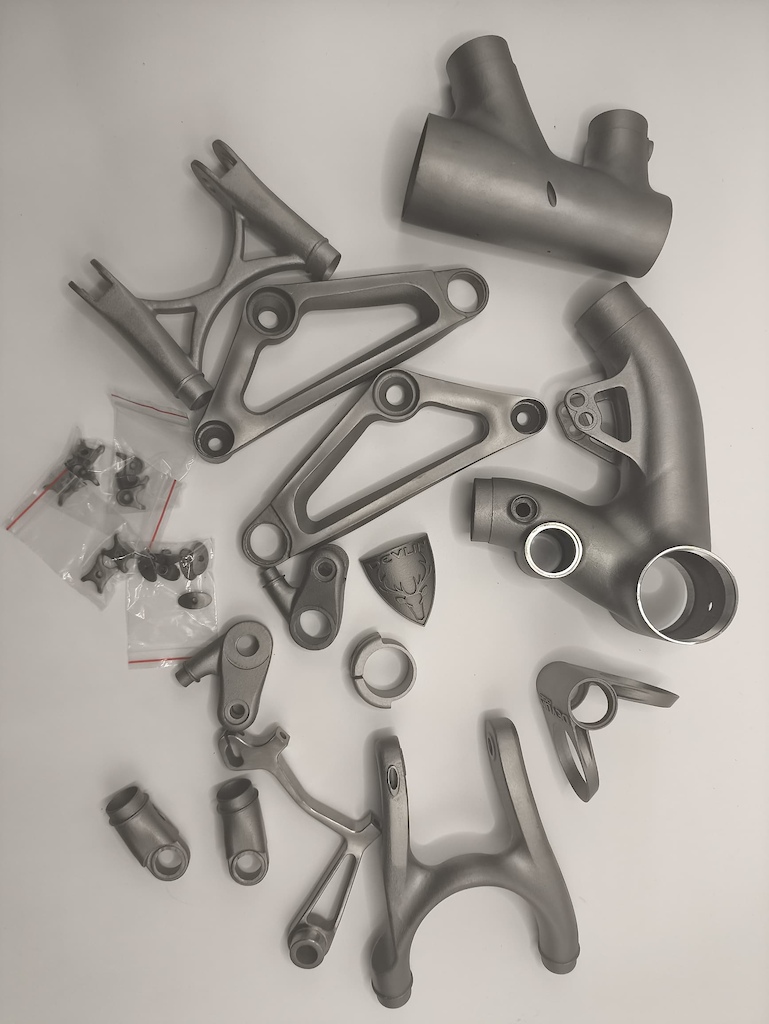
The reworked 3D-printed parts yield a platform with a slight increase in weight over the previous version, now weighing 4.65kg with shock, but it is stronger and employs heat-treated 17-4PH stainless steel. The 3D printed parts include the head tube, bottom bracket and main pivot area, reshaped swingarm yoke, hollow rockers and drop outs, a rocker pivot sleeve and a one-piece seat stay/brace section and cable guides.
I use Columbus tubing for the majority of the frame tubes, with the swingarm and seat tube using Promolloy 4130. Both brands produce a consistent level of quality and accuracy that ensures a high level of fit and finish. The top and down tubes are double butted and heat-treated Omnicrom, providing excellent dent protection. The seat stays are fork blades from the Columbus catalogue. Initially, I used similar-shaped chain stay tubes in the beginning, but found the wall thickness wasn’t enough to cope with the forces coming from the brake calliper, with a few instances of buckling on early prototypes. The thicker wall of the fork blades has resulted in a much stronger section and a bump in rear-end stiffness.
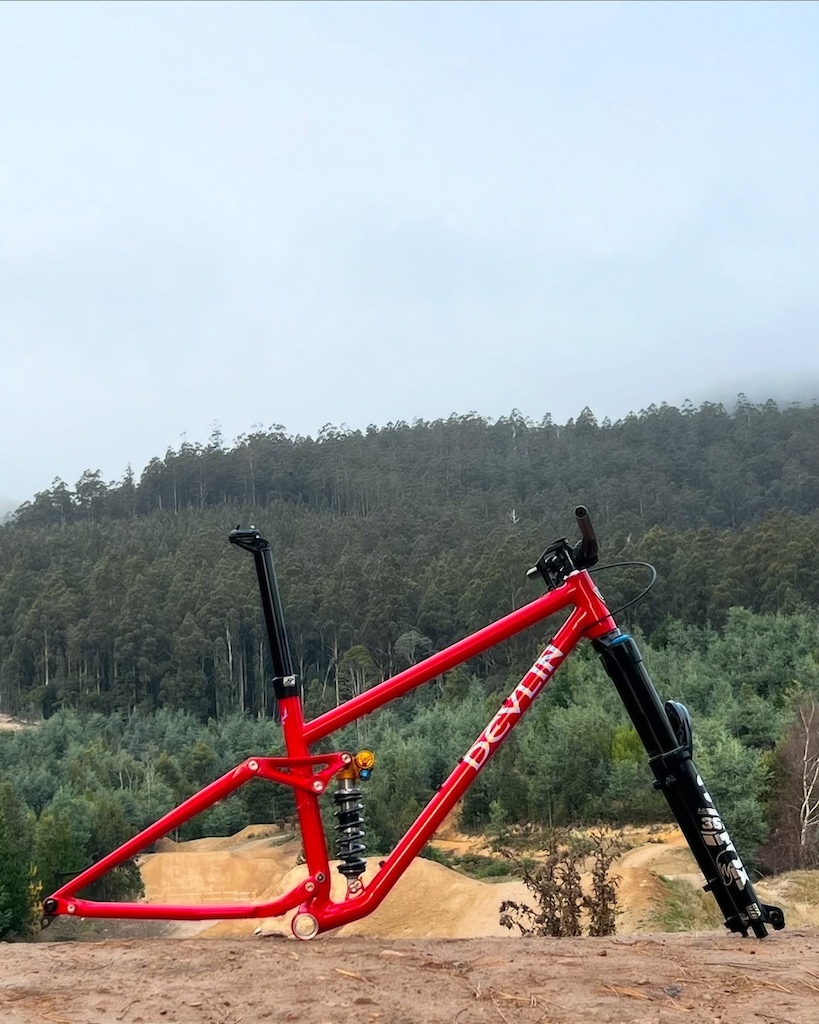
The use of more 3D printed shapes in the makeup of the frame has allowed an improved workflow efficiency within the workshop. This has also provided an even greater control over the QA process and consistency with each frame. I have always set my fabrication tolerances at a high level to ensure customers get the best product possible and ensure that frame hardware lasts longer. There are full stainless steel flanged bearings at the main pivot, rocker, and seat stay connections, a Rock Shox upper eye bearing unit as standard and industrial plain bearings at the Horst link. These plain bearings use customized Igus bushes with polished stainless centre axles.
The Jester is bristling with features, and this bike is outfitted with the integrated Eightpins NGS 2 setback dropper post and fully integrated Pademelon steering damper. Whilst the frame comes standard with the ability to use the Eightpins dropper, a conventional dropper can be used by dropping in a plain seat tube shim and a supplied seat tube collar. When using the Eightpins dropper, it comes with its own shim, which has the slide bearings for use in their system. The Jester can be ordered with or without the Eightpins dropper. The cable housing for the dropper passes through the down tube in a fully enclosed stainless tube for super easy install and maintenance.
The Eightpins dropper has a few benefits over a normal dropper post. The two main ones are weight and maximum travel for a given saddle height. Their website has a wealth of information, and the above geometry chart shows what is possible for each frame size and dropper length.
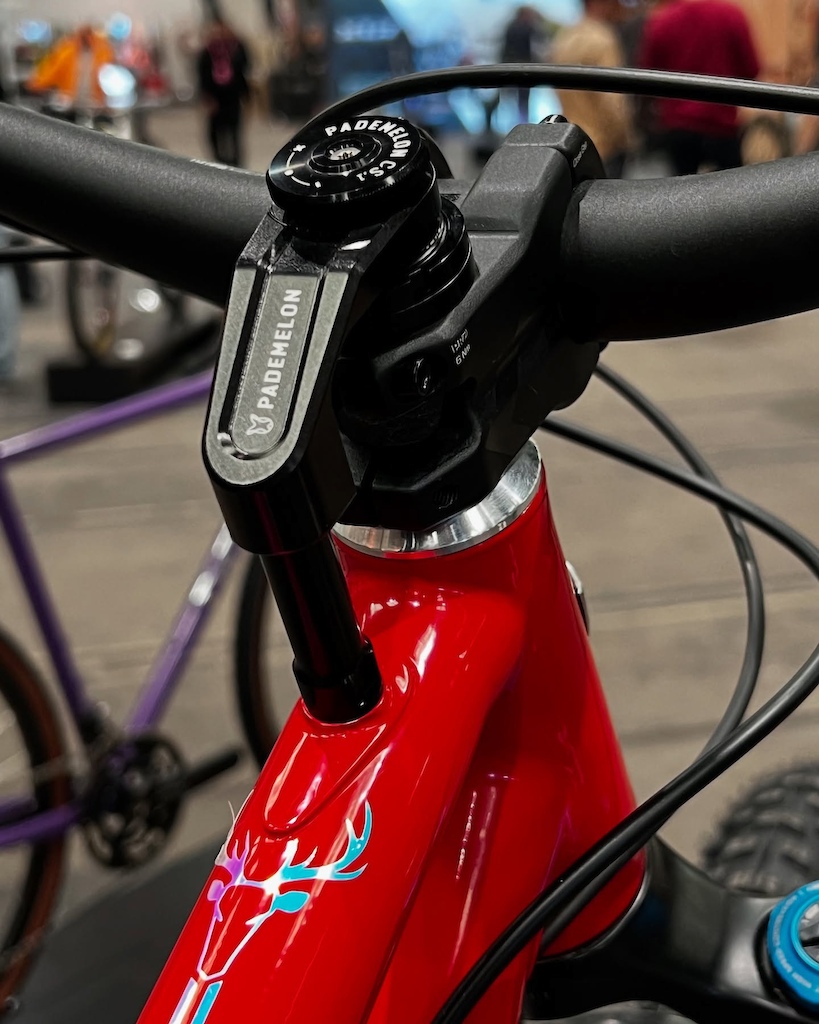
Likewise, the Jester can be ordered with or without the Pademelon steering damper. The platform is well-mannered and was designed without the steering damper input. Before this year’s Spoken show, Jeremiah Boobar, owner of Pademelon, approached me to see if he wanted to add the damper and integrate it into the frame for the show. It was a last-minute, late-night endeavour as the frame was off to powder coating the next day. This ended up being the world’s first fully integrated Pademelon damper unit, and the boss for the anchor post is now incorporated into the 3D print for the head tube.
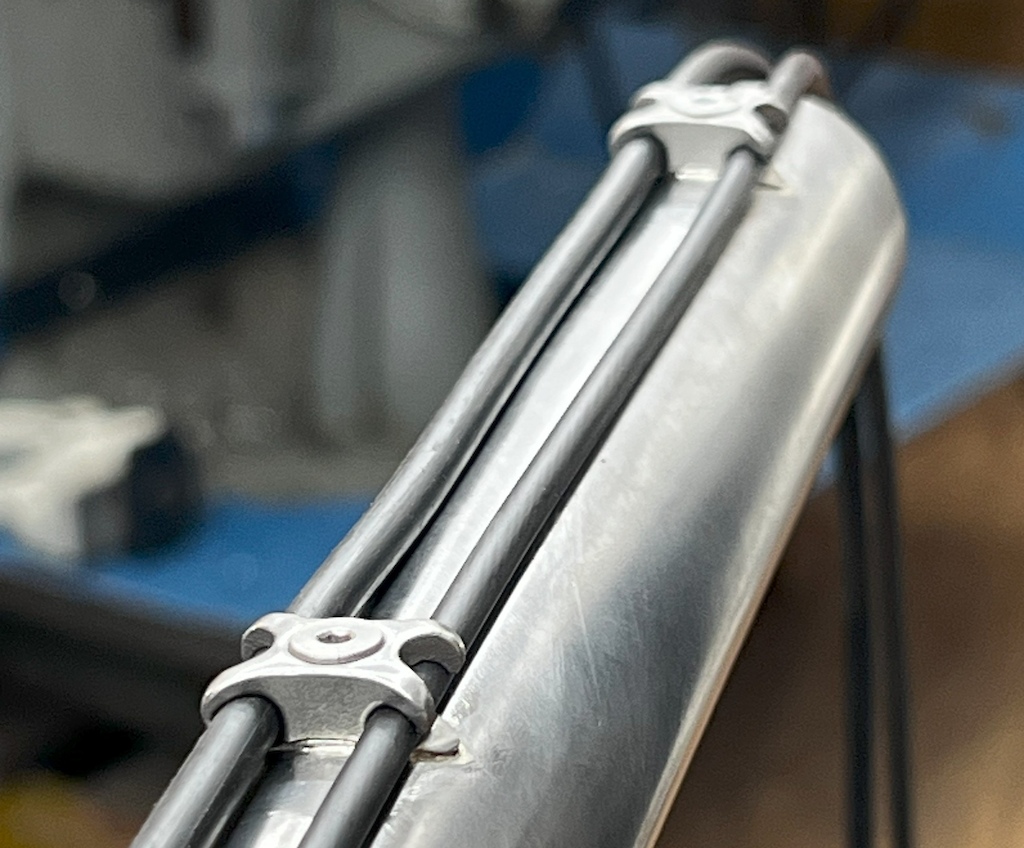
Gear and brake housing/hose is routed on top of the down tube, with the rear brake hose continuing externally under the swingarm, and the gear housing goes internally down the right side through a full-length internal stainless tube, exiting just in front of the Horst pivot. I am running the new Shimano XT Di2 drivetrain, so no housing is installed currently. Not shown on his bike are the new housing clamps for the down tube, which come in one and two cable shapes.
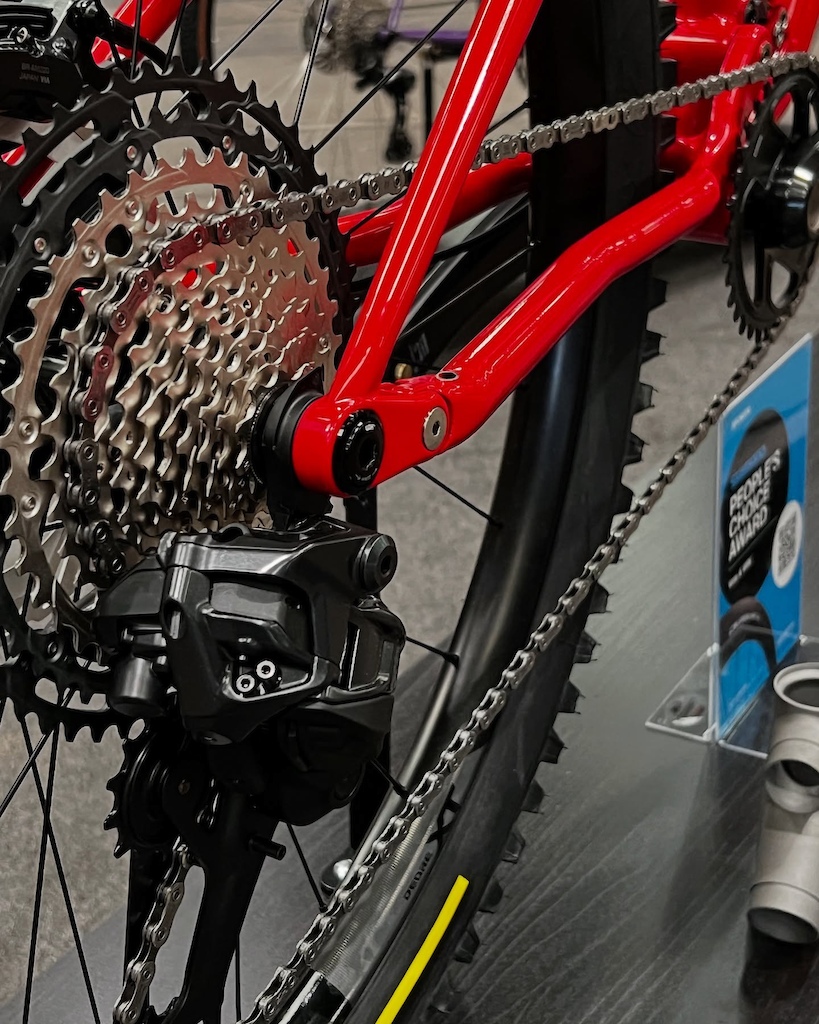
The frame comes standard with a UDH derailleur hanger, which I decided to adopt to use as soon as it was available to market, and all of the models across their range, from road to gravel to mtb, use this specification. New to the range is my take on the possible Universal Brake Mount (UBM). The idea of a separate component to the frame is not new, but SRAM’s move to file and be awarded a patent for a particular feature means that there is a good bet that the UBM specification will become a standard feature across the industry.
Whether that comes to fruition or not, I have decided on my frames to use a separate brake mount as a standard feature. I have used what I believe to be the open-source part of the specification, which avoids the patent, and it mirrors a lot of the UDH specification. I now have a swingarm that is symmetrical again and future-proofs my bikes if new calliper architecture gets introduced to the market. It’s a simple swap out of the bracket, and no frame modifications are needed.
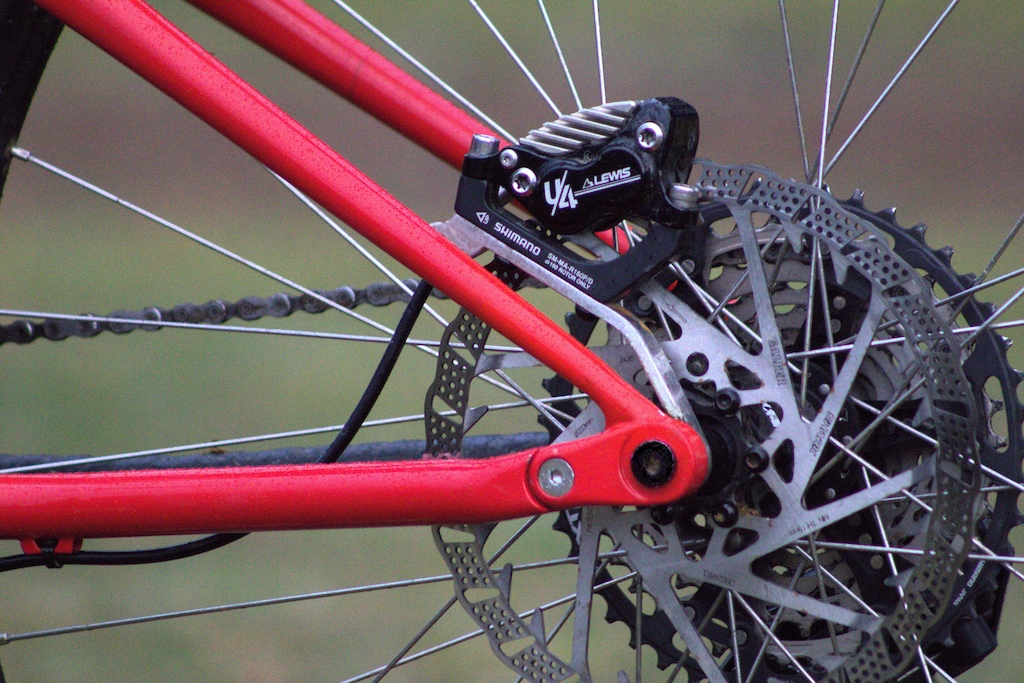
Pictured on the bike is the first variation I designed, which is working perfectly well, but I have redesigned the bracket so there is no need for the flat to post mount adapter.
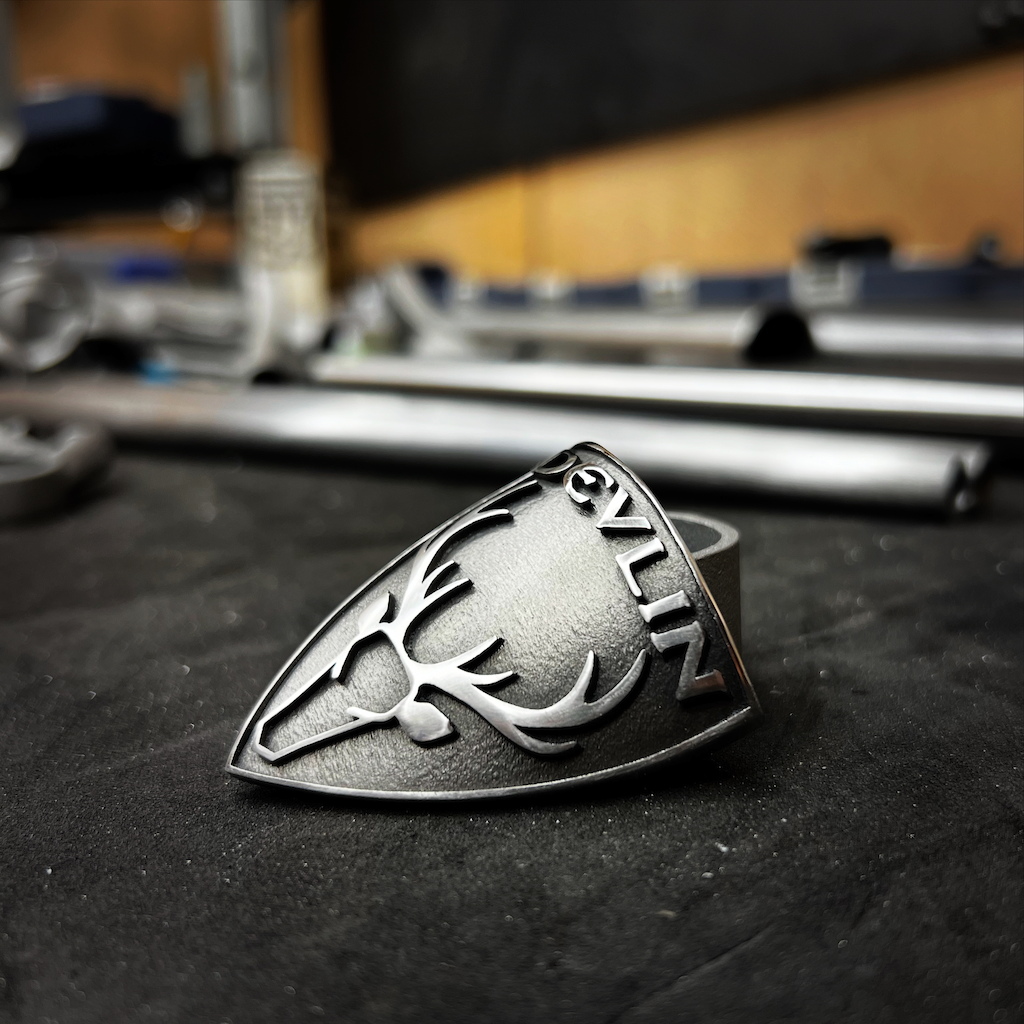
Not included on this bike but standard on the Jester are ISCG tabs on the BB shell. There are also spares/gear holder bosses on the underside of the top tube with one set of water bottle bosses on the downtube. There is a new 3D printed head badge, and all frames come powder coated with vinyl decals on the downtube.
My bike sports DT Swiss EX417 rims, 28 holes on silver Revolution spokes, brass nipples and DT Swiss 350 hubs. I am looking to bring reserve wheels on board as standard and give you, the customer, peace of mind with great support from Reserve. Stay tuned for that.
The fork employed for this build is a FOX 36 Performance Elite+ with a custom tune from Nigel Reeve at NSR Racing in Maydena. Currently, it sports the standard Float X shock, but the Ohlins TTX2 shown onboard at Spoken will be replacing it once the custom tune has been finalized.
There are standard build kits listed on the website as a guide for customers, but all bikes ordered can be partially or fully customized, and there will be updates on SRAM build kits in the coming weeks.
Some numbers. My bike weighs 16.4kg, as pictured, with DH-spec Pirelli Scorpions 29x2.5 tires and Tubolight inserts. I am riding a 480mm reach bike and am 177cm tall with long legs and +5 ape index. These things matter when looking at bike fit and sizing. I use a 31.8x35mm stem and 760mm wide, 30mm rise bars.
Lastly, I have opted to use the new Lewis LHP U4 downhill spec brakes. They have proven to be an excellent choice for the trails in Maydena, which are notorious for the braking loads, and I am running 223mm front and 200mm rear rotors. The Lewis callipers run with a 2.3mm thick rotor.
Frames start at Aus$6900 (US$4580, €3900, £3380 at time of writing), which include a Float X shock, choice of single colour powder coat and contrast logos, 3Dprinted cable guides, seat tube shim and collar, UDH and UBM. Wait times are currently 2 months from deposit.
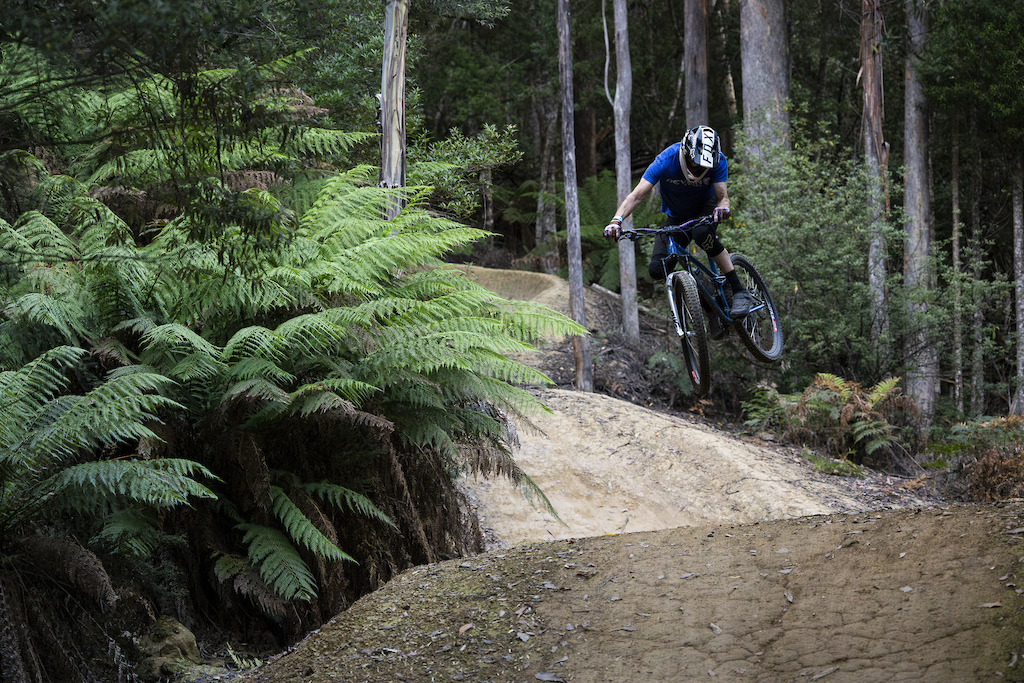
Lower Local, Maydena, Oisin Trail bike
More information is available on the website www.devlincc.com.
Author Info:

 Hobart, Australia
Must Read This Week
Looks amazing, great job!
His first efforts, way, way back when, with quite unique / lovely Rim brake systems, were very impressive - though, I'd already gone the Disc brake route ( and, endured the garbage most early ones were)
I've watched his Devlin Cycles efforts from afar, and have always been impressed by his frames, of any type.
They are Free of the near endless BS of the MTB market, and in nearly every aspect, I admire and agree with his efforts - and, I'm Bloody Hard to impress, being so committed to simplicity of design.
I only caught up with him at the Spoken event this year, and enjoyed talking to him, and, found his bikes to be lovely things.
I've joked with him that I gave Gas Torches and Brazing / Silver Soldering up in the 70s, changing to TIG in my (very) early teens, but, all that counts is good, well perfect, execution of your work, and the strength and durability that comes from that.
And, Sean's workmanship Is Superb - he Is a Master Craftsman!
Heck, he's even got me thinking of getting my swingarms forward pivot section 'Printed'....... but nah, I'm old, and, weirdly, I really enjoy all the fabrication that I do, pretty much by hand. Heck, even my Tubular Sports Sedan Chassis work is largely , shall I say, 'Analogue'. I'm Old, and Ornery. My 12 to 15 frames a year, and my MC and Car chassis work is ( more than ) enough for me, nowadays.
Once again, I cannot speak highly enough of Sean and his Devlin Cycles efforts - You can't go wrong with his bikes.
Great stuff, Sean!
One day I’ll have one in my garage!
Kinda funny because i really was digging the bikes geo and how great they look but the- (Yes, extremely high price) and now your attitude....I'll be passing up ever buying one of those beautiful Rigs. Sorry Mate!
"You can fool some of the people all of the time, and all of the people some of the time, but you cannot fool all of the people all of the time"
How's the igus bushings hold up at the horst pivots? They always seem the best on paper, but my experience has been needle bearings far outlast them and don't squeek.
I’ve a couple bikes go a full season at Maydena without any issues with the Horst link. If you took that the majority of time the movement is in the middle say 75% of movement it’s only about 2.5 degrees of movement. Not enough for an overlap in the rollers. Not had any squeaking from them either. The new bushes are a higher spec Igus so am confident they will go for long service life
I have to ask though, with all the stainless 3d printing of lugs & hardware why not use stainless tubes?
It’d just be too sexy kitted with raw ally components? I want one, shame i’m poor!
So since you are the real person for this... I'm gonna ask the hard question... are those 3d printed metallic parts UT and HIP'd in QA? If not, expect a pretty substantial Weibull tail on fatigue life.
1) can one order their choice of rear center length?
2) can one run a dual crown?
1) it is possible and it would be a discussion to have. The platform is a package and changing just one variable does have an effect on it.
2) yes you could, it is a very strong frame
Is it just me or the shock mount to the DD looks like Elmo's face?