Devinci Shares Insights to their Chainsaw Recall
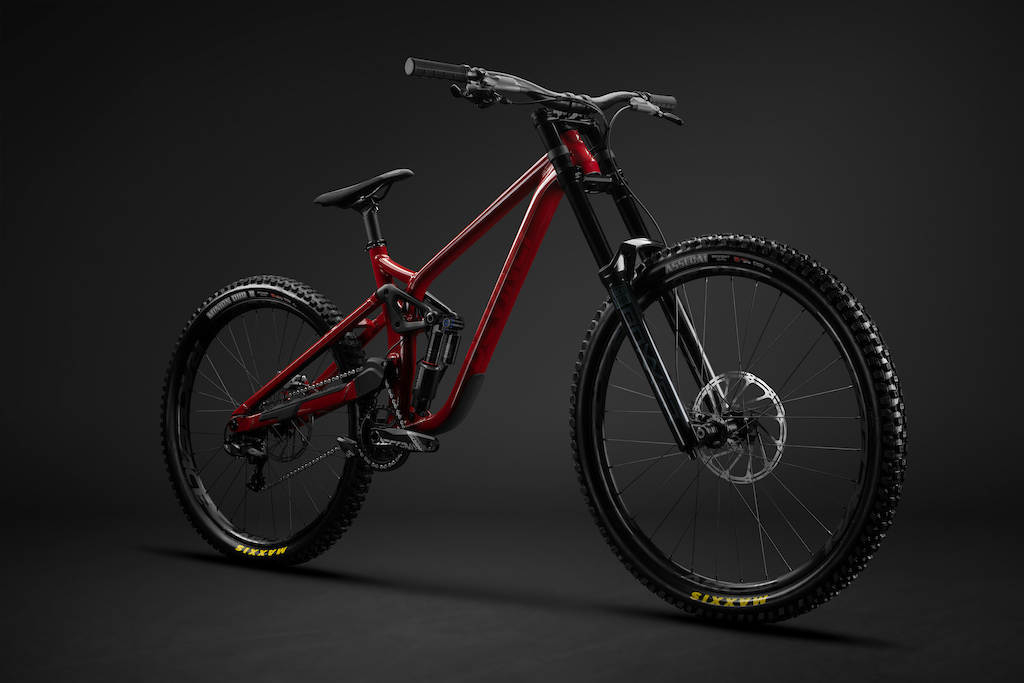
As many of you know, our gravity platform, the Chainsaw, was impacted by a recall last August. We initiated this voluntary safety recall because we are deeply committed to our riders’ safety. While only a few incidents occurred, the severity of the potential issue was significant, and as a brand, we were unwilling to create any risk for our valued customers. When you purchase a bike from us, we want you to feel safe at all times and ride with complete confidence.
To remain transparent with our community, here’s a look behind the scenes at what has been happening within our factory over the past few months as we prepared to re-launch the Chainsaw.
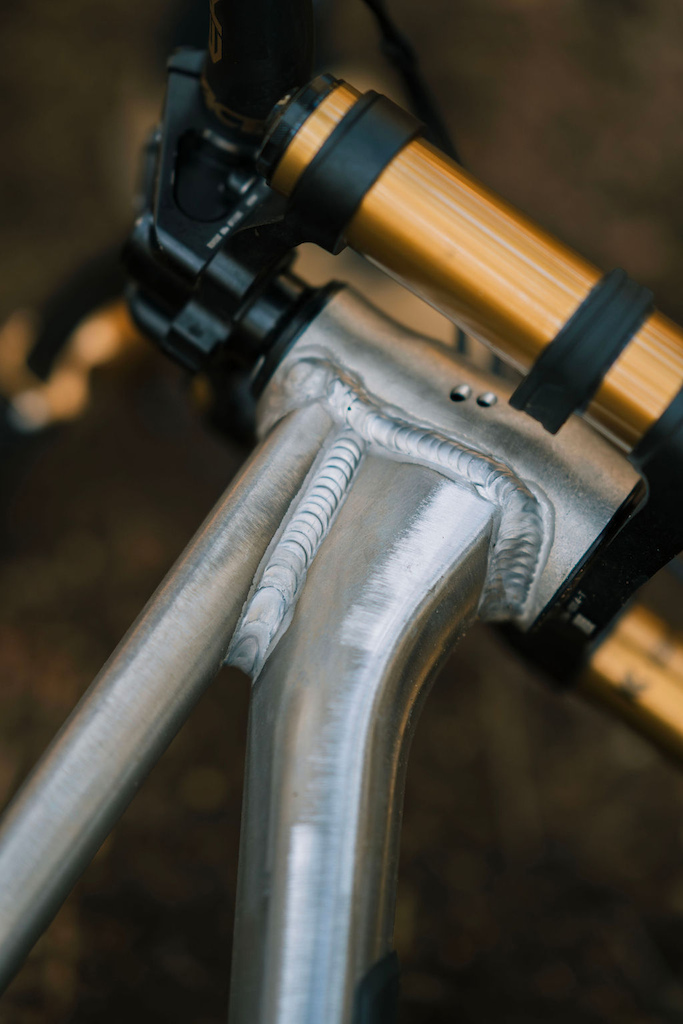
Following the recall, our team of engineers and technicians got to work immediately. The process was not taken lightly. They conducted rigorous tests on more than sixty frames to pinpoint the issue and replicate the failure in our lab. These tests and further examinations revealed that, in specific cases, the penetration of the headtube welds was not optimal to withstand the demands this platform was designed for. During our investigations, we also discovered that the arrangement of tube junctions could lead to welds with insufficient penetration, compromising the required strength levels under high load.
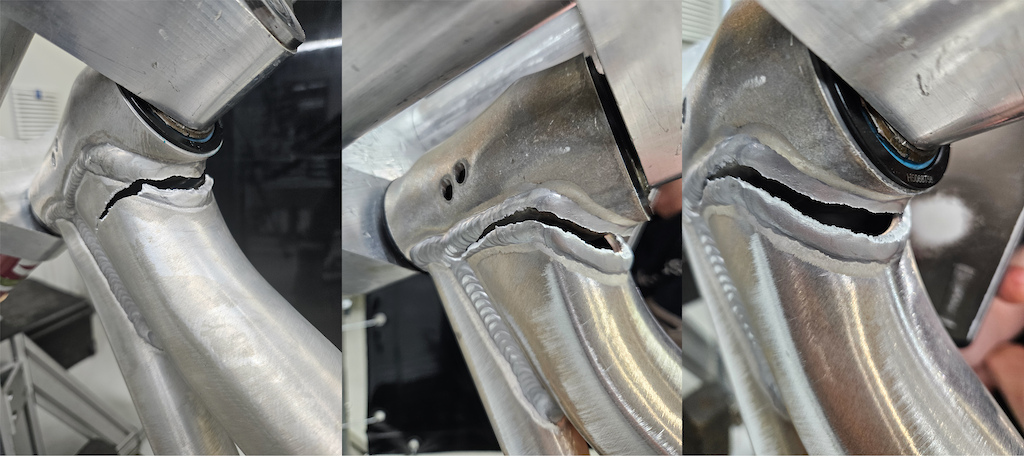
Our team was able to recreate the types of failures we experienced, which alerted us to initiate this recall. Recreating those failures is crucial in understanding the issue.
We’re now 100% confident that the new Chainsaw for 2025, along with all replacement front triangles made for the previously impacted production runs, are solid and ready to take on everything they were designed for. We adjusted the tube cut geometry at the junctions to ensure consistent root weld penetration across all frames during production. This modification allows for better control of the weld's effective throat length, a key factor in ensuring its strength. In short, the updated front triangle now features a larger and stronger weld at the junction of the toptube, downtube, and headtube. This enhancement makes the front end of the bike more resistant to significant impacts and stresses. How do we know this? Testing.
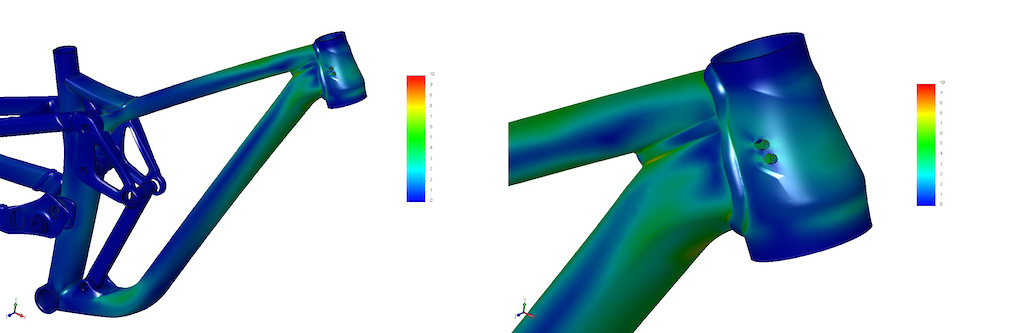
The updated Chainsaw front triangle above is shown in a Finite Element Analysis. By simulating forces and loads, we can use the colour variations to identify sections at risk of deformation or material cracking.
Extensive testing has been conducted in our laboratory, including high-strength fatigue tests, ultimate strength tests, and front impact tests with varying weights. In each of these exercises, the goal was to subject the frame to forces far beyond what a rider would typically apply, and to quantify its resistance. These tests are designed to prevent material cracks and ensure that the welds are strong, durable, and capable of withstanding these rigorous conditions.
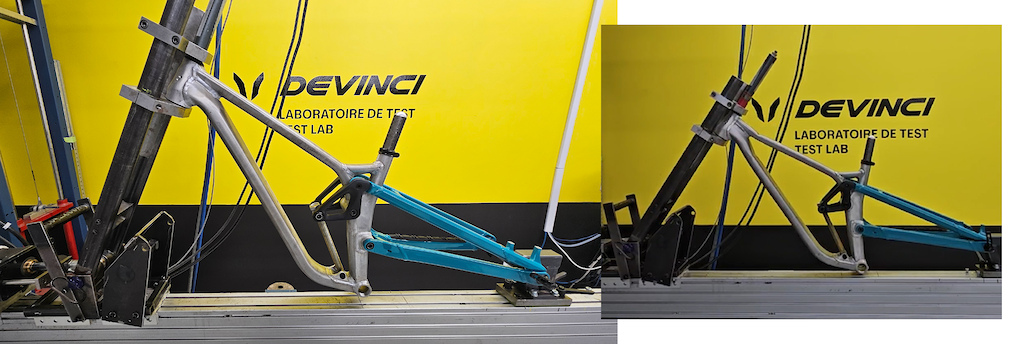
On the left, an updated Small Chainsaw frame is set up on the test bench for what we call an ultimate strength test. On the right, the desired result: tubes buckling instead of separating or cracking.
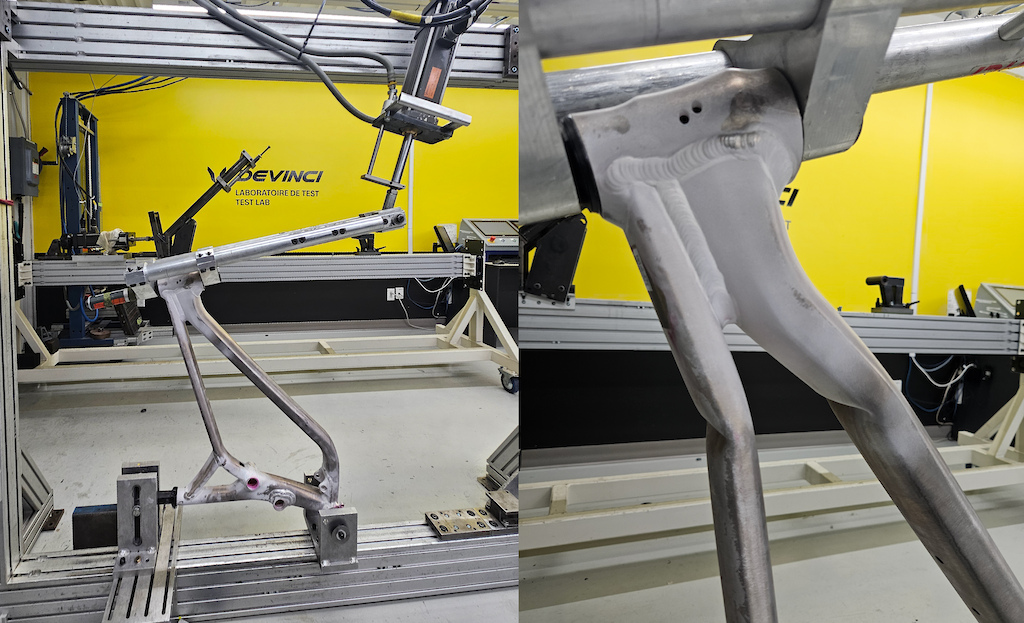
Another version of an ultimate strength test. Once again, the desired outcome is downtube and toptube buckling rather than separation or cracking.
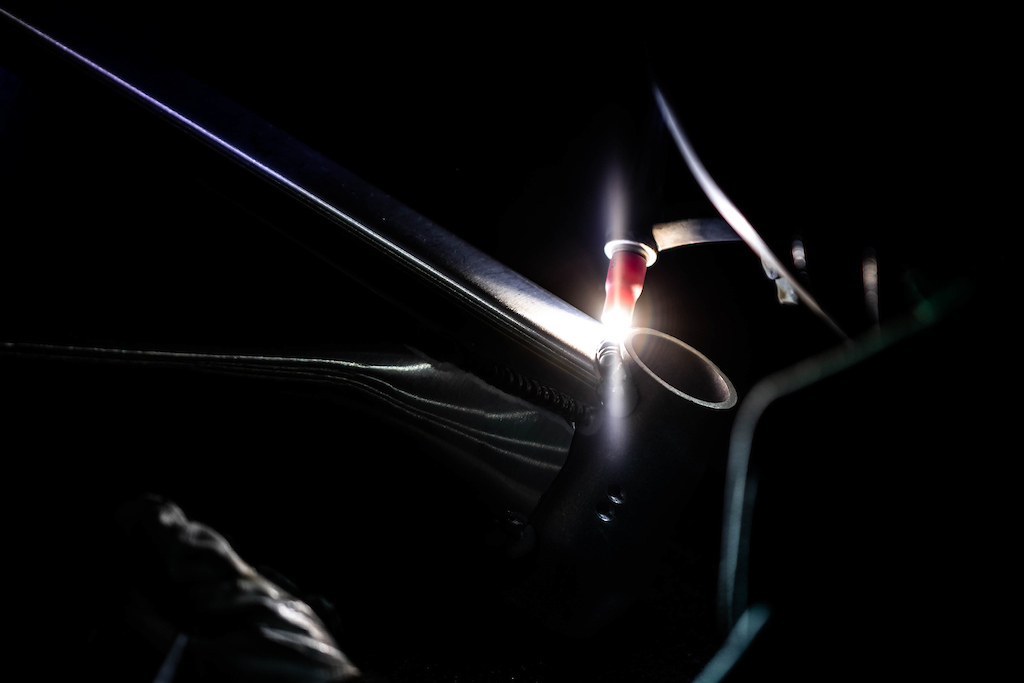
After the lab tests, the frames underwent several months of real-world testing. This ensures not only durability but also that the ride quality meets our high standards. Think of this as the final step in our approval process.
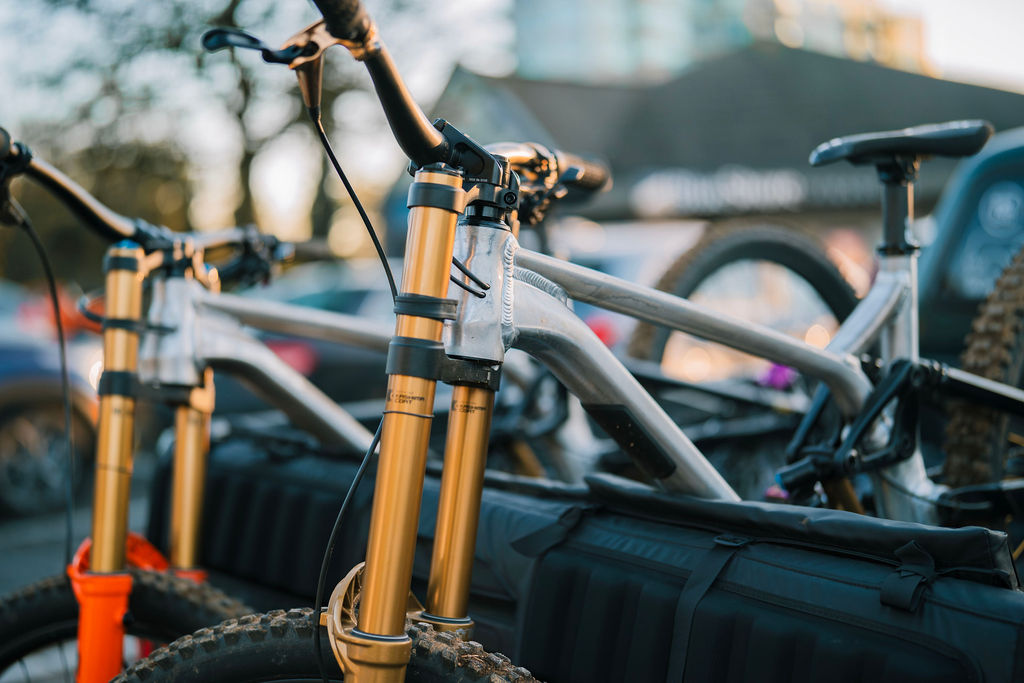
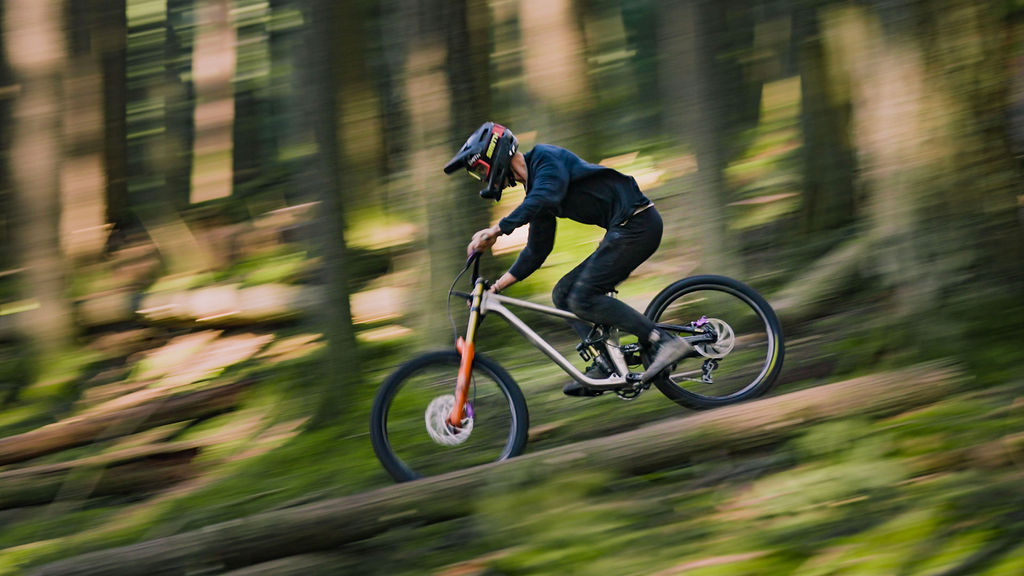
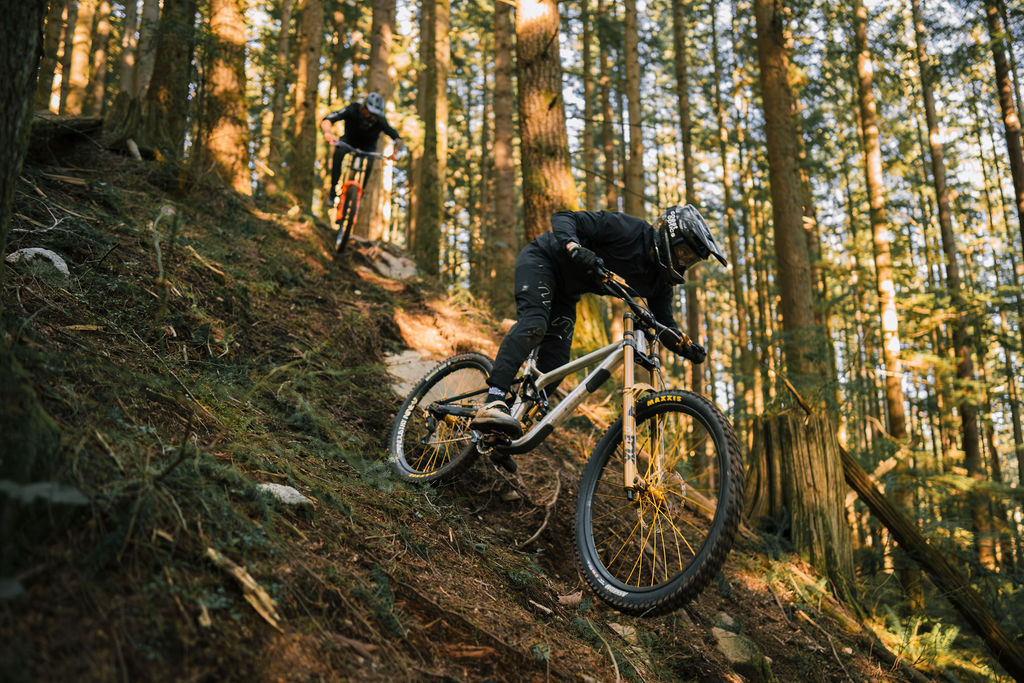
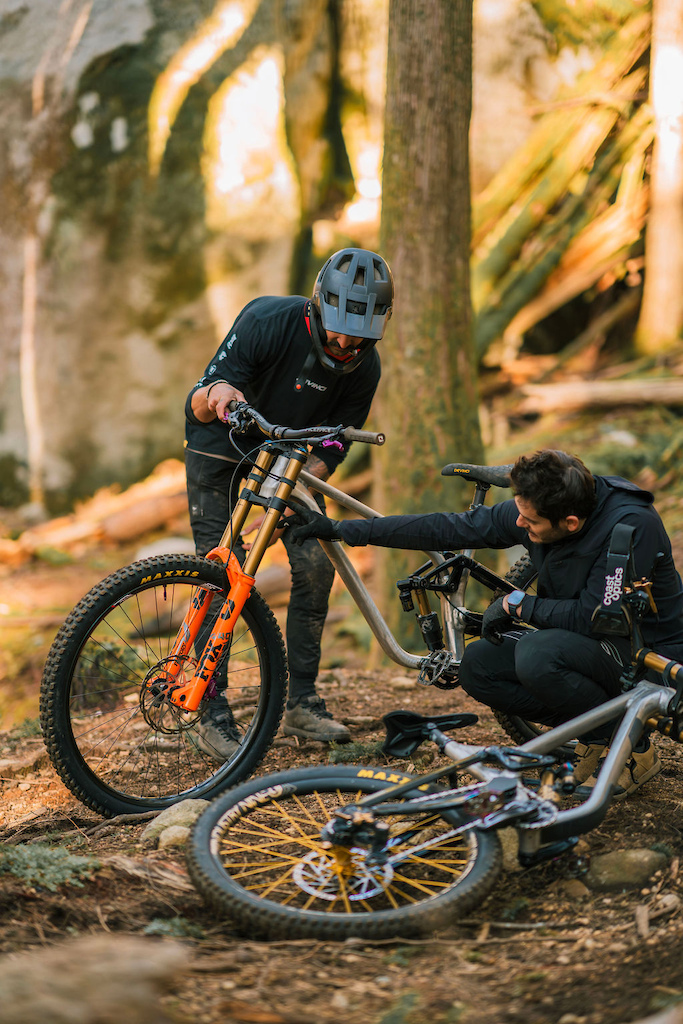
At Devinci, we take immense pride in our Canadian heritage, crafting high-quality aluminum bike frames since 1987. Our commitment has always been to build durable bikes that meet the needs of the most demanding riders. This recall may appear to be a misstep to some, but for us, it is an opportunity to stand behind our products, learn from our mistakes, shed more light on the Canadian bicycle manufacturing process, and continue to refine our local expertise.
Action Photography: Kelsey Toevs
Author Info:

 Chicoutimi, QC, Canada
Must Read This Week
Can't speak for others, but my experience with Commencal was stellar.
Commencrack !
www.pinkbike.com/forum/listcomments/?threadid=243188
Devinci, albeit a bit slow, has been stellar in upholding their warranty in my experience!
Then again, if several pictures of broken ones OF THE SAME MODEL are appearing online, it could very well point to a problem in the production/design of that model.
Let's put it this way, if 30% of a certain product failed, and people posted about it, and the brand brushed it off with saying 'well, there more of them out there that *aren't* broken', for sure that wouldn't go down too well.
My point was this:
Let's say a failure rate of 3% for any given product is acceptable. Those who have such a failure, will complain online possibly, and try to get warranty. If that works for most of them, fine. No one will make a big fuss about it, and the general public won't notice - despite the few people complaining online.
Now in my example, the failure rate was 30%. I think we can agree that is not acceptable.
In that case, way more people will complain, other people and cycling media will start to notice, and the brand will have to act swiftly, with thorough action, to avoid a PR problem.
Now, let's go to your reaction: "I’d bet there are even more photos of unbroken ones". My point was that that statement would be true even in my example of a 30% failure rate, so that fact does *not* mean there isn't a problem with that amount of failures.
What you're seeing is tube buckling, and that’s exactly what we want in an extreme load scenario. It means the frame is doing its job: preserving integrity. A head tube detaching? Now that’s what you don’t want.
Now, if they give consumers more options for bikes with normal boost vs super/silly boost, I think more people will shift towards them as a brand...ESPECIALLY in this modern tariff world.
Comments here often get silly, harsh, just dumb but they still do serve as a voice of [older] enthusiasts who spend money on mountain f*cking bicycles.
So, please, stop all this BS marketing and just prove what you stand for. It’s actually super easy to stand out on such core platforms like PB and Vital. You don’t need millions or external consultants. Just talk/listen to your customers and riders-employees who still give some shit about your brand.
Devinci definitely is on my radar now.
Pivot releases a prototype bike to a team of test riders, has a failure, recalls all of the prototypes of that model from the whole team, shows what happened and how they fixed it, and people still mention it every time the production model is pictured even though the prototype version and the production version have significantly different build methods.
Not a dig at Devinci. I think their bikes look great and I'd have gotten one if it made sense for me (I also don't own a Pivot, either; superboost is incompatible with the way I like to manage my bike stuff). I could see a time in the future that I'd own a Devinci. I don't see a time in the future that I'd own a Pivot (unless I pick it up used at a great price).
Just a thought about the fickle nature, inherent biases, and short memories of PB commenters.
I guess I was viewing it as "alarming to you guys." I didn't get the impression that there were a large number of failures but more like there were enough failures that you wanted to take a big step step to fix it.
I can't go back and edit the comment but I think that definitely is an important distinction to make!