Pinkbike's Predictions for 2012
Mike Levy Predicts
RC's Predictions

Before you read further, I must tell you a story that relates to every successful prediction that I have made for my brief 96 years in the bicycle industry. Once I was struggling to cross a wide sand wash on my Mantis Pro Floater. This was a hellish place where only I rode. Beyond a two half-buried washing machines, a doll head and four non-matching truck tires from the '30s, there was no visible evidence of humans for a half mile in any direction. You may understand then, why I was curious to see a Magic 8-Ball laying on a smooth sand bar next to an impact crater the size of a cantaloupe. The black sphere was a fresh addition to the wash, it glinted in the afternoon sun and the marks it made in the sand were distinct. I could clearly see that the orb impacted near vertically. The flares surrounding the crater radiated evenly in all directions and there was evidence that the 8-Ball bounced only once before settling window down, approximately seventeen inches from initial impact.
Given its remote location, Nolan Ryan could not have thrown the black missile high nor far enough to duplicate such a decidedly vertical impact. I ascertained that the magic 8-Ball must have been dropped from the sky by a pilot or passenger who, after losing spouse, home and fortune to an unforced 8-Ball error, flew to a god-forsaken place and heaved it out the window. I picked it up the ball, shook it around and asked an unspoken question: 'Did some jerk throw this ball from an airplane in disgust?' The floating icosahedral within slowly loomed up from the dark blue alcohol. The message read: 'It is decidedly so.' Intrigued, I asked a more subtle question: 'Am I the greatest living editor in the bicycle industry?' I shook it good and hard. It seemed to take forever for the ball to reply: 'You may rely on it.' Well, that was all the evidence I needed. I stuffed the eight ball into my Camelbak and to this day, I have used it to predict the future of cycling.

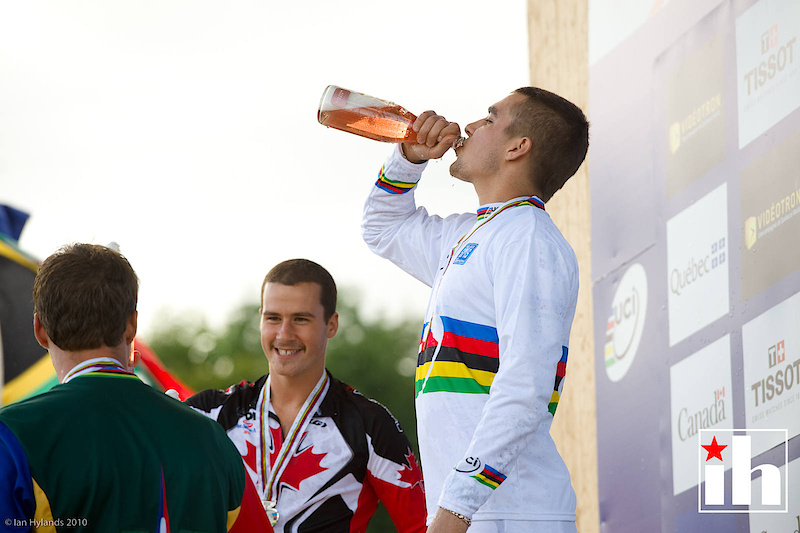
![photo]() Mick, Neethling and Minnaar Ian Hylands photo
Mick, Neethling and Minnaar Ian Hylands photo
Why should a downhill racer conform to ANY dress code beyond appropriate safety gear? I would love to see an up-and-coming pinner smoke the pro field in double low-rise stretch jeans and a T-shirt. Of course, it's a pro sport, so sponsor logo placement and country flags are part of the deal, but what individual team members wear should be up to the team and the racer. With money tight, racers typically contract with gear and clothing sponsors outside of the team's and it is doubtful that additional dress codes will give this valuable income source a workaround. Brace yourself for some UCI meddling near the end of the 2012 season. - RC
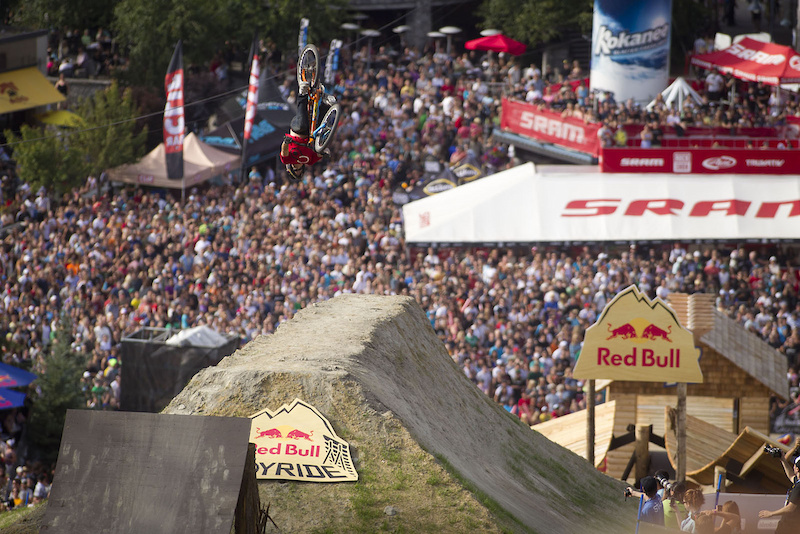
Anthony Messere's Redbull Joyride Run
.

The Comeback: Sam Hill returns to the top
With a schedule of World Cup events held on some of the most challenging tracks, as well as a World Champs that was decided on the perilous slopes of Champéry, Switzerland, the 2011 season looked to be tailor made for Hill to reclaim the title of the fastest downhiller alive. Unfortunately for Sam, it didn't work out as he was no doubt hoping. There is no denying that Hill began the 2011 season not looking nearly as fit as the rest of the field, a fatal mistake when you consider the efforts that Gwin and company were making in the off season, but a shoulder injury was the final nail in the coffin of a year that really should have been his for the taking. It seems that half of the people I talk to feel that Sam's best days are behind him, and while I can't argue that the consistency of Gwin's race runs or the excitement of Danny Hart's World Champs win seems to have stolen some of Sam's fire, I'm still willing to bet that we'll see Hill on the top step of the World Cup podium once again. Yes, Gwin and the rest of the field have raised the game to a new level in Sam's absence, but an athlete returning to the top after an injury or off-year is the hallmark of a champion in any sport - many have already forgotten that Hill has done just that once before with his World Champs win in Canada, not to mention his 7th place at this year's Champs in Champéry after a season ending injury, a result that many people absurdly look at as a disappointment. Sam is often compared to Supercross' James Stewart, a rider who can often be too fast for his own good, but he also shares Stewart's drive to win - you don't put it on the line like Sam has in the past without a massive amount of pure desire. It's that fire that will have us fans see him start the 2012 season trim, fit and ready to shut down the doubters as only he can, hopefully wearing the loudest Troy Lee Designs gear that we've ever seen. - Mike Levy
With a schedule of World Cup events held on some of the most challenging tracks, as well as a World Champs that was decided on the perilous slopes of Champéry, Switzerland, the 2011 season looked to be tailor made for Hill to reclaim the title of the fastest downhiller alive. Unfortunately for Sam, it didn't work out as he was no doubt hoping. There is no denying that Hill began the 2011 season not looking nearly as fit as the rest of the field, a fatal mistake when you consider the efforts that Gwin and company were making in the off season, but a shoulder injury was the final nail in the coffin of a year that really should have been his for the taking. It seems that half of the people I talk to feel that Sam's best days are behind him, and while I can't argue that the consistency of Gwin's race runs or the excitement of Danny Hart's World Champs win seems to have stolen some of Sam's fire, I'm still willing to bet that we'll see Hill on the top step of the World Cup podium once again. Yes, Gwin and the rest of the field have raised the game to a new level in Sam's absence, but an athlete returning to the top after an injury or off-year is the hallmark of a champion in any sport - many have already forgotten that Hill has done just that once before with his World Champs win in Canada, not to mention his 7th place at this year's Champs in Champéry after a season ending injury, a result that many people absurdly look at as a disappointment. Sam is often compared to Supercross' James Stewart, a rider who can often be too fast for his own good, but he also shares Stewart's drive to win - you don't put it on the line like Sam has in the past without a massive amount of pure desire. It's that fire that will have us fans see him start the 2012 season trim, fit and ready to shut down the doubters as only he can, hopefully wearing the loudest Troy Lee Designs gear that we've ever seen. - Mike Levy

More Flow: Dropper posts drop on their own
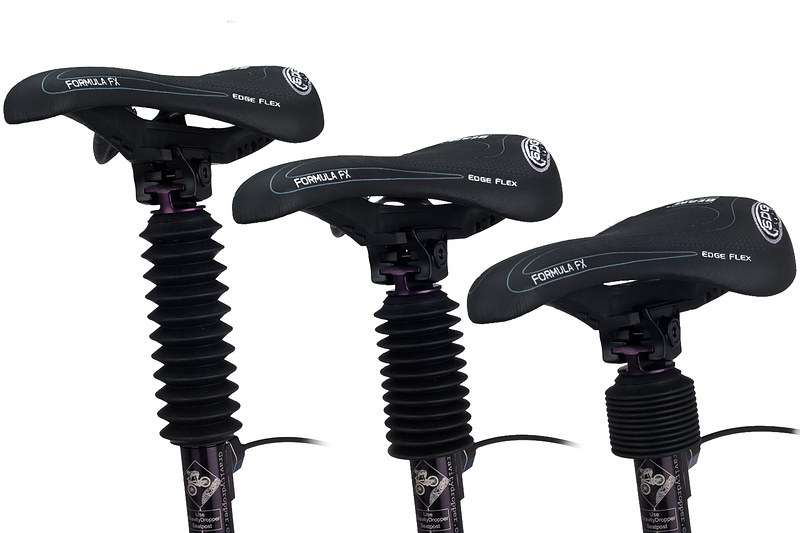
No, I'm not talking about the already common issue of a failed dropper post that has a mind of its own. There are few locations around the world where a telescoping seat post won't benefit your trail ride, mainly routes that get all of the climbing out of the way right off the bat, but the large majority of riders will benefit from adding a dropper post to their bike. While the category still needs to improve on the reliability front, I believe that we'll soon see a telescoping post from at least one manufacturer that lowers at the press of a button without requiring you to use your body weight. This would eliminate that awkward moment when you are forced to sit for a split second before rolling into the gnar. I'm not going to pretend to have an idea of how the system would work (maybe some sort of negative air pressure would be involved?), but the technology is there to make it happen and raise the flow levels even higher. Is it a needed development? Nope. Would it be useful? Hell yes. You heard it here first, unless it doesn't happen, of course, in which case you can forget that I ever said it. - Mike Levy
No, I'm not talking about the already common issue of a failed dropper post that has a mind of its own. There are few locations around the world where a telescoping seat post won't benefit your trail ride, mainly routes that get all of the climbing out of the way right off the bat, but the large majority of riders will benefit from adding a dropper post to their bike. While the category still needs to improve on the reliability front, I believe that we'll soon see a telescoping post from at least one manufacturer that lowers at the press of a button without requiring you to use your body weight. This would eliminate that awkward moment when you are forced to sit for a split second before rolling into the gnar. I'm not going to pretend to have an idea of how the system would work (maybe some sort of negative air pressure would be involved?), but the technology is there to make it happen and raise the flow levels even higher. Is it a needed development? Nope. Would it be useful? Hell yes. You heard it here first, unless it doesn't happen, of course, in which case you can forget that I ever said it. - Mike Levy

Hard to Beat: Derailleurs continue to rule
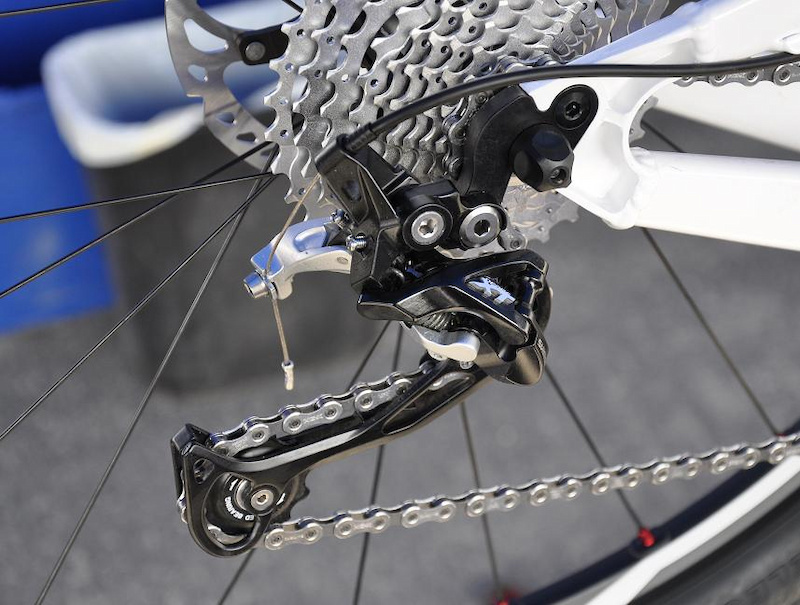
I'm likely not going too far out on a limb when I say that, from what I've seen so far concerning gearbox technology, derailleurs will continue to rule the drivetrain world. Sure, a story on a new gearbox bike seems to light up the forums and comment boards, but I've yet to see these bikes actually make any headway into proper day to day use by more than a few select riders. Some will point out that Honda's 'derailleur in a can' design reaped some success, or that a gearbox system should require less maintenance and shrug off abuse, but there are facts that will always hold the gearbox back from being accepted by the general public. First and foremost, as much as many complain about the current systems, derailleurs are pretty damn dialled these days. Even Shimano and SRAM's entry level kit is impressive, with the 9 speed Deore and 10 speed X5 groups offering more performance and reliability than you'd expect from parts that retail for such reasonable prices. There is also the issue of weight, which will likely always tip in the favour of traditional systems. While many riders, especially the downhillers out there, often claim that they would be happy to trade the added weight for a gearbox's theoretical advantages, the fact of the matter is that we're a fickle bunch when it comes to counting grams and even the lightest gearbox systems are currently quite a bit heavier than a derailleur setup. There are then the issues of the friction associated with most designs, or having frame manufacturers come to an agreement on how to attach them to the frame. But the most damning fact is that neither Shimano or SRAM seem to be behind the idea, despite both producing internally geared hubs for quite some time. The jaded and suspicious of you are likely to ask why they would bother, given their investment in standard derailleurs, but I'd counter that by saying that either company would love to get the jump on the other by releasing a lightweight and reasonably priced gearbox design. Will it ever happen? I'd love to say that I'm looking forward to having a go on a competitive gearbox bike, but I highly doubt that it will happen anytime soon. - Mike Levy
I'm likely not going too far out on a limb when I say that, from what I've seen so far concerning gearbox technology, derailleurs will continue to rule the drivetrain world. Sure, a story on a new gearbox bike seems to light up the forums and comment boards, but I've yet to see these bikes actually make any headway into proper day to day use by more than a few select riders. Some will point out that Honda's 'derailleur in a can' design reaped some success, or that a gearbox system should require less maintenance and shrug off abuse, but there are facts that will always hold the gearbox back from being accepted by the general public. First and foremost, as much as many complain about the current systems, derailleurs are pretty damn dialled these days. Even Shimano and SRAM's entry level kit is impressive, with the 9 speed Deore and 10 speed X5 groups offering more performance and reliability than you'd expect from parts that retail for such reasonable prices. There is also the issue of weight, which will likely always tip in the favour of traditional systems. While many riders, especially the downhillers out there, often claim that they would be happy to trade the added weight for a gearbox's theoretical advantages, the fact of the matter is that we're a fickle bunch when it comes to counting grams and even the lightest gearbox systems are currently quite a bit heavier than a derailleur setup. There are then the issues of the friction associated with most designs, or having frame manufacturers come to an agreement on how to attach them to the frame. But the most damning fact is that neither Shimano or SRAM seem to be behind the idea, despite both producing internally geared hubs for quite some time. The jaded and suspicious of you are likely to ask why they would bother, given their investment in standard derailleurs, but I'd counter that by saying that either company would love to get the jump on the other by releasing a lightweight and reasonably priced gearbox design. Will it ever happen? I'd love to say that I'm looking forward to having a go on a competitive gearbox bike, but I highly doubt that it will happen anytime soon. - Mike Levy

Less is More: More riders will use bikes with less travel
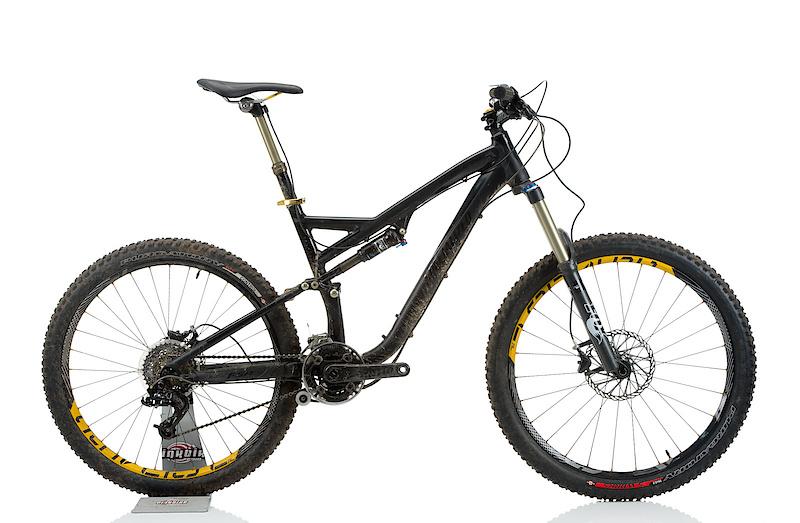
While I can't argue that a downhill bike lets you get away with mistakes and line choices that would spank you hard on a shorter travel bike, there is something to be said for mastering that same terrain on smaller rig. More and more riders who would have previously spent most or all of their saddle time on a downhill bike are discovering how much fun they can have on a shorter travel bike, but why? Part of if is a fundamental change in how many riders look at their riding. A trail bike, or whatever you want to call it, means that you get more saddle time instead of sitting on a lift or in the back of a truck. Don't take me the wrong way, racing and riding big bikes with buddies will never get old, but there is no way that those long travel beasts can give you the same bang for your buck when talking about amount of time spent on singletrack. Manufacturers are also waking up to the idea, with more and more designing trail bikes that agressive riders can feel comfortable on. The idea of such a bike is far from new, but we all win when big players like Specialized put out bikes like their 145mm travel Stumpjumper FSR Expert EVO, a mid travel machine with geo that allows you to charge hard. Many brands, both big and small, are designing similar bikes that allow a skilled rider to work the terrain more, with many discovering that they are actually faster in a great deal of places on their shorter travel bike. But here's the clincher: these progressive bikes are showing riders that it isn't about outright speed, but rather outright shits and giggles. And when are you having the most fun? When your bike is sliding around, loose and spraying dirt behind you, a point that is much easier to reach on a mid travel trail bike than on a full fledged DH sled. Slack and low geometry combined with short stems, suspension technology that lets you have your cake and eat it as well, and dropper posts that allow you to squeeze every last ounce of flow out of the trail are all factors that will ensure that these evolved trail bikes will continue to gain in popularity. - Mike Levy
While I can't argue that a downhill bike lets you get away with mistakes and line choices that would spank you hard on a shorter travel bike, there is something to be said for mastering that same terrain on smaller rig. More and more riders who would have previously spent most or all of their saddle time on a downhill bike are discovering how much fun they can have on a shorter travel bike, but why? Part of if is a fundamental change in how many riders look at their riding. A trail bike, or whatever you want to call it, means that you get more saddle time instead of sitting on a lift or in the back of a truck. Don't take me the wrong way, racing and riding big bikes with buddies will never get old, but there is no way that those long travel beasts can give you the same bang for your buck when talking about amount of time spent on singletrack. Manufacturers are also waking up to the idea, with more and more designing trail bikes that agressive riders can feel comfortable on. The idea of such a bike is far from new, but we all win when big players like Specialized put out bikes like their 145mm travel Stumpjumper FSR Expert EVO, a mid travel machine with geo that allows you to charge hard. Many brands, both big and small, are designing similar bikes that allow a skilled rider to work the terrain more, with many discovering that they are actually faster in a great deal of places on their shorter travel bike. But here's the clincher: these progressive bikes are showing riders that it isn't about outright speed, but rather outright shits and giggles. And when are you having the most fun? When your bike is sliding around, loose and spraying dirt behind you, a point that is much easier to reach on a mid travel trail bike than on a full fledged DH sled. Slack and low geometry combined with short stems, suspension technology that lets you have your cake and eat it as well, and dropper posts that allow you to squeeze every last ounce of flow out of the trail are all factors that will ensure that these evolved trail bikes will continue to gain in popularity. - Mike Levy
RC's Predictions

Before you read further, I must tell you a story that relates to every successful prediction that I have made for my brief 96 years in the bicycle industry. Once I was struggling to cross a wide sand wash on my Mantis Pro Floater. This was a hellish place where only I rode. Beyond a two half-buried washing machines, a doll head and four non-matching truck tires from the '30s, there was no visible evidence of humans for a half mile in any direction. You may understand then, why I was curious to see a Magic 8-Ball laying on a smooth sand bar next to an impact crater the size of a cantaloupe. The black sphere was a fresh addition to the wash, it glinted in the afternoon sun and the marks it made in the sand were distinct. I could clearly see that the orb impacted near vertically. The flares surrounding the crater radiated evenly in all directions and there was evidence that the 8-Ball bounced only once before settling window down, approximately seventeen inches from initial impact.
Given its remote location, Nolan Ryan could not have thrown the black missile high nor far enough to duplicate such a decidedly vertical impact. I ascertained that the magic 8-Ball must have been dropped from the sky by a pilot or passenger who, after losing spouse, home and fortune to an unforced 8-Ball error, flew to a god-forsaken place and heaved it out the window. I picked it up the ball, shook it around and asked an unspoken question: 'Did some jerk throw this ball from an airplane in disgust?' The floating icosahedral within slowly loomed up from the dark blue alcohol. The message read: 'It is decidedly so.' Intrigued, I asked a more subtle question: 'Am I the greatest living editor in the bicycle industry?' I shook it good and hard. It seemed to take forever for the ball to reply: 'You may rely on it.' Well, that was all the evidence I needed. I stuffed the eight ball into my Camelbak and to this day, I have used it to predict the future of cycling.

Will 650b Bikes Re-emerge in 2012? "Signs point to yes"
When 650b marched into the spotlight, 29ers were facing resistance from mainstream bike-makers and a mid-sized wheel format seemed to be a reasonable compromise that offered the benefits of the 29er's larger wheels while retaining the familiar handling qualities and component spec of a comparable 26er. The Momma-Bear wheel solution captured the imagination of riders, the press, and a number of tire and wheel makers, but the cycling industry was already having a tough time translating the benefits of 29ers. Explaining the benefits of 650b was more difficult because the mid-sized format appeared similar to its smaller 26-inch brother. With its clearly different profile and widespread support, the winds of change filled the sails of the 29er and 650b disappeared from the lineups of all but a few of bike brands. The re-emergence of 650b is already gathering speed, however, and insiders report that suspension makers are gearing up to produce 650b forks on the order of the biggest names in the bike biz. This indicates that 650b bikes are slated for future production.
Why? It's no secret that Specialized and Trek are locked in a heated battle to own the 29er business worldwide. Both brands have sharp design teams who are struggling to adapt the 29er to the longer travel AM/trail market which is the fastest-growing segment. After 120 millimeters of rear-wheel travel, squeezing additional suspension from a 29er becomes a bit of designer's nightmare as standard components crowd each other for space. On top of that, reinforcing the frame to counter the additional forces generated by big wheels and more aggressive riders heaps on weight - an issue that 29ers already suffer from. Those who have continued to develop 650b know that the harder those designers try to cram 29er wheels into a 160 to 180 millimeter chassis, the better 650b will begin to look. Plus, riders who are feeling pressured to jump over to big wheels might choose a mid-sized format if it makes sense, simply because it isn't a 29er. The reasons for 650b may still be the same, but the circumstances are far more compelling. - RC
When 650b marched into the spotlight, 29ers were facing resistance from mainstream bike-makers and a mid-sized wheel format seemed to be a reasonable compromise that offered the benefits of the 29er's larger wheels while retaining the familiar handling qualities and component spec of a comparable 26er. The Momma-Bear wheel solution captured the imagination of riders, the press, and a number of tire and wheel makers, but the cycling industry was already having a tough time translating the benefits of 29ers. Explaining the benefits of 650b was more difficult because the mid-sized format appeared similar to its smaller 26-inch brother. With its clearly different profile and widespread support, the winds of change filled the sails of the 29er and 650b disappeared from the lineups of all but a few of bike brands. The re-emergence of 650b is already gathering speed, however, and insiders report that suspension makers are gearing up to produce 650b forks on the order of the biggest names in the bike biz. This indicates that 650b bikes are slated for future production.
Why? It's no secret that Specialized and Trek are locked in a heated battle to own the 29er business worldwide. Both brands have sharp design teams who are struggling to adapt the 29er to the longer travel AM/trail market which is the fastest-growing segment. After 120 millimeters of rear-wheel travel, squeezing additional suspension from a 29er becomes a bit of designer's nightmare as standard components crowd each other for space. On top of that, reinforcing the frame to counter the additional forces generated by big wheels and more aggressive riders heaps on weight - an issue that 29ers already suffer from. Those who have continued to develop 650b know that the harder those designers try to cram 29er wheels into a 160 to 180 millimeter chassis, the better 650b will begin to look. Plus, riders who are feeling pressured to jump over to big wheels might choose a mid-sized format if it makes sense, simply because it isn't a 29er. The reasons for 650b may still be the same, but the circumstances are far more compelling. - RC

Will Four Cross Return to World Cup Racing?
"My sources say no"
They say that when you are acting stupid that you get three chances to live before nobody can save you from inevitable death. Four Cross promised side-by-side action that was sure to wow spectators and attract television coverage that had been lacking from um-who-was-that-rider downhill and my-god-this-is-taking-forever dual slalom formats. What we got was a bunch of groomed big-boy-BMX courses that, on paper, were wide enough for passing, but in reality, offered only one line. On a smooth, banked course, there is only one fast line and if you don't claim it at the start, your only option for the win is to push the leader off the track. Rubbing is racing, but purposeful moves that take out the field in nearly every heat is unsportsmanlike conduct (unless its roller derby). Protests were rare and officials failed to respond to stop the foolishness. After watching their homeland heroes get taken out by jerk moves time after time, spectators started to thin out and top names began to no-show simply because winning an event staged at night after the big show was not worth a broken leg and a hundred bucks. Strike three was that you could win almost any four cross race on a hardtail - which is fine for BMX lovers, but kind of silly in front of a crowd that rides 140 to 180 millimeter dual-suspension bikes. It was sad to see worthy courses finally appear throughout the 2011season with serious terrain and line change-ups that actually offered passing opportunities - and gave the advantage to dual-suspension bikes. By then, however, the exorbitant cost of crafting a race course that only got used once by an abbreviated field of riders soured promoters to the point that most secretly wished for the decision to be handed down by the UCI. Had four cross began where it ended, it probably would have grown to a successful stand-alone series. Three strikes, and now it's dead. - RC
"My sources say no"
They say that when you are acting stupid that you get three chances to live before nobody can save you from inevitable death. Four Cross promised side-by-side action that was sure to wow spectators and attract television coverage that had been lacking from um-who-was-that-rider downhill and my-god-this-is-taking-forever dual slalom formats. What we got was a bunch of groomed big-boy-BMX courses that, on paper, were wide enough for passing, but in reality, offered only one line. On a smooth, banked course, there is only one fast line and if you don't claim it at the start, your only option for the win is to push the leader off the track. Rubbing is racing, but purposeful moves that take out the field in nearly every heat is unsportsmanlike conduct (unless its roller derby). Protests were rare and officials failed to respond to stop the foolishness. After watching their homeland heroes get taken out by jerk moves time after time, spectators started to thin out and top names began to no-show simply because winning an event staged at night after the big show was not worth a broken leg and a hundred bucks. Strike three was that you could win almost any four cross race on a hardtail - which is fine for BMX lovers, but kind of silly in front of a crowd that rides 140 to 180 millimeter dual-suspension bikes. It was sad to see worthy courses finally appear throughout the 2011season with serious terrain and line change-ups that actually offered passing opportunities - and gave the advantage to dual-suspension bikes. By then, however, the exorbitant cost of crafting a race course that only got used once by an abbreviated field of riders soured promoters to the point that most secretly wished for the decision to be handed down by the UCI. Had four cross began where it ended, it probably would have grown to a successful stand-alone series. Three strikes, and now it's dead. - RC

Will the Enduro Racing Format Gain Traction in North America? "Ask again later"
Already an established and popular series in Europe, Enduro racing is one of the few formats that allows us to race a normal mountain bike. Enduros have all of the pieces that AM/trail riders have been wishing for, like an emphasis on technical bike-handling skills and reducing the climbing component from dominating the odds of a podium finish. It's better than Super D because there a number of racers who compete side-by-side on course and Enduros offer multiple stages to highlight different skillsets. Where Enduro begins to falter is that North American racers tend to like uncomplicated events. Although the premise of an Enduro race is relatively striaghtforward - accumulated timed stages connected by un-timed uplifts and climbing sections - as long as an Enduro racer must translate his or her sport to convey its importance to friends, it will continue to be a slow growing event. Another block is that it is accepted practice in European events to cut the course to gain an advantage. Much of their pre-race ride-arounds are spent searching the courses for cheats. The excuse is that if there is no tape on either side of the course, then it is OK to ride wherever you can to gain an advantage. US racers abroad have followed Enduro stars down secret routes that have gained the leaders 15 seconds or more. Antics like that are rare in North American racing, even in 24 hour events, where there is virtually no supervision and racers enjoy the cover of darkness. Enduro racing has great potential in North America, but it needs to be repackaged to lure trail riders out of the woods and onto the race course. - RC
Already an established and popular series in Europe, Enduro racing is one of the few formats that allows us to race a normal mountain bike. Enduros have all of the pieces that AM/trail riders have been wishing for, like an emphasis on technical bike-handling skills and reducing the climbing component from dominating the odds of a podium finish. It's better than Super D because there a number of racers who compete side-by-side on course and Enduros offer multiple stages to highlight different skillsets. Where Enduro begins to falter is that North American racers tend to like uncomplicated events. Although the premise of an Enduro race is relatively striaghtforward - accumulated timed stages connected by un-timed uplifts and climbing sections - as long as an Enduro racer must translate his or her sport to convey its importance to friends, it will continue to be a slow growing event. Another block is that it is accepted practice in European events to cut the course to gain an advantage. Much of their pre-race ride-arounds are spent searching the courses for cheats. The excuse is that if there is no tape on either side of the course, then it is OK to ride wherever you can to gain an advantage. US racers abroad have followed Enduro stars down secret routes that have gained the leaders 15 seconds or more. Antics like that are rare in North American racing, even in 24 hour events, where there is virtually no supervision and racers enjoy the cover of darkness. Enduro racing has great potential in North America, but it needs to be repackaged to lure trail riders out of the woods and onto the race course. - RC
Will the UCI Continue to Impose Dress Codes on Downhill Racing?
"As I see it, Yes"
The UCI is all about making rules and you can bet that, now that downhill racing is on the radar of the international governing body for cycle racing, that more rules are in order. The UCI knows a lot more about kits than courses. Reverse logic suggests that if Olympic teams run the same kit, and ProTour road racers ride the same kit, and Pro XC teams all wear the same kit, that Pro DH teams should follow suit. Downhill is one of the last mountain bike race venues where the individual looks like an individual. When rain pours down and contestants are muddy, it's still possible to differentiate racers by their kits. Plus, DH is a timed sport - one man or one woman laying it all on the line against nature and the clock.
"As I see it, Yes"
The UCI is all about making rules and you can bet that, now that downhill racing is on the radar of the international governing body for cycle racing, that more rules are in order. The UCI knows a lot more about kits than courses. Reverse logic suggests that if Olympic teams run the same kit, and ProTour road racers ride the same kit, and Pro XC teams all wear the same kit, that Pro DH teams should follow suit. Downhill is one of the last mountain bike race venues where the individual looks like an individual. When rain pours down and contestants are muddy, it's still possible to differentiate racers by their kits. Plus, DH is a timed sport - one man or one woman laying it all on the line against nature and the clock.
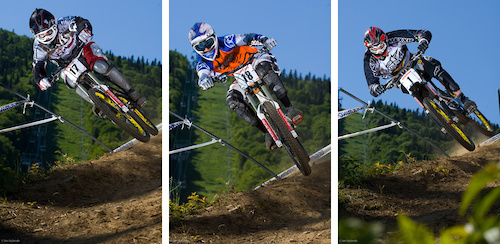
Why should a downhill racer conform to ANY dress code beyond appropriate safety gear? I would love to see an up-and-coming pinner smoke the pro field in double low-rise stretch jeans and a T-shirt. Of course, it's a pro sport, so sponsor logo placement and country flags are part of the deal, but what individual team members wear should be up to the team and the racer. With money tight, racers typically contract with gear and clothing sponsors outside of the team's and it is doubtful that additional dress codes will give this valuable income source a workaround. Brace yourself for some UCI meddling near the end of the 2012 season. - RC

Will Slopestyle Events Hit a Plateau? "Very Doubtful"
Throughout 2011, it appeared that slopestyle events were won by the same tricks, just a lot bigger and a lot more of them. By the end of the year, however, the focus seemed to take a turn. We are seeing more tricks launched from natural features and at contests, the moves are becoming larger and more graceful. Instead of cramming as much as possible in two and a quarter seconds between lips, riders are creating a flow, sewing together huge arcing tricks with lighting-fast moves. There is a new aesthetic emerging that seems to be transforming the sport. One of the new-school guys is Anthony Messere, who at 15 years, placed a convincing third at the Kokanee Crankworx Red Bull Joyride. Watch this Aaron LaRoque video and notice how Messers seems to have a clear vision of how he'll execute his routine and at the same time, what it will look like from an observer's perspective. It's a beautiful style, and he's just getting warmed up. - RC
Throughout 2011, it appeared that slopestyle events were won by the same tricks, just a lot bigger and a lot more of them. By the end of the year, however, the focus seemed to take a turn. We are seeing more tricks launched from natural features and at contests, the moves are becoming larger and more graceful. Instead of cramming as much as possible in two and a quarter seconds between lips, riders are creating a flow, sewing together huge arcing tricks with lighting-fast moves. There is a new aesthetic emerging that seems to be transforming the sport. One of the new-school guys is Anthony Messere, who at 15 years, placed a convincing third at the Kokanee Crankworx Red Bull Joyride. Watch this Aaron LaRoque video and notice how Messers seems to have a clear vision of how he'll execute his routine and at the same time, what it will look like from an observer's perspective. It's a beautiful style, and he's just getting warmed up. - RC
(Password protected)
.
Will RC's predictions for 2012 come true?
There are 20 answers inside the Magic 8-Ball:
Author Info:
Must Read This Week
Sign Up for the Pinkbike Newsletter - All the Biggest, Most Interesting Stories in your Inbox
PB Newsletter Signup
Sam has a talent that can't be learned, or improved by training. But unlike the others who train hard physically, Sam has great room for physical improvement. A fit, injury-free Sam Hill will be World Cup or World Champion again.
I hope Sam comes back fighting this year, it would be nice to see someone challenge Gwinn.
Gwin is still new to the sport (200
What he does in 2012 could be epic. In a lot of respects I hope it is, the latest stars are moving the sport on to another level.
Must be tough positioning 3,1,1,2,1,1,5 (Crash),1,1,1,3,1,12 (Crash),2,1 last year for Gwin.
www.pinkbike.com/news/Specialized-Carbon-Demo-First-Look.html
dirt.mpora.com/news/specialized-carbon-demo-sniper-shots.html
I think we'll see more bikes with "wheel geometry" options.
This will probably correspond with the mid-travel AM/FR Enduro bike category. You'll see bikes that are designed to be 30lbs with 160mm of travel and have the roll over advantages of 650b at the top model and the "standard" or low end models will have 26" wheels.
The 650b model may have different drop-outs or shock links to maintain good geometry. In "FR" setup, you'll run 26" wheels, bigger tires 2.5+, longer travel, more slack, think Mini-DH. In the "AM" setup you'll run 650b, 2.35 tires, slightly more steep HA throw the seat post up and you've got a good alternative to the wagon wheels.
I ride a 29er, and I'm very excited about the new crop of AM 29ers like the Satori, Tallboy, Prime, Lenz, etc, but I believe there is definite limit to both suspension travel and head tube angle with the bigger wheels.
Even now that 3D HD TVs aren't any more expensive than regular HD TVs, people are buying them, but they only sell 3D glasses to a very small % of people who buy those 3D HD TVs. The consumer doesn't care much about 3D, and isn't going to take the disadvantages (wearing glasses) to get the advantages (seeing the same shows/movies in 3D).
Hey Sony, I don't want to have to wear glasses when I watch TV. People stick plastic lenses to their eyes with their fingers and have surgery to not have to wear glasses.
Hey Intense, I don't want a bike that handles like a Buick on singletrack and downhills just so I can "roll" over bumps better. The main reason I ride a mountain bike is for the singletrack and downhills... a 2 mile singletrack downhill? YES PLEASE!
I'm just really annoyed with manufacturers telling me "you need to ride one!" I have, and I'm not a fan. It's bad at everything I love about mountain biking. Not to mention, just like 3D glasses, they look stupid!
Plus there's nothing like sticking it to someone when you're on a short travel bike and jeans to their DH monster, fivetens and neck brace!
Giant are you listening? I want a mini Glory made of Carbon!
Amen to that!
I also don't think he'll be a consistent winner or performer.
He still has some great races to do though... I believe.
Gwin is nearly the package, Danny on a wild day can keep with or beat him, but that was just it in 2011, Gwin makes what others (Including Gee, Steve, Greg) make look hard, look simple.
Train hard, race as a 100% professional not a media star and you can do it.
I remember Greg (or might have been Gee) saying about the young boys Gwin, Hart, Stevie, Josh and Brendog can do ok for a run, but are not consistent at the start of 2011.... well Greg (or Gee), you better have been training hard over the winter to catch back up!
"Gwin took the overall with ease - had a race n hand - but on any given day it was the lights out riding of Hart that won it."
Have to disagree with you there. On "any given day" it was Aaron's riding that won it. Hart won one race, admittedly it in a very spectacular style, but Gwin won the most WC races in a single year by any male racer in the history of the sport.
Regarding Hill and Troy's results in their national rounds, remember that these are not WCs. They obviously want to win these races but much like Sea Otter, their focus is on the WC season and World Champs.
Totally agree.. and to say that Sam got "spanked" by Troy when he was down 2 seconds on a 5+ minute track without much vertical is a bit silly. The fact that Sam was that close to Troy ( and ahead of Graves ) on flats is telling... bring on the WC tracks!
lp1.pinkbike.org/p4pb7394968/p4pb7394968.jpg
goes up the mountain, across the mountain, down the mountain - the true "mountain bike" just like my first MTB in 1986 which I rode everything on?
so much quicker than any of my previous long travel DH / FR bikes, and so much more fun to ride, as it requires skilled input to navigate steeper, rougher terrain than just "ploughing" through like you can do on the big bikes!!
Hmm. seriously though, there could be a weight inside that bounces, creating air pressure to lift the seat when you're ready.. but, weight = bad.. so, that's not so great. (besides, it wouldn't work for short changes, as it would need to recharge)
or, I wonder if you could use the extending rear suspension to 'charge' the uplift.. after the rear suspension cycles a couple times, that energy could be used to lift the seat.. I have no idea how to tie the two together.. a cable attached to the rear swing arm would be light, but not super clean.. Hmm.. needs more work. ..
It's an interesting concept though. that's how great ideas get started, Mike! someone has to find a need for something, then find a way to do it. Identifying the need is sometimes the hard part, so perhaps we are half way there already!
Sam will win races but not Championships...
1. you say it's cause of this that enduro won't take off in north america. So you assume there's no cheater in north america??? Let me laugh. You find cheaters worldwide.
2. now let me point another non-sense (but what a non-sense): how the heck can you say that "cut(ting) the course" is "an accepted practice" and then say the riders (euro of course, cause north-american either are no cheaters or may not be allowed to follow the same rules????) are "searching for cheats". You know that if it's allowed by the rule it's not cheating? Is it a formulation problem or just bad faith?? The latter I'm afraid. Moreover, it should actually better be in the rules cause how do you wanna tape 4 courses of say 5-10km (~3-6 miles for our north-american friends ;-)) and even better: have a commissaire every 10 meters???
I thought you are a respectable person but your lines are so offensive to european riders (and even to european in general) that I might have been wrong. I'm not fond of politically-correct/boring articles at all but here I think you really crossed the line.
(cut, too long)
And please, if you dare answering keep the "nations" out of it. There are good people and idiots everywhere.
Finally, I think and hope (for the pro-athletes and for the average dude like me and for you too RC) that enduro keeps growing, including in north america. You said it: that's the kind of race you run with your trail/enduro/all-mountain bike, which is it seems the largest market segment for the MTB enthusiasts. and best of all: it's fun!
Enough typing, I have now to "escape winter" with another Pinkbike article in Utah (let me dream...)
And what's more, few years ago I just loved watching DH movies with guys like Gracia fooling around and all the others partying together after the race... Today dowhill seems to become more and more serious (I know it builds better image of this sport for sponsors, media etc. but personally, I think it's a bit less exciting too watch...)
So I think that when Hill will be 100% free from injuries, he will be pinning it like few years ago, and his "partying tatooed animal" part would just make him more interesting to watch
If you trust Mike, lots of good stuff for us bikers. If you trust the Maya, the end of the world.
We can only want things to happen and hope for them to be realised.
I wish all of you the best for this year, lots of riding, lots of jumping, lots of pinning, a good health and may no bad shit hit the fan.
before you down vote me, hit the same trail you been hitting on your massive DH rig and tell me its not as fun on a hard tail?
Riding a trail/all-mountain bike is great training for riding/racing DH. I do hope there are more Enduro events in the US. They are incredibly fun and challenging.
I have been riding XC/Trail/All-Mountain bikes all my life and was putting wide bars, short stems, single rings & chainguides on my trail bikes long before it became the cool thing to do. It's amazing what a properly spec'd and set-up trail bike can handle. I swear I'm faster down some gnarly DH trails on my Enduro.
Years ago I used to get really stange looks for running 745mm Sunline VI Bars, a 50mm Sunline V1 Stem, a 34 tooth single ring & chainguide, burly wheels and a Minion DHF & High Roller on my Stumpjumper. Now Spesh specs their bikes in a very similar fashion.
Depends on who you talk to. A lot of people already add some weight to their DH sled to make it "bombproof". If you're a racer that is fortunate enough to have good sponsors and a team mechanic, I understand that it's not worth it. For the weekend warrior though, it could be a great addition and there are much more weekend warriors out there than pros on the circuit. That being said, dh is pretty much the only discipline I'd see this "observation" applicable to, unless they find a way to make the weight comparable to a regular derailleur option.
as for sammo: i worship the guy, but I'd settle for him just riding each race this year, ie a slow build up: confidence, strength. If he does it within 2 races, sobeit.But welcome back Sam. We missed you
oh and for the record, Sam Hill DID beat Gwin at worlds.
I've said that from the get go...why would you want infinite adjustment? Having preset positions seems to make alot more sense to me. Having a preset "cruiser" position allows you to raise the seat while you're riding and know exactly where it is without raising it all the way up.
Check out the new Specialized Commandpost Blacklite. It's pretty rad.
As much as I'd love love to see a two way dropper-post, from a physical point of view, I would say that's highly unlikely. As most people should know, energy is a constant and can't be created, just change form. (I.e. no prepetuum mobile, we don't live in a perfect world without friction or heat dispersion) A traditional dropper-post relies on some sort of spring, be that air or steel, that stores energy to move the seat against gravity and friction to an erect position. The force that restores that energy into the spring, is the weight of your body. To move the seat in any other way, would require some sort of stored energy that can exert that energy repeatedly to move the seat up and down, be that a motor of sorts (energy stored as electricity in batteries) or hydraulics/pneumatics (energy stored as pressurized liquid/air). Either way, all these alternative methods of moving the seat is fragile and requires recharging at given intervals. -Not something most of us would like on a trailbike I assume.
The only other way to move the seat the desired amount without externally stored energy, that I can see, is to have a lever on the handlebar that asserts as much energy when applied both ways as needed to move the seat up or down. A hydraulic lever using hydraulic leverage could possibly move the seat the desired amount, but it would take some force and some locking-mechanism to overcome the friction and other forces at work.
So for all you hydraulic engineering nerds out there: There's money to be made if you can get this to work. I know Hollywood special effects makers have been struggling with this for ages for applications like retractable claws/knives/guns etc. They still have to be reset manually after each use or use hidden pneumatics.
My 2 cents
i've been punting the 6" all mountian do everything soak up any trail bike for years, and they just keep getting better and better.
nothing is more fun than being able to conquer anything anywher for 50km, long live the all mountain, trail, whatever you want to call..................MOUNTAIN BIKE
wish enduro racing would get UCI status as well, i bet you'ld see a lot of the DH boys crossing over.
Gwin is not a World Champion he is the World Cup Champ
The one race TOO win he did not win.
Gwin had a great year all the same but he cannot be called a world champ yet.
Sam Hill can come back if he wants too no doubt. Last year was not just about injury other issues messed him up too hence silly crashes and injuries and unpreppardness. Like Tiger if he can over come those hurdles watch out I hope he rises to the challenge go Sam. The rest is wide open in 2012 its more mental now all riders have skills to win it will take mental skill which is also about prep.
Good luck to all the racers 2012 could be the best yet pity such a stupid gap between rd 1 & rd 2. UCI sucks still the only thing I can predict for 2012.
RC's 8 ball predictions:
•Fox is on record to make a dedicated 650b fork for the 2013 season. So 650b is definitely coming back.
•4X is done--too expensive to build a track from scratch.
•Enduro racing is the only race format that does't require a specialized bike--you can race your day in day out ride. So it's available to the general public in ways that no other race format is. It's gonna grow, for sure. After all, you can do an enduro race with middling fitness and do passably well and have a ton of fun. But to race XC or DH and not get spanked requires the right tool and gobs of fitness.
•The fun police, I mean the UCI, will continue to enforce a dress code. Slopestyle blows my mind every year with it's progression--that's not gonna stop soon.
but yeah, i honestly think its a great idea. i hate that awkward sit-on-the-seat moment, especially when we are racing - the intended original goal of the dropper post.
i honestly agreed with everything mike levy said.
The weight must be cut daOn! The numberz! it's all about the NUMBERZ!!! I've had a dream - I saw Numberz! The prophet with an eye in his rectum appeared said: Do the SRAM-ANATRA's will, Go Sub-30lbs! From now on kitchen scale shall be my lord, my saviour, my misery and my joy, sweetness and ash, now and forever more amen, kryshnah kallah-asja-bedin!!
Nothing wrong with creative line choice.