Neutron Components Releases 55 Gram, Frame-Mounted First Aid Kit
PRESS RELEASE: Neutron Components
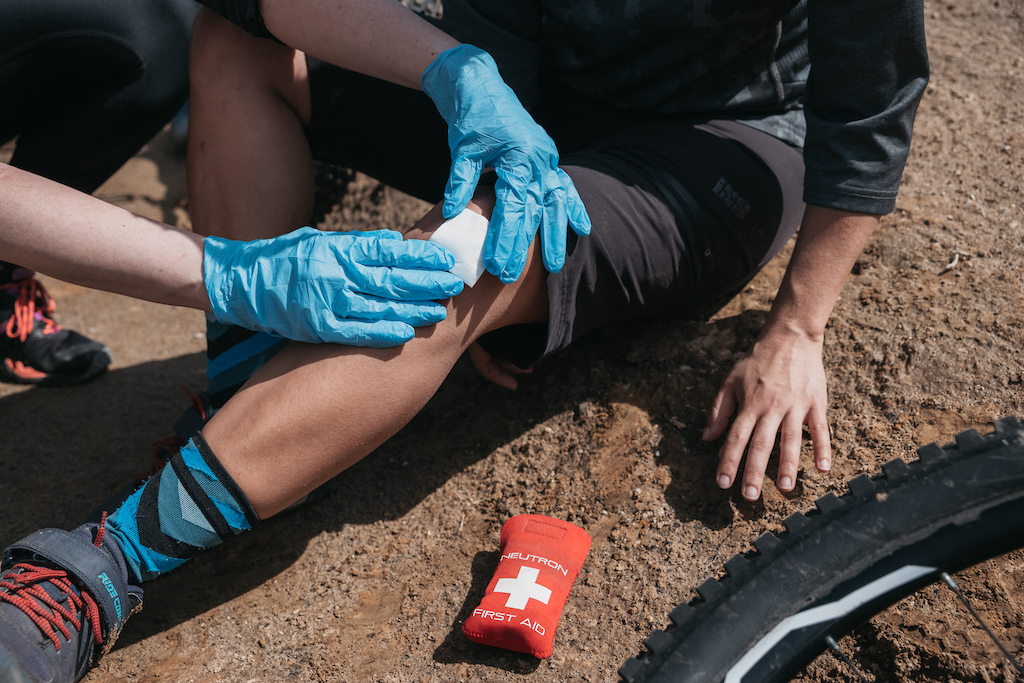
“Yeah, I reckon I could make that” — confidence is 90% of mountain biking. Unfortunately it’s the other 10% that really hurts… and that’s what we at Neutron Components are working on. We thought we had it covered when we released our onboard multitool, the Oh Sh!t Kit, earlier this year, but we’ve since realised that fixing the bike is only half the job. So, we’re stoked to lift the veil on our follow-up product, an ultralight first aid kit with all the essentials.
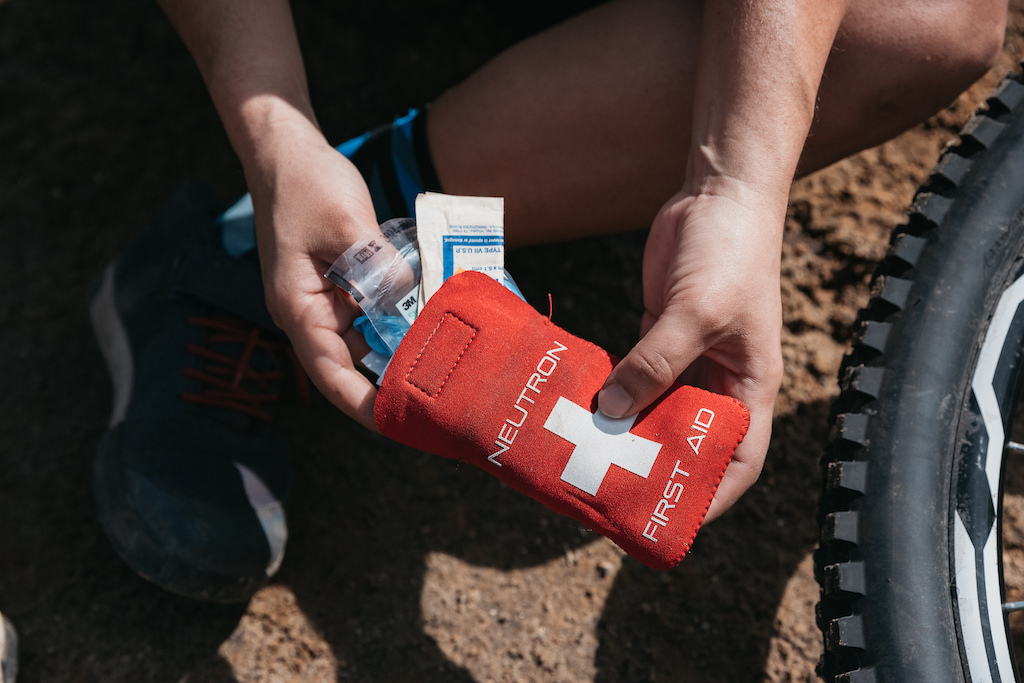
Half the challenge with conventional first aid kits is carrying it, so we set out to make our mounting system as versatile as possible. The elasticated strap lets you secure it to your bike, backpack, or trail dog, plus we’ve thrown in a self-adhesive hook & loop pad for even more flexibility and added security. And with the complete kit weighing only 55 grams, you’ll forget you’re carrying it at all - until you need it that is.
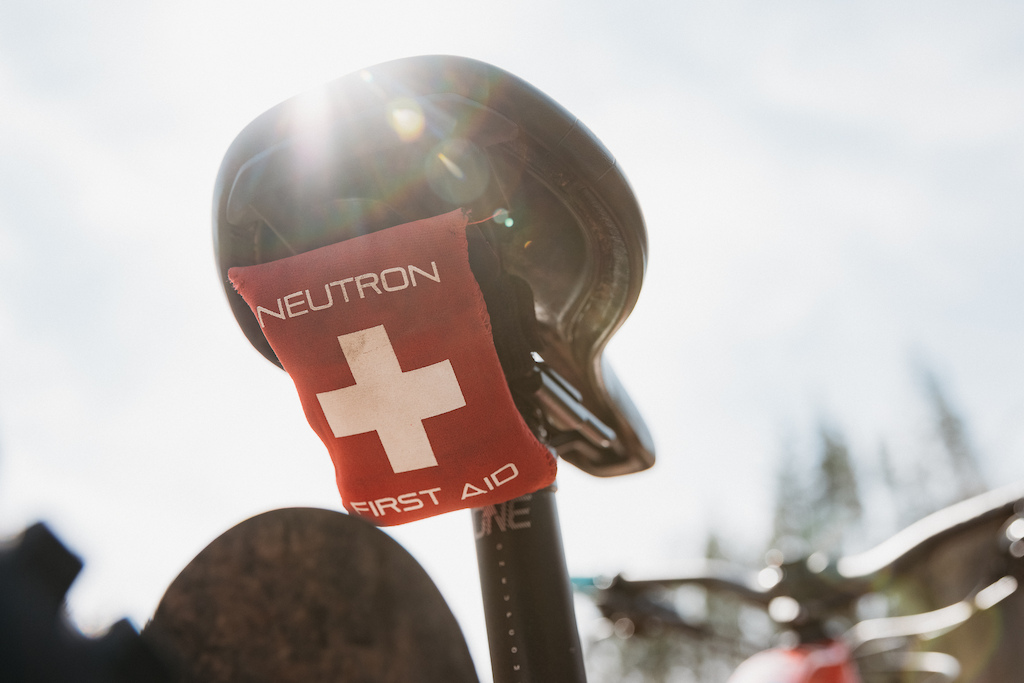
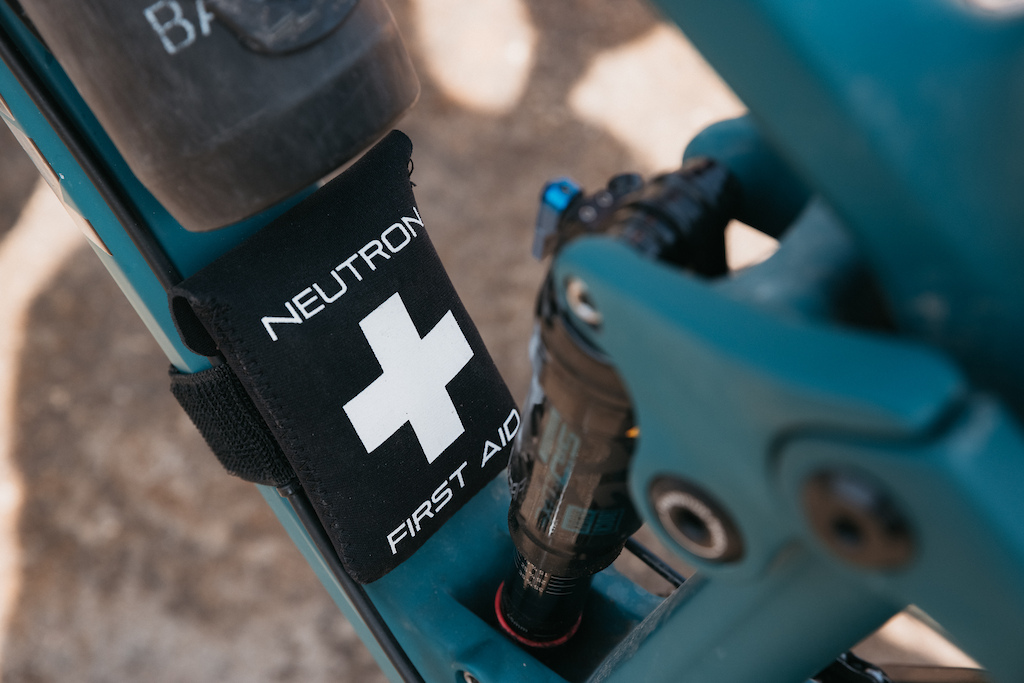
Whether you’re into biking, hiking, climbing or kayaking, our first aid kit is designed as an ultralight, easy-carry emergency kit for adrenaline-junkies and weekend warriors alike – by stripping it down to the essentials we’ve managed to pack it into a size that’s practical to carry even for short missions. To be honest, we were amazed that nobody had done it before.
The first aid kit includes the following:
• 1x small dressing
• 1x medium dressing
• 2m duct tape
• 2x alcohol swabs
• 1x CPR barrier shield
• 2x plasters
• 5x 3M steri-strips
• 2x nitrile gloves
• 1x quick-reference guide
• 1x small dressing
• 1x medium dressing
• 2m duct tape
• 2x alcohol swabs
• 1x CPR barrier shield
• 2x plasters
• 5x 3M steri-strips
• 2x nitrile gloves
• 1x quick-reference guide
Further specs:
Kit dimensions: 100x70x20mm
Kit weight: 55g
The first aid kit is proudly designed and tested in New Zealand, and retails for $35 NZD ($24 USD).
Neutron Components’ goal is to make sure every rider gets home after every ride, so we’ve made our quick-reference guide free to download. A first aid kit will always be your best option, but a bit of knowledge can make a world of difference.
For more information visit www.neutroncomponents.com
Author Info:
 Taupo, New Zealand
Must Read This Week
Results: Luke Meier-Smith & Lisa Bouladou Win the 2026 Lake Placid DH World Cup Elite Finals
92147 views
92147 views
Results: Sacha Earnest & Ethan Craik Win Elite Q2 Qualifying at the 2026 Lake Placid DH World Cup
69242 views
69242 views
Not a frequent user of the up=down vote but had to upvote you back to zero... I want to coin a new one, " not a donut " to be used in every comment section of every PB reviews.
However, after just two rides this past summer in Minnesota the humidity was almost unbearable and it quickly lead me to purchase a hip pack to reduce the heat from my torso. Fast forward to now, and ahead of next season I'm considering all options to make me as comfortable as possible and strapping stuff to my bike seems like a sensible solution.
It's easy for us all to think that "mountain biking is mountain biking" but different geographical locations require different bikes and different solutions to our on-trail needs.
So for me it's either bum bag or strapped to the frame.
couldn't strap those to my bike;D
Now I use my EVOC only on big ones and ski, for under 3 hour rides near home a hip pack is much more easy to grab, clean and it's lighter.
They also carry more kit! +2 hour ride then it comes out. Nothing less.
That is not to say I don’t have a first aid kit. But I only care if it’s serious enough to call an ambulance/MRT. Especially calling out MRT as it can take them a while to mobilise and then find you. If it’s bad weather especially fog, it really could take a while.
Things you need, tourniquet, Israeli bandage, SAM splint, aluminium foil blanket, whistle, fully charged phone. All of which fit in my hip pack and still loads of room for all my other stuff.
I only care about the stuff that would actually save my life.
I’m sure you can, but if I can spend x amount of £ on a bronson, I can afford to not be a tight arse and spend 20 quid on althe proper tool for the job. Then I can stay alive to watch my son grow up.
This kit is borderline worthless in my opinion. Minus the CPR shield. But then you need to be trained on CPR. Training is really the critical component for people going to play on bikes in the woods. I recommend wilderness first aid.
Hey @pinkbikeoriginals , here is an idea for a series: What to do if you __________ on the trail. Example: You misjudged the gap between those trees and now you broke your collarbone. Here is what you can do to get you back to the car. If you have already done this, can you link to where it is?
Good for you dude. I would get a blanket if it’s for first aid. Bivi if you want to do some bike packing and then it’s a better investment. But the blanket takes up next to no space and weighs nothing.
I terms of the way I think about things. I go in reverse. As I said I don’t care about cuts and bruises. I’ve got a tourniquet and I hope I never have to use it, it’s the one piece that would truly save your life. Next a splint and Israeli bandage. I’ve broken both wrists and my collar bone before (not that I could use a splint on a collar bone). And then anything else afterwards, blanket & whistle are are a bonus to keep you warm and aid help quicker. And then finally the first aid plasters for cuts and bruises.
www.pinkbike.com/photo/19748235
Sorry dude, that sounded a bit passive aggressive. If my life was in danger I would use whatever I could. And an inner tube is a great idea.
When I was 23 I broke my collar bone on some DJs and my meditation was Mary j. Now I’m 41 with responsibilities I take things a little more serious haha
www.wesspur.com/items/saf540.html
A small airplane bottle/ shooter of grain alcohol is better for sterilization in the field than antibiotic creams. And grain alcohol also doubles as an effective pain med.
Believe it or not, pure honey works really well for a topical wound treatment, dehydrates the wound, preventing bacterial growth along with a natural antibiotic. Plus, a honey packet also doubles as backup sugar in case of hypoglycemia in case you or your buddy end up bonking and need a boost to get home.
Rubber gloves pack small and can double as quick warmth for cold hands and can be made into occlusive dressings with some tape.
A jacket can be converted into a shoulder sling.
Spine protectors and other armor can be good
Spare socks can work well for bleeding over a base bandage to provide more fluid absorption and create extra pressure when wrapped in the gauze wrap.
Quick clot is really light and can stop a major wound from bleeding out, sucks to clean out in the hospital, but can save a life in the field.
Spare tube and a stick would make an effective tourniquet.
Duct or medical tape around a pump is easy storage for your tape.
That said, an easy kit like this strapped to your seat isn’t a bad idea.
Lol, a year ago I cut some arterioles in my knee. It was a gusher. I rode home with a bandage made out of my sock and an inner tube. It stopped the bleeding, but I was pretty shock when I got to hospital. Now I have a maxi pad and some duct tape.
RE quick clot, it's simple to use, you put it on. The issue is what wounds need it. Sen with a tourniquet. Most things can be stopped with pressure. Even things that squirt. Quick clot needs to be cut out at the hospital, a tourniquet can cost you a limb.
Freak injuries happen more than you would think. Knowing how and when to safely use both a trauma dressing and tourniquet are great skills and equipment to possess.
www.dailymail.co.uk/health/article-2278942/Pouring-granulated-sugar-wounds-heal-faster-antibiotics.html
The studies on sugar just used standard granulated sugar, you can just use sugar packets if that makes you feel better than honey.
www.bbc.com/future/article/20180328-how-sugar-could-help-heal-wounds
I'm not a trauma specialist, but I'm also not a layperson. This would was a pelvic fracture resulting in a fem artery lac. That's incompatible with life without rapid evac to a level 3 trauma center. They used point pressure, binders and O2 to keep him alive, not a tourniquet. There are absolutely situations where a tourniquet and a coagulant can save lives. Knowing how to use them is pretty simple. The issue is knowing when. They are good, but dangerous tools. With cg, if they'd packed the wound full of quick clot they may have killed him or cost him his leg due to the time needed to get past it to repair the fem artery lac.
I'm not saying they aren't useful, but the education needed to use them safely isn't a matter of reading a website or a half day course.
I'm also saying that in cycling In particular, the mechanisms of injury are such that an inreach is probably a better use of space than almost anything. Freak accidents do happen, but by and large the mechanism is either blunt force trauma or penetrating injury. There are lots of nasty bleeding cuts etc, but your chances of cutting something fatal coming off a bike are much Lower than your chances of loosing a limb because someone tourniquetted a Nasty shin lac that's squirting because a few arterioles are involved.
I'll stick with most ppl needing: heavy flow maxi pad, duct tape, a space blanket, an Inreach, and inner tube (which can be a tourniquet) . A razor blade is also good. Nada mass unless properly educated (aka enough knowledge of anatomy to know what vessels are likely involved).
Honestly I've seen weirder injuries than cg's from less intense activities, sounds like you might be in a position to have as well.
FYI I am a medic and WEMT instructor
Snake bite bandage (Australia) quick clot blotter / bandage and phone. Snake bite bandage can do an ok tourniquet if needed.
But again it’s like picking a new bike - to each their own... Climate, experience, medical training all these things come into play.
Totally agree with what matches your needs. I used to live in the city and either ride local trails or go to well ridden spots in the country. Where there’s easy access for ambulances and it wouldn’t be too long before another rider came along the trail.
Now I live in a national park and if I go for a solo ride on a miserable wet day in November I won’t see another soul on the hill until I get back to the car. Which is what I’m about to do. Re my kit... to quote alien vs predator “ just like a condom, I would rather have it and not need it, than need it and not have it”.
My original post was that simply these small first aid kits are pretty pointless other than patching up a graze... I can live without
Solid! I’d say stage the tourniquet outside of the plastic.
m.pinkbike.com/photo/19753092
This is my kit. Plus or minus stuff depending on what I’m doing and the bag I’m rockin. Chem light for visibility, haven’t used it but from what I’ve seen is that you can spin it on the paracord for visibility. I will add a sam splint if I’m taking a full on back pack.
Also two tourniquets based on feedback. Sometimes one isn’t enough for a leg injury. Tourniquets aren’t in the bag, they are currently in two top pockets in my pack.
Ideally I’d carry more triangular bandages but between the paracord and tourniquets I’ll be okay, unless someone is bleeding and has a broken bone.
Hey man, nice kit, good to see someone else hoping for the best but prepared for the worst. I keep it in the plastic wrap not for sterile purposes or anything but just helps it keep contained. Your absolutely right about sometimes one not being enough. But alas I’m trying to keep to just a hip pack these days. But good to see you take it seriously like it deserves. And great idea on the glow sticks. Ordering right now!!!
When you need rescue this is invaluable.
1. Tweezers for pulling cactus
2. Duct tape for pulling cactus
3. Pain meds for old man joints
4. Alcohol wipes for poison ivy
Minor scrapes and wounds are mostly ignored.
It is a good idea,nice addition to any ride.
is the type of cut or scrape this would solve.
This stuff would instantly become useless if something really bad actually happened. plus for the cost of one of these you could make a legit first aid kit and throw it in your hydration pack if you actually cared that much about first aid.
NeutronComponents do not know the difference between the Swiss flag and the Red Cross (ICRC)
Heiko Maas (German foreign minister) does not know the difference between the German flag and the Belgian flag.
www.thetimes.co.uk/article/merkel-minister-heiko-maas-mistook-belgian-troops-for-bundeswehr-in-tweet-hqqkddznx
I think you’re kinda of missing the point. If you need a tourniquet, you’re going to die very quickly without one. Especially if you are riding alone